
Arriving in Argentina I have been faced with the most difficult shift in Spanish since Colombia.
The biggest hurdle is that the pronunciation is different with yo becoming sho and LL moving from a Y sound to a SH sound. Then there’s lunfardo….
Argentine slang is so complex it actually has a name! I probably should be brushing up at a Spanish school but I am spending all my money on steak in Buenos Aires and learning Argentine Spanish on the street.
Cuban Slang
Everyday words completely change and I have been lucky to meet Michael‘s friend Chance early on.
Chance is a tour guide here and I would be completely lost in the city without him. He knows everything about it, including what vocabulary I need to know right away.
Beginner Lunfardo Terms
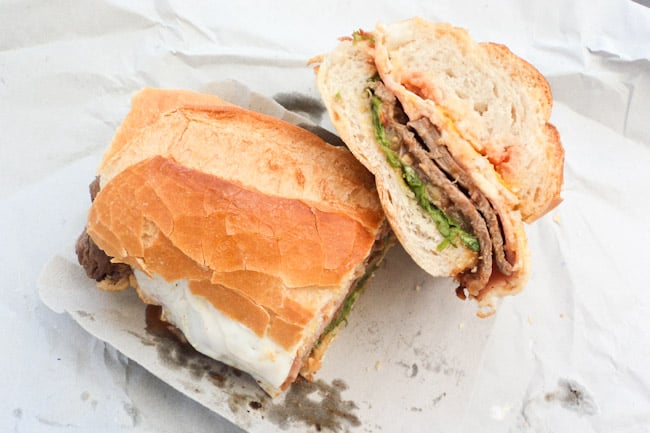
Words for Food in Argentina
Who thought eating could be so difficult! In each country I have noticed small differences but not as much as with lunfardo in Argentina:
Bacon was tocina but now is pancetta.
Butter was mantequilla but now is manteca.
Avocado was aguacate but now is palta.
Peach was durazno but is now melocoton although apparently it is the same in Mexico.
Hotdog is no longer salchicha but pancho.
And I learned that fiambre means deli meats and are very popular here.
At least I already knew chimichurri as it’s common in Brazilian cuisine as well.
Talking to and about people
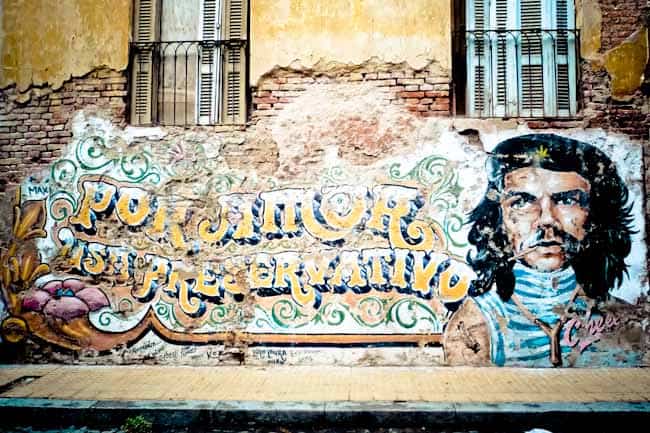
Che is possibly the most famous lunfardo expression which is often used to say hey you and seems to appear mostly as a question such as hey where are you going.
Chabon is a casual way to say guy or dude.
Joya literally means a gem but people used it to describe others who have done something nice.
Gaucho also used to describe a guy who has gone out of his way to be a gentleman, in my case Chance has been un gaucho during my time in Buenos Aires.
Chamuyero (chah-moo-SHARE-o) is a smooth talker or a bullshitter. Not necessarily someone who wants to sell you something but this guy is talking you up to talk your pants off sometime in the future.
Talking about myself
Fiaca means tiredness or laziness. It’s when you feel like doing nothing and is most often used by people when they are at work the day after going out hard the night before.
A full means totally or absolutely.
Shopping
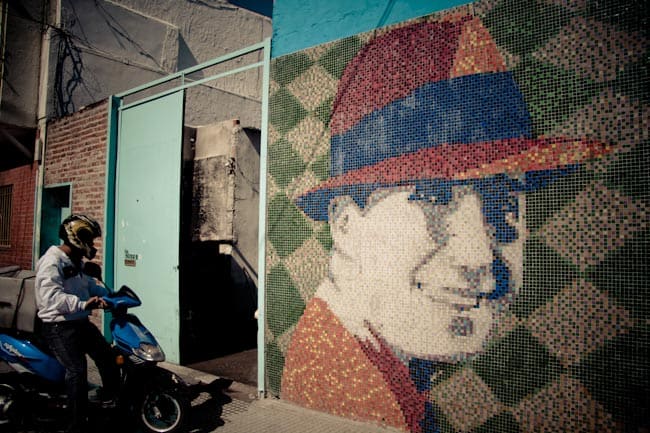
Mango is a peso. You could say something costs 70 mangos and if you are broke No tengo un mango that you don’t have a single mango.
Trucha literally means trout but is used to describe a bad/poor quality fake and believe me there are tons of them here.
Cheto/a is used to describe something snobby because it is exclusive or expensive.
Good vibes and sexy nights
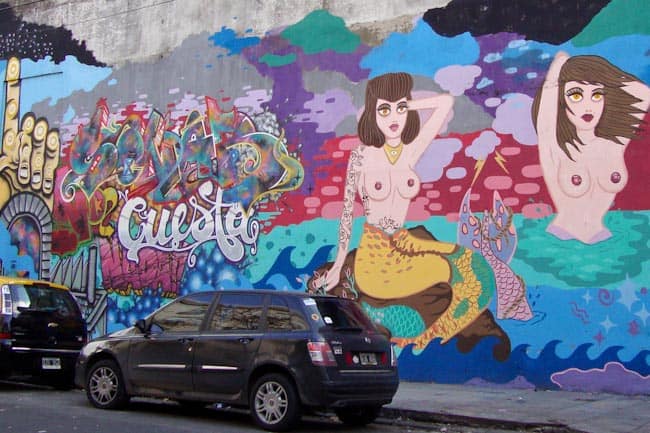
Buena onda is used all the time in Buenos Aires, everyone is talking about their onda. It’s how they describe people places and things, if you ask about a restaurant they may tell you the food was great but the onda was lacking.
Telo is not a slang word but one you should know. It is used to describe one of the many sex hotels you can rent by the hour. It is very common in this city as many young couples still live with their parents.
Forro is a condom.
Tapu is a slut and a very common example of the piglatin that Argentine’s use as it is normally puta.
According to Chance this is a good start, but I have a feeling this is just a fraction of what I need to know in the lunfardo lexicon.
If you’re planning a trip here check out Dan’s helpful Buenos Aires travel guide.
For more South American slang check out
Colombian Slang
Ecuadorian Slang
Peruvian Slang
That’s interesting how they use the Italian word pancetta for bacon. Although I guess there are a lot of similarities with the Spanish language.
Most Portenos are from an Italian heritage and you see the influence in the language and the food.
GO AWaY!
Fueron muchos Italianos en Argentina antes de que era peligroso ser ellos. Entonces, la honda se cambió. Ya no fueron Italianos, pero la gente, como no hablaban Castellano, hablaban Español con mucha “che” para todo. Pero, como nadie quería problemas con nadie, todo mun hacia mucha tram, asi es todavía, qué no?
There’s actually more similarities between the Argentinian and the Italian, than the Argentinian and the Spanish …people, habits and language.
I completely understand you. I mean, I am from Spain and I also have a hard time sometimes with other spanish-speaking countries slang 🙂
Here are a couple more you will eventually run into:
morfar, lastrar: to eat
chorear: to steal
mango: Like 3 bucks; 3 mangos
trolo: gay
cheto: preppy
forro: is condom but it really means ‘prick’
Enjoy you’re stay…
Hey thanks so much, there’s so much to learn here!
I love these slang posts — so interesting to see the subtle (and not so subtle) differences as you make your way through each country…
Pancetta es mágico? haha
How on Earth are you still posting during volcanic eruptions and cancelled flights? I really hope that you make it to Vancouver!!
Me too!
great language tips for travelling in Argentine. what is toilet in the slang?
Toilet : is Baño or you can say, ñoBa that´s ultimate porteño slang!
Love it! Argentina has its own language, but many of the terms you list here are shared with Chile as well: palta, joya, a full, buena onda… but the accent can really throw you.
Once on an Aerolínea Argentina flight the attendant offered me “carne o pocho.” Carne is beef, of course, but I had never heard of pocho, so I thought I’d try that. She looked at me like I was an idiot. “Es pocho! Pocho!” (???) until my husband said “pollo” Duh…chicken!
That happens every day to me!
Some of these words I hope I never use! 🙂 Thanks for sharing the slang. Every country has it but I don’t think ours changes that much. From generation to generation it does but I am so not hip it doesn’t matter anyways.
It seems like you’ve made a good enough start on the important food words. They’re the most important in any country, I reckon.
I’m very curious about how those final slang words came up in conversation, though!
Ahh that’s all thanks to Chance who seems to think I need to know these words 🙂
I’m loving the street art and graffiti! They almost make better pictures than the gorgeous buildings. And I also really need to start learning some Spanish before next year, but by the looks of it I still may end up in a muddle with all the changes in pronunciation and spellings.
I started with the Spanish Survival Guide podcast, it’s great for the basics.
These are always among my favorite posts, great cultural insight. I think mango is my fave, mostly because it is also the best fruit on earth.
I would be in so much trouble if I went to Argentina! It’s hard enough learning another language, let alone all the slang. Thanks for sharing these!
I love how regional slang can be, and how it gives an atmosphere to the location. Great photos, I love the street art!
So it’s probably bad that I have been in Buenos Aires longer than you, and I only know half of these 🙂
Languages change from the bottom up, and many new words enter our languages through the “slang” door. Still, not all new words are there to stay, and nothing is as old-fashioned as yesterday’s slang.
Love it, thanks so much Michael.
Amazing at how the slang is so different in the different countries of South America, and here I thought Spanish was Spanish.
Oh no it varies everywhere I go.
So many countries so many different things, language, food, clothing, and it makes it all interesting.
Thanks for sharing the photos and story about the differences and how you are trying to adapt
Eileen
Ok I am getting internal error and or duplicate comment but nothing has submitted yet so I am adding this in the beginning to try and trick the server.
So many countries so many different things, language, food, clothing, and it makes it all interesting.
Thanks for sharing the photos and story about the differences and how you are trying to adapt
Eileen
Fun list and helpful too. My Spanish is terrible and I find it frustrating how certain words have different meanings throughout Latin America. Love the ‘mango’ meaning…I’ll have to remember that one.
Good to know. I think I’ll leave Argentina for the end of my time in South America so I don’t confuse myself before I get better at speaking Spanish.
Oh I hate that! Just when you think you’ve got it all figured out they go and change it on you.
I thought Che was a revolutionary and a gaucho was a cowboy! Shows how little I know.
fun and interesting post.
Ernesto “Che” Guevara was a revolutionary — and he was from Argentina. He got his nickname from Cubans who remarked on his frequent use of the word “che”.
And the use of gaucho for gentlemanly and gallant is very much like the Spanish adjective caballero, or the English chivalrous — the idea of the horseman’s code of honor.
Love it! I wish I had found this guide 6 years ago haha.
Great info – and what we could have used in January. The change in the “ll”” sound really through us off.
I’m Spanish and most of the expressions I have never heard before! Funny this lunfardo…
I think you’ve covered the basics pretty well here. Love the word “onda” – think I’ll try to use that.
My new favorite one is “vieja chota.” That’s what people called Cruella when I told them the story. Love the slang… but only when I know what the hell they are talking about.
Another great slang vocabulary post 🙂
Love these slang posts! It’s just keeping track of where to use them 😉
To this day I still use the ll “sh” and y “sho”. People get it tho. Thankfully.
Just reminds me how little Spanish I know! I wish I was better at languages, but some things to keep in mind for when I finally hit up Argentina.
For sure you’ve experienced how different spanish can be in different countries. Even I sometimes have a hard time understanding some words from other spanish speaking countries.
This is what I love so much about travel. Every culture is so different and even though it’s the same language it’s different. I’m already horrible at speaking and understanding Spanish so any differences than what I already learned totally throws me off. I really loved Argentina and the Italian influence is such a nice touch.
Great post. I remember struggling with Spanish when I hit Argentina…wish I could have read this at the time!
The little language differences in each country are amazing and are exactly why just knowing Spanish isn’t enough because each country, and sometimes each region has its own list of slang.
Argentine Spanish feels completely different than any other country.
The Aregentine accent is hard! I was at a restaurant the other day here in Santiago and the waiter was Argentine. He asked if our table had “servichetas”. Since I had no idea what they were, I said no. Then he came back with napkins (servilletas) and when he saw that there were already some on the table got really confused. To make matters worse I blurted out “Ahhh! ServiLLetas! Si, ya tenemos.” Haha.
When Chileans want to immitate the Argentine accent they put “che” before everything and “viste” after. Not sure if this is so accurate but it sure is hilarious.
When I tell Argentines that Chileans are easier to understand they think I am crazy.
Wow! Very informative post. I had NO IDEA Argentine expressions and slang were so different! Like you, I was mostly familiarized with Central and most of South American Spanish. But when I moved to Spain, I had to re-learn entire vocabulary lists and phrases because a lot of words were different or had completely different meanings than what I had been taught. It’s interesting how much a language can change from region to region, isn’t it?
Every time I hit a new country I have to ask around if the slang I used before is still applicable.
Here are a few more:
boludo/a – Ayngelina, you told me you discussed this word in another post but I never saw it. For those who don’t know I would personally think this is the most popular lunfardo word (besides che perhaps) and can be used among friends in greeting but is very commonly used to refer to stupid people or people who have done something stupid or even to call someone (usually a guy who misleads a gal) an asshole; it seems, according to all my female friends here, that just about all Porteños are boludos 😉
quilombo – something that is messed up (a situation, bad traffic, whatever)
pedo – normally means fart, but when used in the phrase estar EN pedo means to be drunk and when used in the phrase estar AL pedo means to have nothing to do or to be doing nothing
chanta – is kind of like chamuyar but more for the purpose of defrauding or cheating someone
Just to clarify, chamuyar is also a verb and refers to someone making stuff up or exaggerating, not just guys trying to get into a girl’s pants.
gato – prostitute
The above are what I gathered from some Porteña friends and I could have mis-understood the exact translations so any locals might want to review them.
Great additions, I looked back and I hadn’t included boludo but you are right that it is very common.
Great Post! Spanish slang is so hard considering there are about 20 lands that speak Spanish as their official tongue. I felt like my Spanish was going well in Panama recently, until I ended up hanging out with a group of Argentinians from my hotel. After a short time, it got to the point where I could only catch a small bit of what they were saying, if that even. That dialect sure is heavy duty stuff.
I think Argentine Spanish is the most difficult to understand, it was also much easier for me in Panama.
I love the photos in this post!
Buenos Aires is an amazing place for photographers, if you can avoid getting robbed 🙂
nice and useful list 😀
just a few comments:
it’s not “un gaucho”, it’s just “gaucho” as in “Chance fue re gaucho”.
about “bueno onda” it’s actually “buena onda”, since buena, here is an adjetive, and in spanish the adjetive has to have the same gender as the noun.
cheto/o is also used to describe people, not only things. is the short form for “concheta/o”, and is usually used to refer to rich and annoying people – or people that act as if they were rich.
and telo comes from saying hotel backwards – repeat many times hotel in spanish and you’ll get it 😉
saludos!
Paulina
Thanks so much, my Spanish is a constant learning process. I hadn’t realized I forgot to explain that telo was hotel backwards, but yes I knew that 🙂
telo is not quite hotel backwards (which would be “letoh”) it’s a question of reversing the syllables. Other examples include feca = cafe, zapi = pizza, and gomia = amigo
Maybe too much time wasted in Argentina to “perfect” the Spanish language. Not such a good place to go and learn it perhaps. 🙁
Yes, the porteño dialect is difficult and my friend who is studying Spanish formally told me that is actually it’s own language if you can believe it, however it’s also a beautiful, sexy dialect when spoken well. I’m really not a fan of chilean spanish and all although the accent when spoken by an educated person is more standard/neutral however chileans cut lots of letters/sounds, have an erratic rhythm and go from very high to very low tones. I much prefer Castellano from Buenos Aires and if I had to choose an accent to imitate it would be that one. Porteños are like New Yorkers, cool ass mofos with tons of attitude, if you earn their trust and respect they’ll warm up to you if you act like a putz they won’t have much time for you at all! That’s my two bits and yes ‘pedo’ is bizarre and hilarious (I don’t use it but I’m getting to the point now where I could start mixing it in to conversation). Suerte!
another word you hear all the time is Barbero! it means wonderful.
What you mean is Bárbaro, which means Great.
Hiya I’m an Argentinian native, here’s a few more in case you never heard of them:
Tengo una lija! = I have a lija = I’m hungry
Bardo = this is a bardo = “this is a mess”
Garca = someone who is not trustworthy = that guy is a garca
Chorro = thief
Fiolo = Pimp (literally)
Bolonqui = Quilombo = mess
Sorete = a piece of shit = that guy is a sorete
enjoy!
Argentinian slang also varies geographically….but I think learning the different “versions” would be for an ultra advanced Argentinian language course haha.
Some words I haven’t read here:
COPADO: expression used when something isreally cool, or when somebody is a good person.( “¡Qué copado!”…..”María es re copada”….”-Voy a ir a Iguazú….¿Si?Que copado!”)
COPARSE: be enthusiastic about doing some activity or something,…”Me copé con las clases de tango”
FLASHEAR o FLASHIAR: (This concept is hard to explain, but widely used amoung young people in Arg)… To be blinded by your imagination,..When you believe something but it’s just your imagination, like an illusion. It’s when your mind anticipates what is going to happen based on some facts, but finally that thing doesn´t happen…..The most common example would be when your crush invites you to do something and you believe he/she has invited you because he/she also likes you, but he/she only wants to be friends. “Flasheaste que le gustabas”
You can also “flashear” under drugs effects (like marihuana, LSD)
ME LA SUBE: (used most recently, but widespread now) When something puts you in the mood, when you like something very much, for example a good song or TV show [or girl ;-)]. ” Esta canción me la sube cada vez que la escucho”
ME LA BAJA: The opposite to “ME LA SUBE”…when something depresses you or you don’t like it. “Los teletubbies me la re bajan”…”One direction me la baja”..”Las mujeres que juegan al fútbol me la bajan, son poco femeninas”
ME LA SECA: The same as “ME LA BAJA” but only used by women, has the exact same meaning, but men wouldn’t(shouldn’t) use it…(Can you guess why?).
FORRO: condom….also a bad person, someone who trolls you (a son of a bitch), it’s an insult, but you can use it with your friends when they don’t wanna do something with you (-¿Vamos al cine?….-No,no tengo ganas….-Dale, no seas forro/a!!).
hi every body
would you mind please help me
what does this idiom means in Argantina? thanks
kiero chupar pija