
In Canada I was never a “breakfast person” because none of the food is appealing. But breakfast in Beijing is different. It can be sweet or savory, a snack or a hearty meal.
I spent a rainy morning in Beijing eating breakfast with a local guide named Kelly and eight other people. I took this food tour and over three hours and six stops we ate about 20 different dishes.
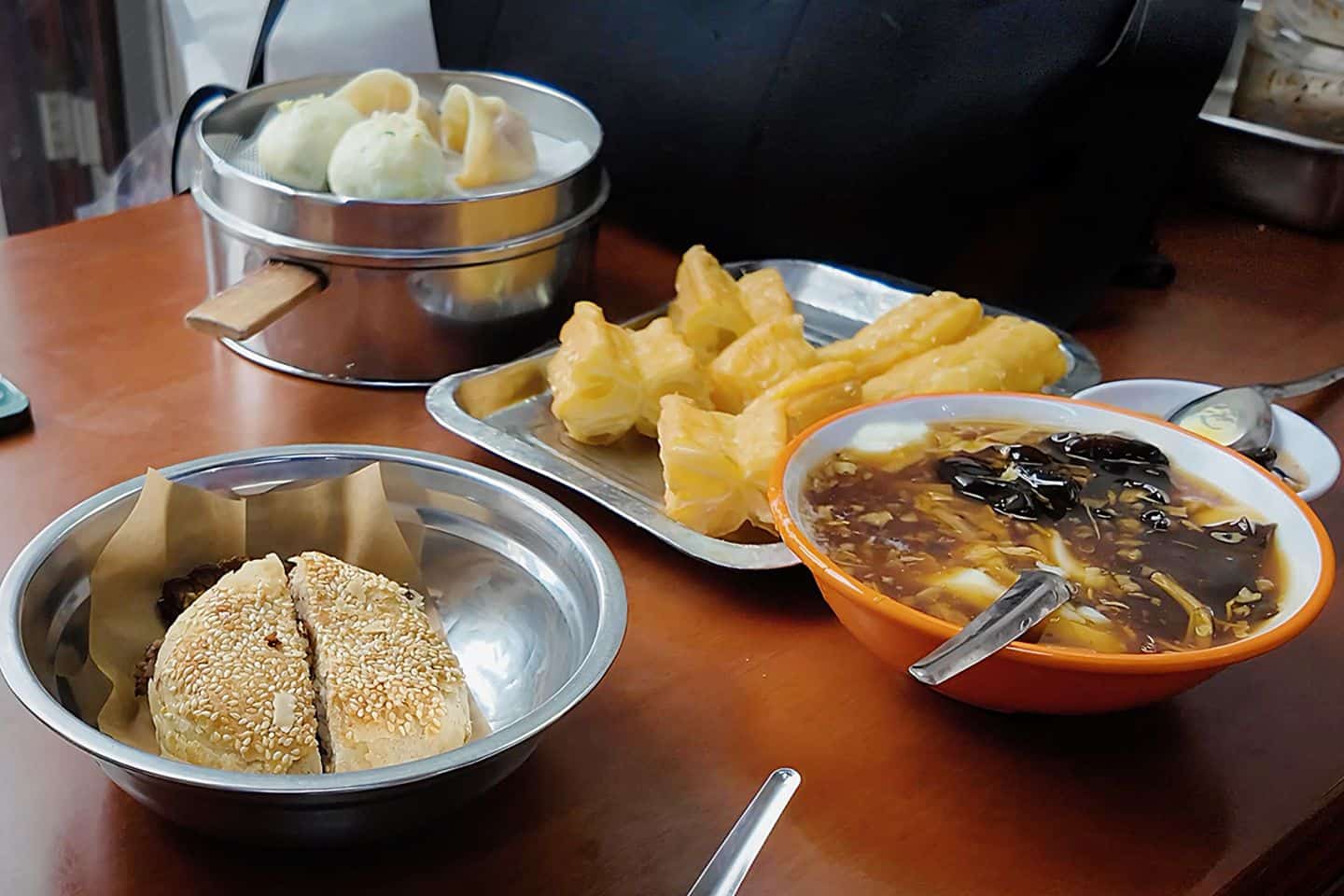
Beijing breakfast is traditionally built on wheat, soy and millet. Vendors steam buns and fry dough in the alleys while locals sit down to warm bowls of tofu or porridge before work.
I have filmed the best breakfast in many countries and written many articles on this site, but China was the first place where a local offered to explain how people eat first thing in the morning.
And it de a big difference because I was planning to just try different Chinese breakfasts, but Kelly showed me how to eat mian cha, what to dunk into tofu pudding, how to mix condiments. I would have gotten a lot wrong on my own.
Why Beijing Breakfasts Are Different
Beijing was the northern capital for centuries, and cold winters shaped a taste for hot, filling food. Wheat and millet grow here far better than rice, which is why breakfast leans on dough, porridge and soy.
Kelly told us that beef was once reserved for royalty. That is why traditional shops still call their beef sesame sandwich “imperial beef”.
Hui Muslim cooks shaped a lot of the morning menu, including beef shaobing and aiwowo. Niu Jie, on the west side of the city, has been home to Beijing’s largest Hui community since the Liao dynasty. My favorite stop in Beijing was at the Niu Jie snack street in this Beijing video.
15 Delicious Beijing Breakfast Dishes
I have included the best dishes but also where to try them in both Chinese (best when searching) and English. When in China do not use Google Maps as it is often wrong. Apple Maps is a bit better but it’s best to go local.
I used Amap, which is the English version of a Chinese app. It was the best for directions but also just finding local spots to eat as people leave reviews including dish recommendations.
I used this eSIM in China, which made things so much easier with unlimited data and a built in VPN so I could still access all my regular apps (YouTube, Instagram, Gmail etc) without any issues.
Doufu Nao | Savory Tofu Pudding
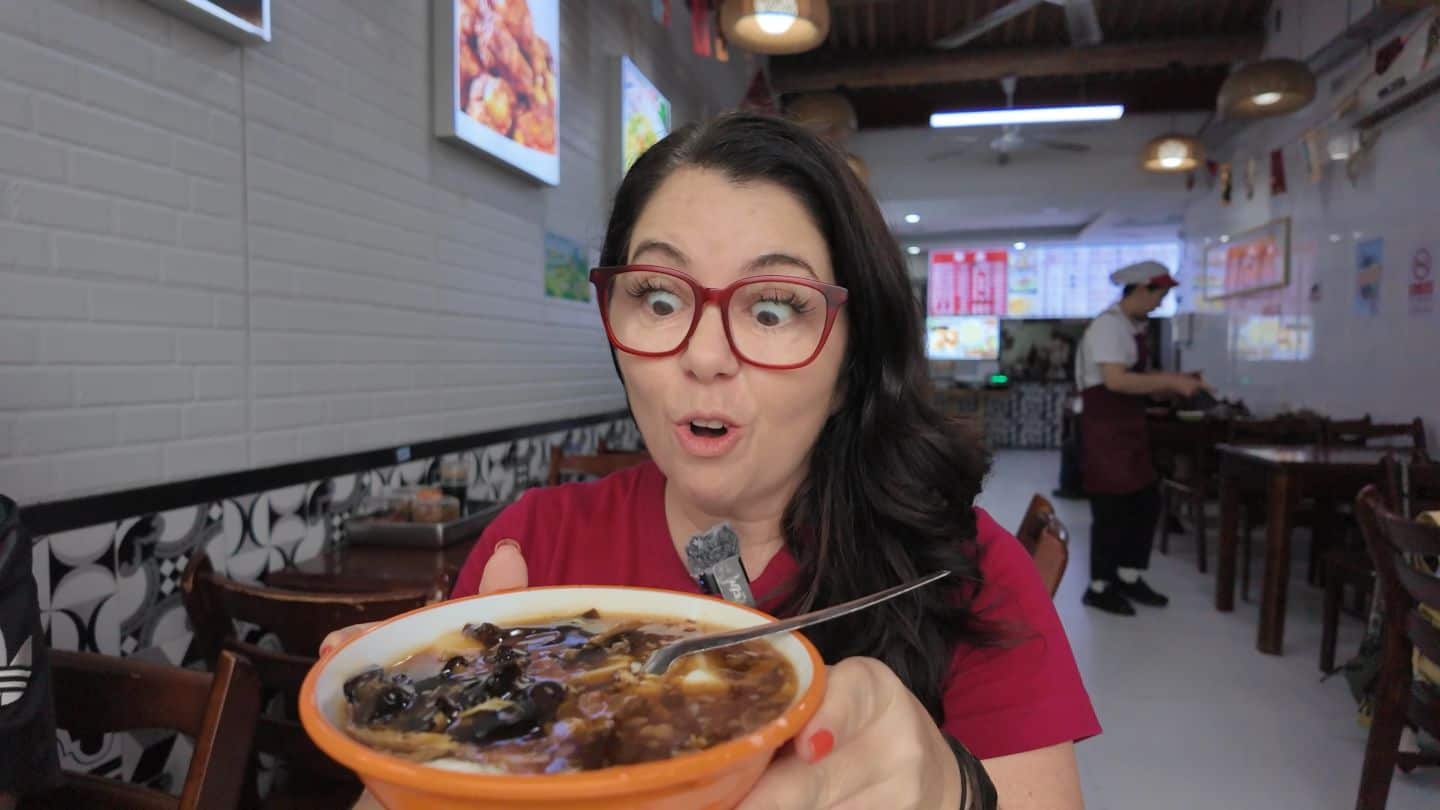
Tofu pudding was my favorite dish of the whole morning. The silken tofu was warm and soft enough to eat with a spoon, and the wood ear mushroom gravy on top was savory and earthy.
I assumed it would be sweet because the gravy looks like brown sugar or honey. Kelly explained that northerners eat it savory while the south serves it as a dessert. I prefer savory breakfast so Beijing is the right place to be.
It was cold and raining outside, and this was the most comforting thing I ate all day.
The name literally means tofu brains, because the texture is like a set custard. Legend credits a Han dynasty prince named Liu An with inventing tofu more than 2,000 years ago.
A bowl usually costs between 5 and 10 yuan. Spoon it gently rather than stirring, since the tofu breaks apart easily.
Old Beijing Shaobing with Braised Pork Joint 老北京烧饼夹肘子
30-2 Dafosi East Street, Dongcheng District, Beijing
Mian Cha | Millet Porridge with Sesame Paste
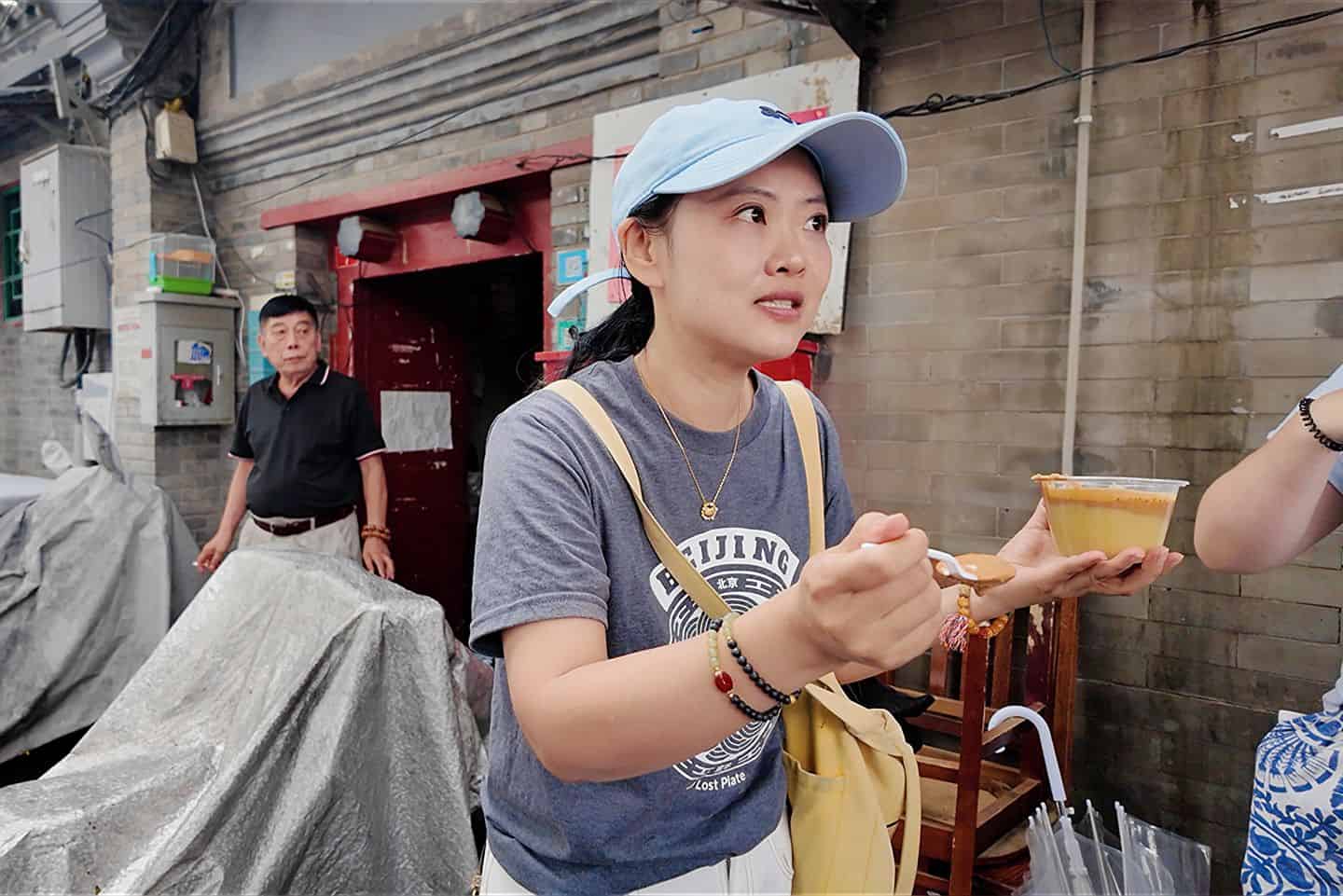
Kelly said Beijing has few rules about how to eat breakfast, and mian cha is the exception. Take a spoon, go deep to the bottom to get the millet and a little of the sesame sauce on top, and scratch it toward you so it does not drip.
Then blow on it, because it is very hot. It made my eyes water, but the millet was thick and smooth like mashed potato, the sesame paste tasted like peanut butter and the toasted sesame seeds gave it a little texture.
Older Beijingers skip the spoon. They hold the bowl in one hand and sip along the rim while rotating it, so the porridge and paste arrive together.
The name means flour tea, but there is no tea in it. Cooks stir millet flour with water nonstop until it thickens, and the paste on top is often about 80 percent sesame and 20 percent peanut butter thinned with sesame oil.
We walked through the hutongs to get there. Kelly told us hutong is a Mongolian word, and that one courtyard can hold four or five households, which you can tell from the number of meter boxes outside.
Daxing Hutong Miancha (大兴胡同面茶
7 Daxing Hutong, Dongcheng District
Youtiao | Deep Fried Dough Sticks
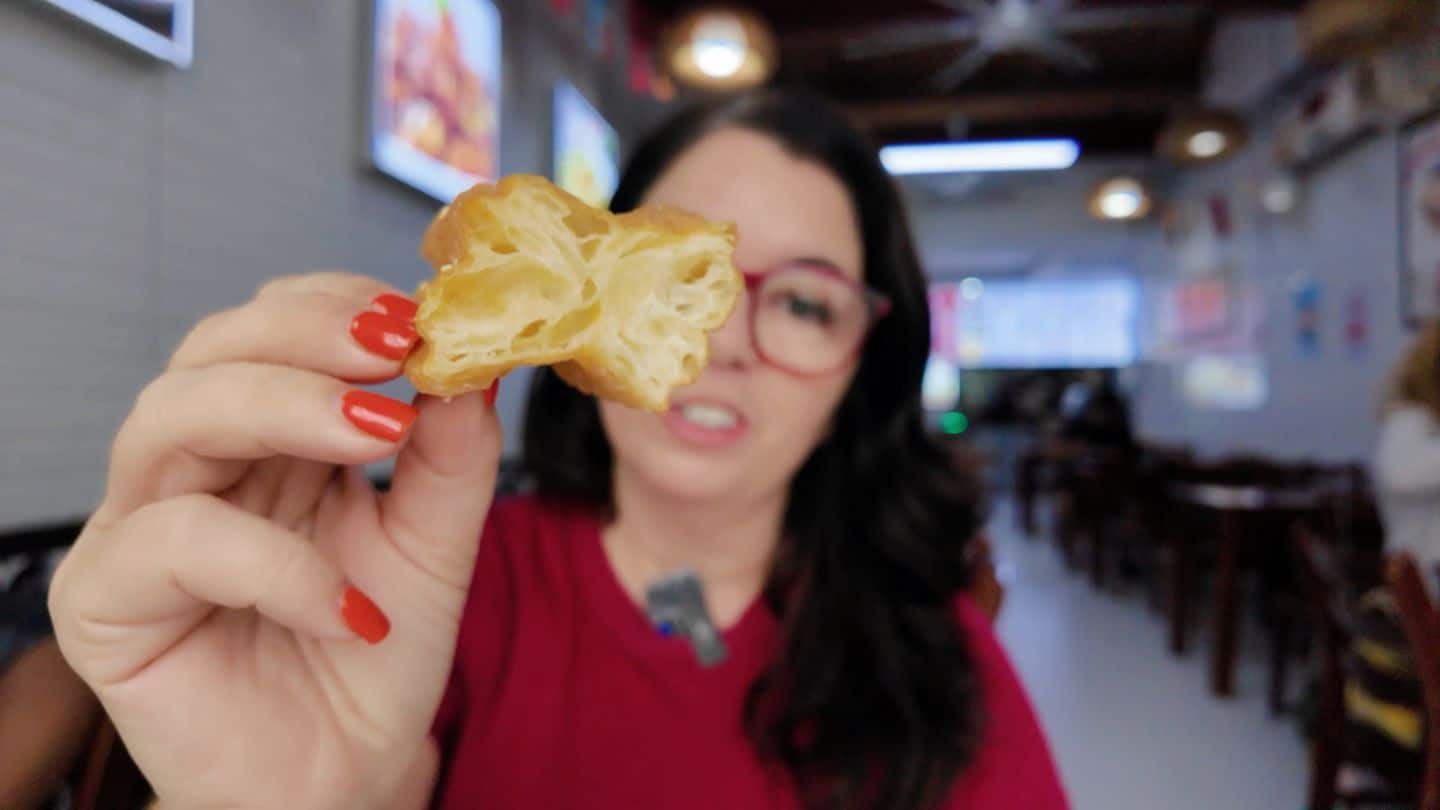
Youtiao are crisp on the outside and pillowy inside, with a light saltiness. On their own they taste fairly plain, which is why they exist to soak up soy milk, tofu pudding or porridge.
Someone on our tour from Indonesia called them cakwe and said they eat them with rice porridge at home. Kelly said the name comes from the original Cantonese one, which traveled to Indonesia with the dough.
Folklore ties them to the Song dynasty. A vendor supposedly shaped two pieces of dough to stand for the traitorous official Qin Hui and his wife, then fried them in oil as a protest, which is why youtiao are often joined in pairs.
The old Cantonese name, youzhagui, means oil fried ghost. The story is folklore and the real origin is unclear.
Ziguangyuan Halal Beijing Snack Shop 紫光园
42 Jiugulouwai Avenue
A halal chain known for fresh soy milk, which is what you want to dunk youtiao into. There are more than 270 branches across the city, so you can also look for one near your hotel.
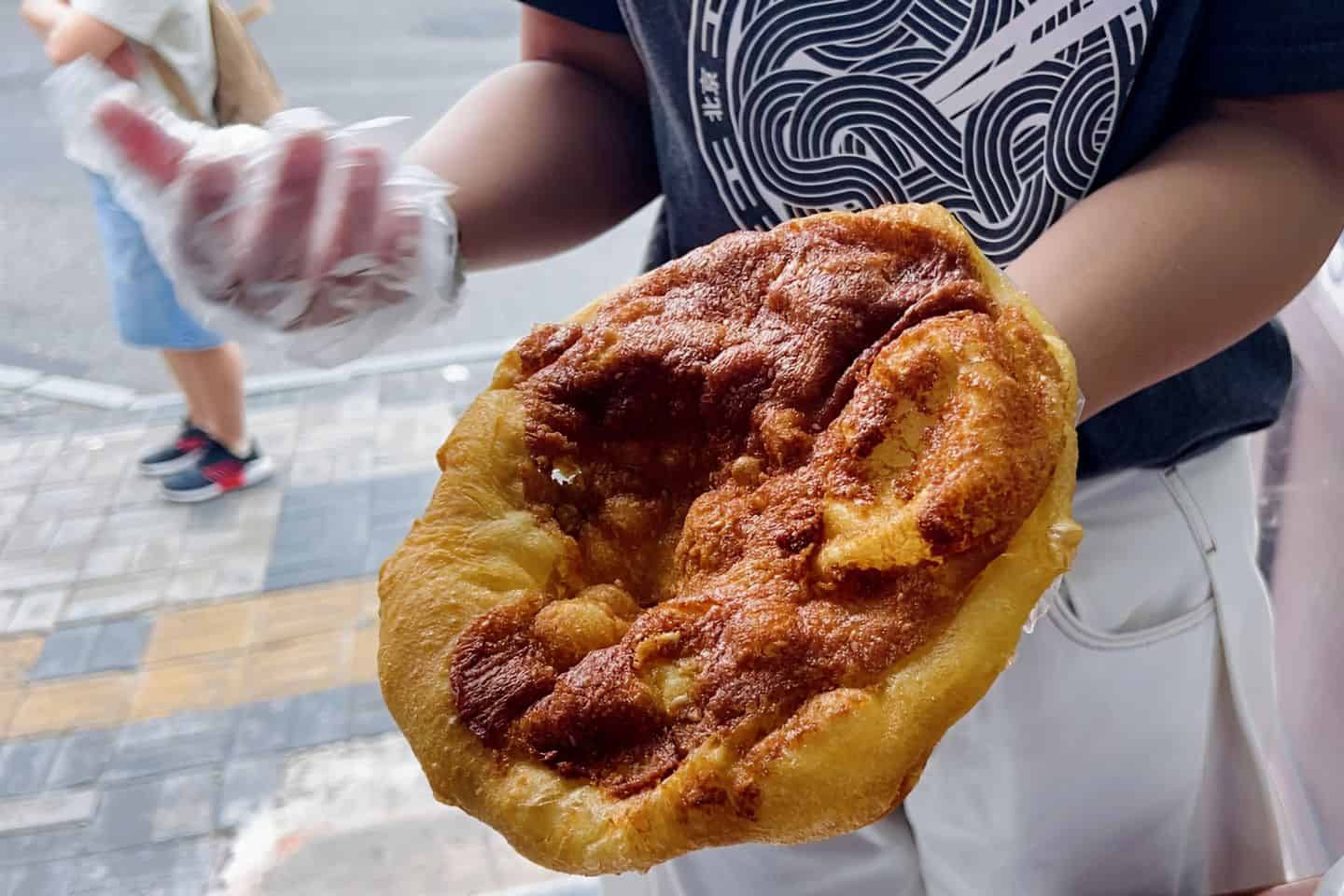
Tian You Bing | Sweet Fried Pancakes
Tian you bing is the sweet version. Brown sugar goes onto the dough, melts as it fries and hardens into a glassy, caramelized crust over a soft, chewy center.
Kelly told us a cook added brown sugar to the savory dough by accident one day. I am not sure I believe it was an accident, but either way the sweet version stuck and she called it a Beijing delicacy.
She also pointed out that small shops like this depend on customers, which is a good reason to eat here rather than at a chain.
Zengshengkui 增盛魁
26 Dafosi East Street, Dongcheng District
Shao Bing | Sesame Flatbread with Beef
Shaobing is a baked flatbread covered in toasted sesame seeds, with a crisp outside and a flaky inside. Beijing’s version tends to be small and is often sliced open like a sandwich.
We ate this on our first morning in the city and again on the tour. The beef was delicious but dry, and I wanted a sauce.
Kelly told us traditional shops call this imperial beef because only royalty could eat beef. Legend says General Ban Chao brought the bread from Central Asia during the Han dynasty, when it was called hubing.
Yueshengzhai 月盛斋
Niujie Halal Supermarket, 5 Niu Jie, Xicheng District
This halal deli began inside the supermarket and is known for its beef shaobing. It is often compared to a burger, and one is enough for a meal.
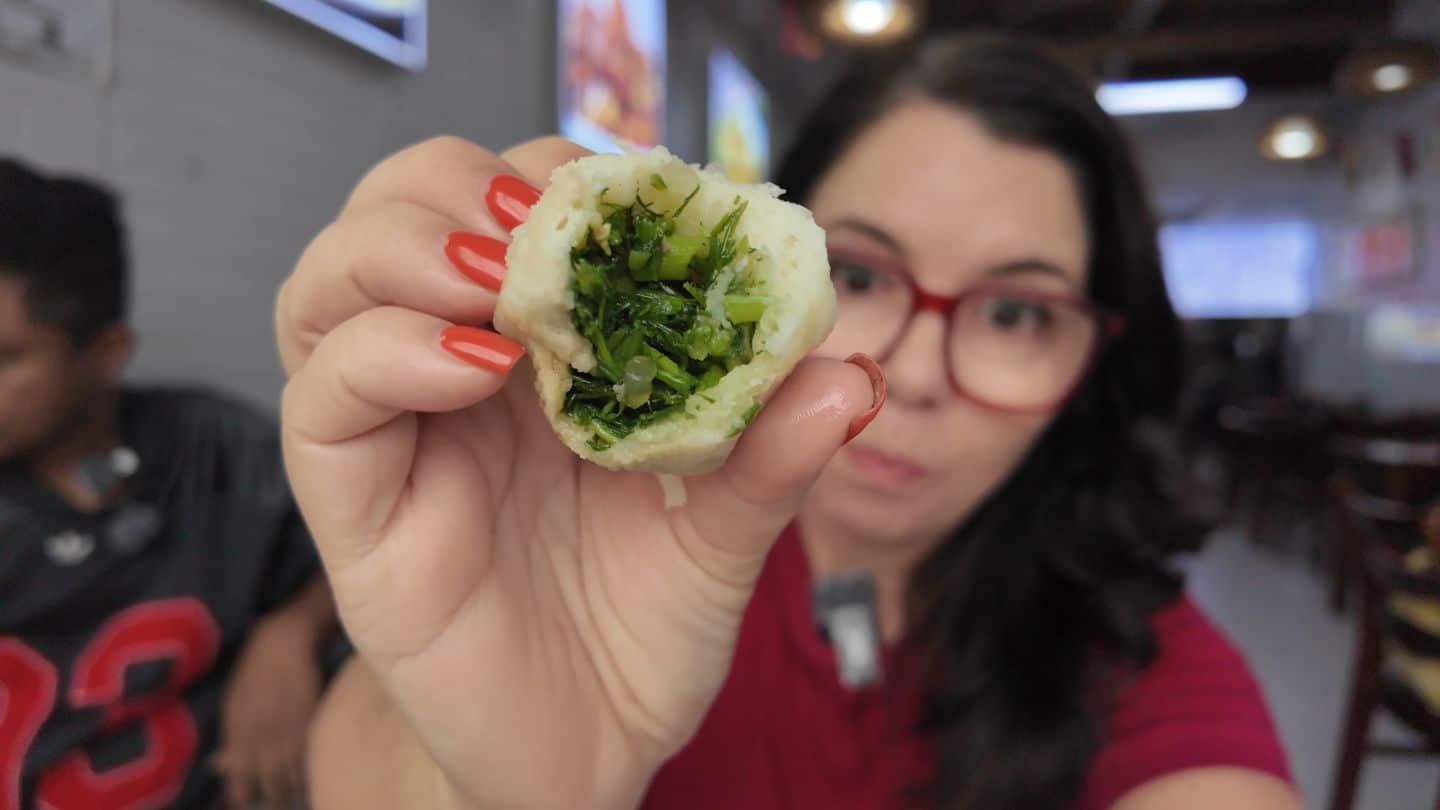
Baozi | Steamed Stuffed Buns
Baozi are fluffy yeast buns filled with meat or vegetables and cooked in stacked steamers. At our first stop I ate a vegetarian one filled with fennel, and it was light, very soft and better than I expected.
I dipped mine in a sauce of black vinegar, chili and leek, and the sauce alone was worth the stop. Classic Beijing fillings are pork and scallion, and halal shops make a firmer, more assertive beef version.
A legend credits the strategist Zhuge Liang of the Three Kingdoms period, who supposedly shaped dough around meat as a stand-in for human heads in a sacrifice to river spirits. The word baozi itself first appeared in the Song dynasty.
Qingfeng Baozi, the best known chain in the city, has been in Beijing since 1948. It became famous nationwide after Xi Jinping stopped at one for breakfast in December 2013.
Qingfeng Baozi 庆丰包子铺
57 Dengshikou Street, Dongcheng District
One of many branches, so it is an easy first stop. Order the pork and scallion bun or the vegetable san xian.
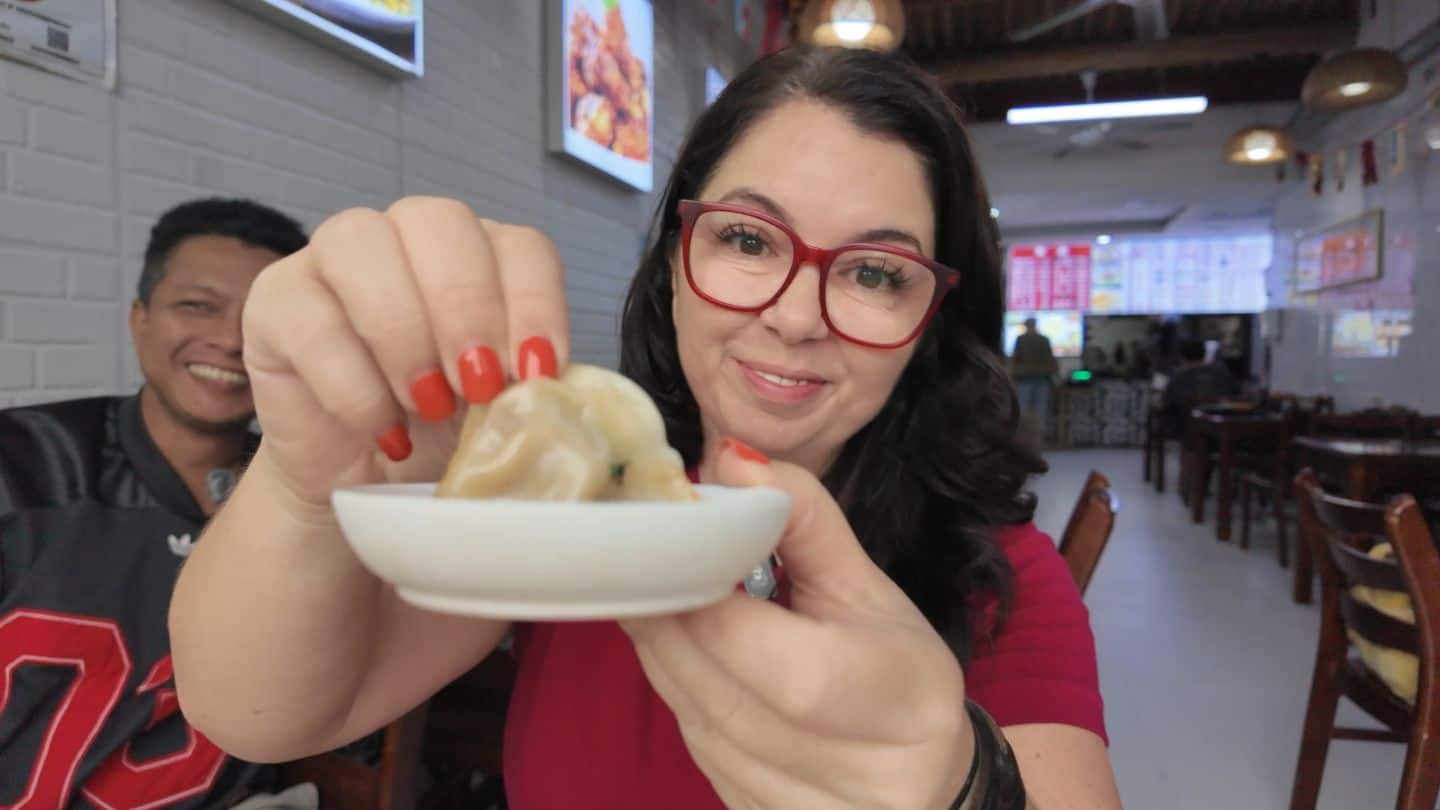
Jiaozi | Boiled Dumplings
Beijing dumplings are not delicate. The wrappers are thick and slightly chewy so they can hold a big filling of pork and cabbage, pork and chive or lamb and scallion.
The dumplings at our first stop were pork, so Alan skipped them and I ate his share. We mixed our own sauce at the table with chili oil, soy sauce, black vinegar and leek, and I love vinegar, so this suited me.
The most popular origin story credits the physician Zhang Zhongjing. During a cold winter he supposedly wrapped lamb and warming herbs in dough and fed them to villagers with frostbitten ears.
Dumplings are also a Chinese New Year symbol of family reunion.
Baoyuan Jiaozi Wu 宝源饺子屋
Building 6, Maizidian Street, Chaoyang District
Near the Workers’ Stadium and known for dumplings with wrappers colored by natural vegetable dyes.
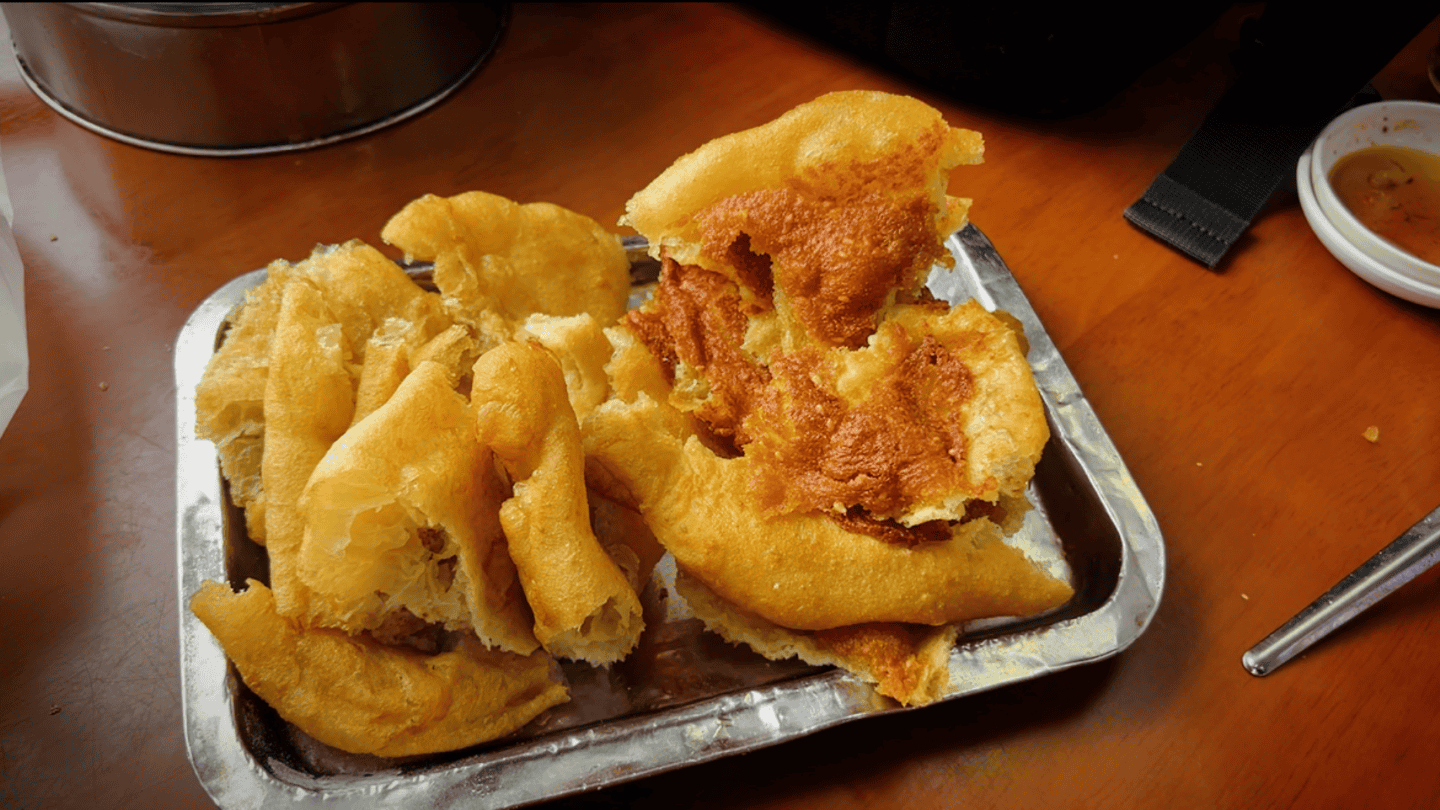
You Bing | Fried Dough Pancakes
You bing is a flat fried dough pancake you will find throughout China. It is made from a dough similar to youtiao but it is chewier, which I noticed right away when I ate the two side by side.
The shop we bought it from was next to the tofy puhas been around since 1928, and Kelly said four generations of the same family have run it. They sold on the street first and moved indoors once they got popular.
The dining room is so small that Kelly and I ordered for the group and carried the food back to eat next door. We dunked our pancakes in warm soy milk.
Zengshengkui 增盛魁
26 Dafosi East Street, Dongcheng District
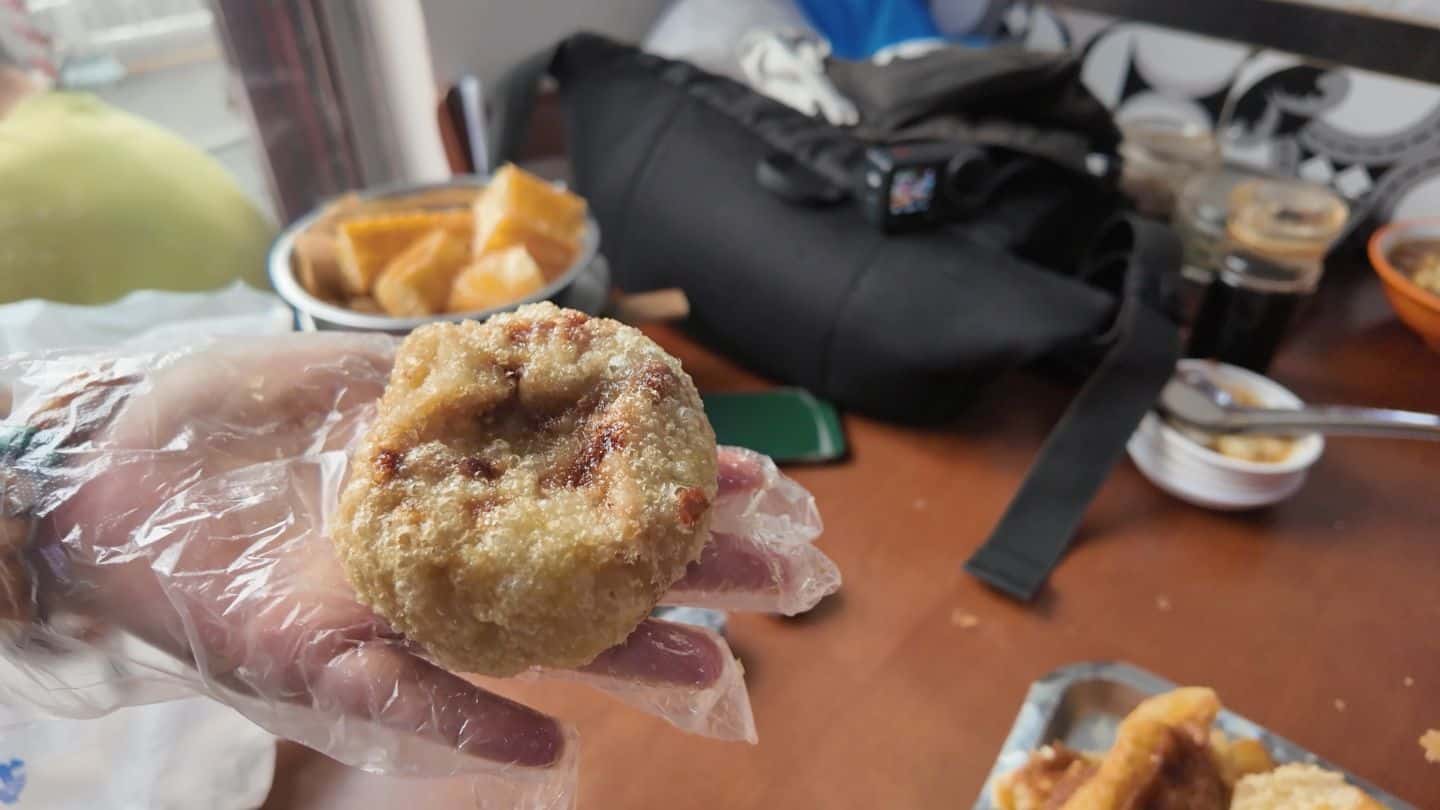
Zhagao | Fried Sticky Rice Balls
Kelly described these as another Beijing specialty. Cooks wrap red bean paste in a shell of sticky rice, steam the ball until it firms up and then fry it in hot oil.
The outside is crispy and savory, the rice is sticky, and the red bean paste inside is creamy and only a little sweet. I am usually not a fan of bean paste, but this one won me over, and I think the texture could go viral.
Zhagao come from Tianjin originally, and fans there will still tell you theirs are better.
Niu Jie Hong Ji Snack Shop 牛街洪记小吃店
12 Niu Jie, Xicheng District
A halal snack shop with a separate breakfast window open from 5:30 to 9:30 am. Arrive before 7 to avoid the line.
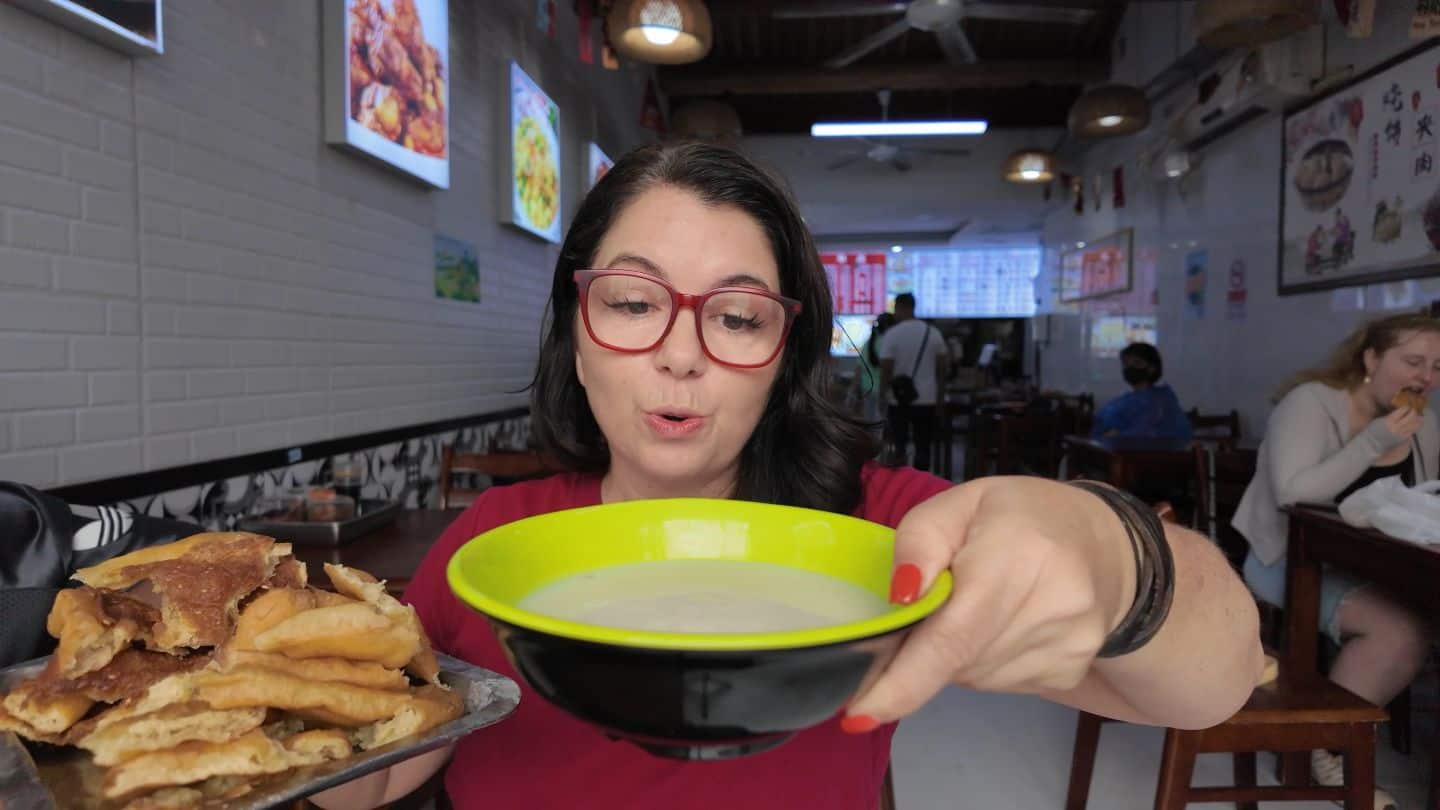
Doujiang | Fresh Soy Milk
Since coming to Asia I have really started to appreciate soy milk. Fresh doujiang tastes nothing like the boxed kind back home.
Shops make it by soaking soybeans overnight, then boiling, blending and straining them. You can order it sweet or slightly salted, and locals dunk youtiao and you bing straight into the bowl.
Ziguangyuan Halal Beijing Snack Shop 紫光园
42 Jiugulouwai Avenue
Known for fresh soy milk, and the chain has branches all over the city.
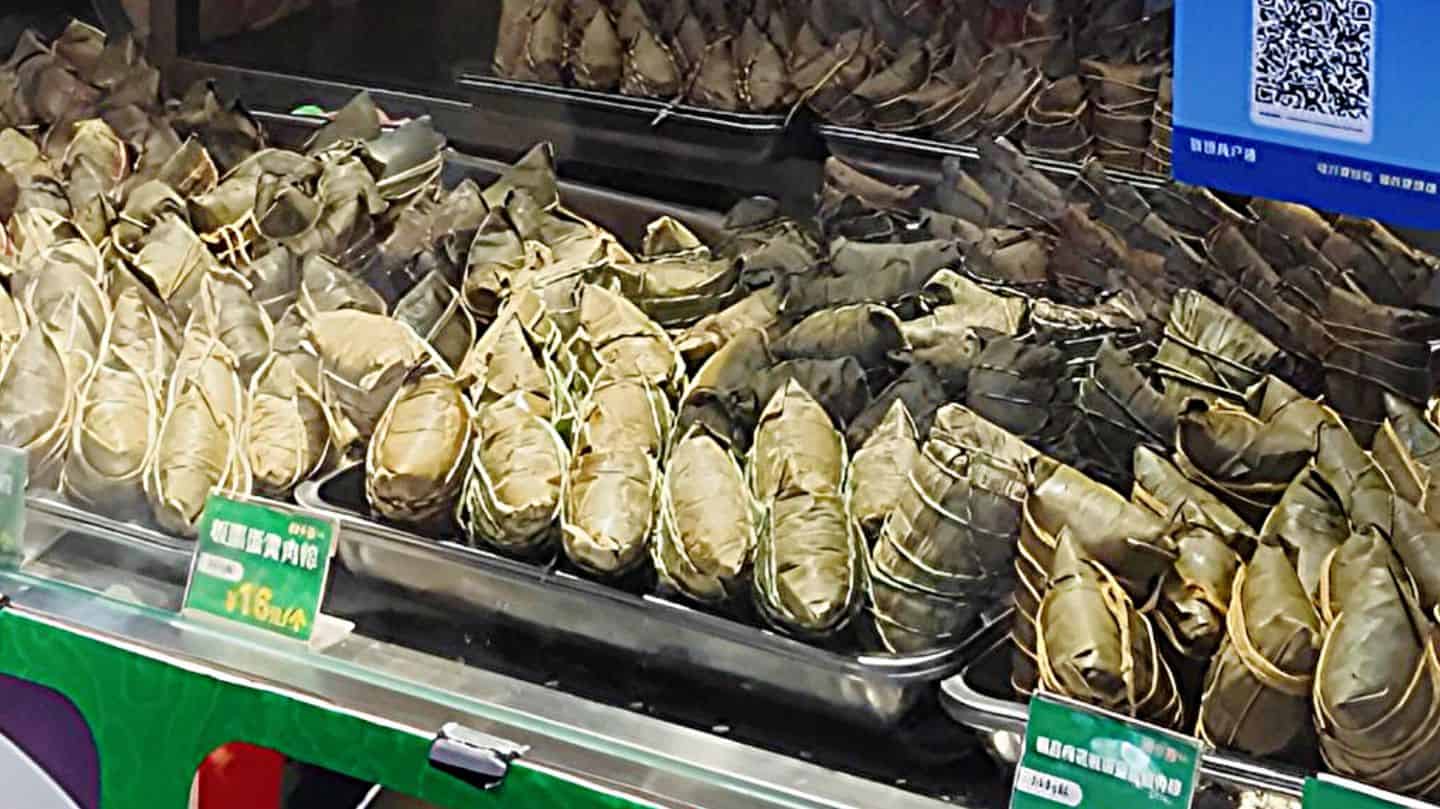
Zongzi | Sticky Rice Dumplings
I tried zongzi at a farmer’s market about a block from Tiananmen Square and the Forbidden City. Kelly told us the government wanted to move markets like this out of the city center about 25 years ago, but a man who found this abandoned space and turned it into a market for locals was allowed to keep it.
The zongzi came wrapped in bamboo leaves and tied with colored strings that show which filling is inside. We tried date and pork.
The date one was just a little sweet, and the pork one won easily. It was savory without being too salty, and the sticky rice was soft and gooey.
Zongzi are tied to the Dragon Boat Festival and the ancient poet Qu Yuan. One story says people threw rice wrapped in leaves into the river so the fish would not eat his body.
Zhaojunsheng Vegetable Market 兆军盛菜市场
25 Dafosi East Street, Dongcheng District
Ask for the pork zongzi.
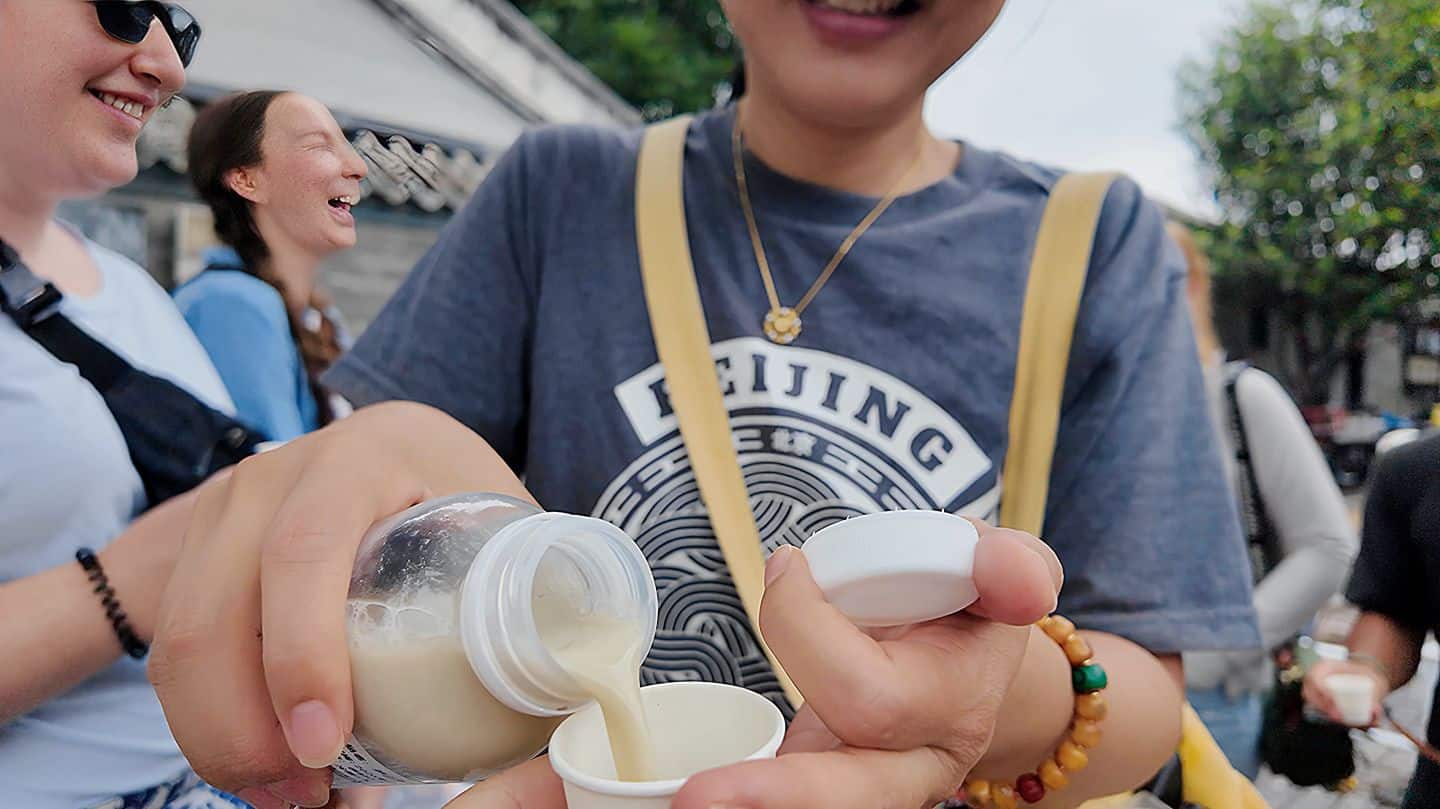
Douzhi | Fermented Mung Bean Drink
This is the Beijing food challenge, and Kelly warned us before we tried it. The smell is like putting the grass from your front lawn into a blender, and the taste is sour and very grassy.
Some people in our group said they would never buy it. I actually liked it.
Douzhi is fermented with wild yeast from the leftovers of making mung bean noodles. Kelly said it counts as a cold food, and since Chinese food thinking is all about balancing hot and cold, many seniors drink it every day for their gut health.
Young people mostly avoid it, so the city is trying to make it trendy with douzhi coffee and ice cream. For now it survives mostly as a food challenge.
It dates back more than 300 years, and the Qing court drank it to cut through rich, greasy meals. The city lists it as intangible cultural heritage, and it traditionally comes with jiaoquan, crisp fried dough rings, and salty pickles.
The old test for whether you are a real Beijinger is whether you finish the bowl.
Yin San Douzhi 尹三豆汁
No. 176, Dongxiaoshi Street, Dongcheng District
Ai Wo Wo | Sweet Rice Balls
Ai wo wo are soft, chewy balls of steamed sticky rice dusted with white flour and often topped with a piece of red hawthorn cake. The filling is sweet and varies from sesame and sugar to jujube paste, walnuts or pea flour.
They are a Hui Muslim snack. One story says a Hui chef made them for the Fragrant Concubine of the Qianlong Emperor, who loved them so much that the emperor ordered them made every day, and other accounts trace them to the Ming or Yuan dynasty.
Huguosi Snack Bar 护国寺小吃
93 Huguosi Street, Xicheng District
Jianbing | Savory Breakfast Crepes
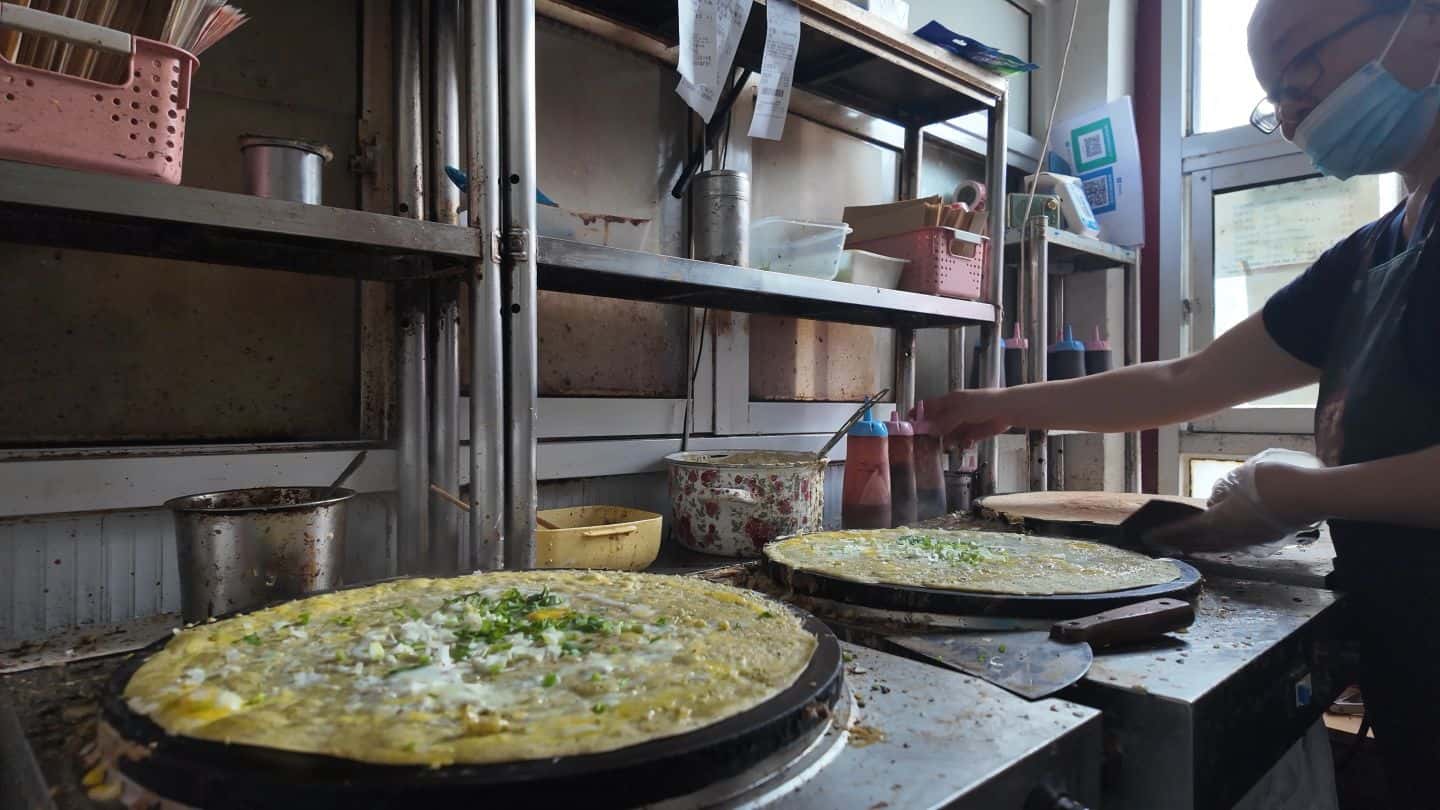
Our jianbing stop was a woman who has been making pancakes for 25 years. Kelly told us Beijing stopped allowing street food for sanitary reasons a while back, and she has kept going anyway.
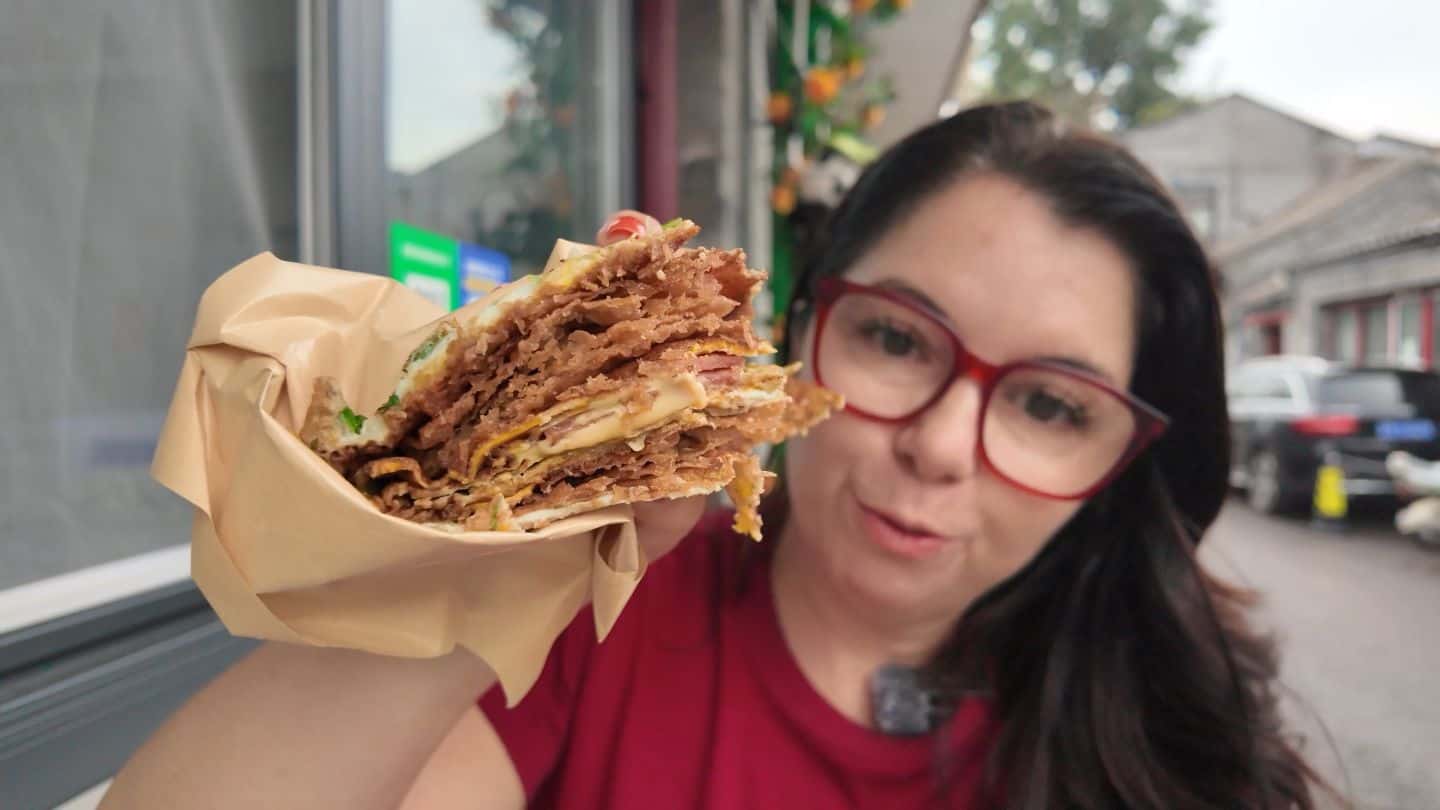
She is known for unusual fillings, so I ordered cheese and bacon while Alan got cheese. The crepe was very thin and layered, with crispy bits and soft bits, and I could taste green onion inside.
Jianbing is really a Tianjin dish, and people there are protective of it. The filled version was first documented in Tianjin in 1933 and grew out of an older jianbing from Shandong.
One Tianjin native told The World of Chinese she never eats jianbing in Beijing because it would break her heart. In Beijing the usual center is a crisp cracker called baocui rather than youtiao.
Dahua Jianbing 大华煎饼
Youhui Wanjia Supermarket, Bei Jianzi Lane 23 to 25, Dongcheng District
The counter is inside a supermarket near Jiaodaokou. The cracker is made fresh each morning, you can add bacon, cheese or a second egg, and it sells out early.
Guo Tie | Pan-Fried Dumplings
Guo tie are dumplings cooked in a shallow pan, so the bottoms turn golden and crisp while the tops steam soft under a lid. They are usually filled with pork or green vegetables and eaten hot, straight off the stove.
They belong to the same family as jiaozi. Boiled ones are shuijiao, steamed ones are zhengjiao and pan-fried ones are jianjiao or guotie.
A well-made batch has a thin, crisp lattice of starch left behind as the water evaporates from the pan.
Country Kitchen at Rosewood Beijing (北京瑰丽酒店)
3/F, Rosewood Beijing, Jing Guang Center, Chaoyang District
A hotel restaurant, so it costs more than a street stall, but The Beijinger’s dumpling guide singles out its potstickers.