
New York City may be famous for pizza, bagels and cheesecake, but some of its most interesting food comes from the immigrant communities that shaped its neighborhoods.
You can eat traditional Jewish deli food on the Lower East Side, visit a century-old Chinese tea parlor in Chinatown and try Nepali dumplings in Queens, all in one weekend.
And while New York has plenty of expensive restaurants, you can still find affordable meals at family-owned bakeries, neighborhood markets and small restaurants that have been feeding locals for decades.
With only three days, it makes sense to explore a few neighborhoods instead of spending half your trip on the subway.
This long weekend itinerary covers some of New York’s best-known food institutions alongside the communities and traditions that make the city such an interesting place to eat.
Where to Stay in New York City
For a food-focused weekend, Lower Manhattan is a convenient base. You’ll be close to the Lower East Side, Chinatown and East Village restaurants, with subway connections to Brooklyn and Queens.
Budget: Pod 39
Pod 39 is a practical choice if you’d rather spend your money on restaurants than a large hotel room.
Located in Murray Hill near Grand Central Terminal, it has compact rooms and good subway connections. Some rooms have bunk beds, making it an option for friends traveling together.
The location is especially convenient for exploring Queens using the 7 train. You’ll need the subway to reach most of the food stops in Lower Manhattan.
Mid-range: The Ludlow Hotel
The Ludlow Hotel sits on Ludlow Street in the Lower East Side, only a short walk from Katz’s Delicatessen and several other historic food businesses.
Its location makes it particularly appealing for this itinerary. Chinatown, Little Italy and the East Village are all within walking distance.
The rooms have a more individual style than a typical chain hotel, and the surrounding streets are full of independent restaurants and bars.
Luxury: The Bowery Hotel
The Bowery Hotel is near the East Village, NoHo and Lower East Side.
The hotel has an old-fashioned residential feel, with wood-paneled interiors, antique furnishings and rooms with large windows overlooking the city.
New York City Weekend Itinerary
New York has three major airports: John F. Kennedy International Airport (JFK), LaGuardia (LGA) and Newark Liberty International Airport (EWR).
JFK is in Queens, about 16 miles (26 kilometers) from Midtown Manhattan. Depending on traffic and where you’re staying, getting into the city can take an hour or more.
There are several ways to reach Manhattan.
AirTrain and subway: This is one of the least expensive options. The AirTrain connects JFK terminals with the subway at Jamaica and Howard Beach. From there, you can continue into Manhattan or other parts of the city. The AirTrain currently costs $8.75 and the subway is $3, making the combined trip $11.75 per person.
Yellow taxi: Official New York City taxis charge a $70 flat fare between JFK and Manhattan. You’ll also pay applicable surcharges, tolls and a tip. Follow the signs to the official taxi stand rather than accepting rides from drivers approaching travelers inside the terminal.
Private airport transfer: If you’re arriving late, traveling with several people or carrying heavy luggage, you can arrange one of the JFK transfers before your flight. This allows you to organize transportation in advance and head directly to your accommodation.
For anyone staying near Grand Central Terminal or Penn Station, the Long Island Rail Road from Jamaica is another option worth considering. It can be faster than the subway, although tickets cost more.
Day 1: Lower East Side and Chinatown
The Lower East Side is one of the best neighborhoods in New York to understand how immigration has influenced American food.
During the late 19th and early 20th centuries, it was one of the most densely populated immigrant neighborhoods in the world. Jewish families from Eastern Europe lived alongside German, Italian and other immigrant communities.
Many residents worked long hours in factories or small businesses, often living in crowded tenement apartments. Food shops, bakeries and delicatessens became important gathering places.
While much of the neighborhood has changed, several businesses have survived for more than a century.
Breakfast at Russ & Daughters
Start at Russ & Daughters, one of New York’s most famous Jewish appetizing shops.
The business began in 1907 when Joel Russ, a Jewish immigrant from what is now Poland, sold herring from a barrel. He eventually opened a permanent store in 1914.
In 1935, he made his three daughters full partners and named the business Russ & Daughters. At a time when most businesses were named after sons, that was an unusual decision.
More than a century later, the family business is still known for smoked fish, herring, caviar and traditional Jewish foods.
The classic order is a bagel with cream cheese, smoked salmon, tomato and onion.
If you’re interested in the traditional food culture, take a look at the herring and whitefish selections too. These were important foods for Eastern European Jewish immigrants long before smoked salmon bagels became a New York breakfast staple.
Try a Traditional Knish at Yonah Schimmel
Just a short walk away, Yonah Schimmel’s Knish Bakery has been selling knishes on East Houston Street since 1910.
A knish is a traditional Eastern European Jewish pastry made with dough wrapped around a savory filling.
Potato is the classic choice, although you’ll also find versions filled with kasha, a roasted buckwheat dish commonly eaten in Eastern Europe.
The bakery has remained in the family for generations and is one of the few surviving businesses from the neighborhood’s historic Jewish food community.
Knishes are filling, so sharing one is a good idea if you’re planning several more stops.
Lunch at Katz’s Delicatessen
A few blocks away is Katz’s Delicatessen, which traces its history to 1888.
Its famous pastrami sandwich is one of the most recognizable foods in New York City.
Pastrami is traditionally made from beef that has been cured, seasoned with spices, smoked and steamed until tender. At Katz’s, the meat is hand-carved and served generously between slices of rye bread.
Order the pastrami on rye with mustard and a pickle.
The restaurant has become a major tourist attraction, but its history is tied to the Jewish immigrant community that once dominated the surrounding streets.
It’s worth watching the people behind the counter slice the meat. The cutters are an important part of the deli experience, and the portions are large enough to share.
Discover Chinatown’s Food History
From Katz’s, continue south into Manhattan’s Chinatown.
Chinese immigrants began settling in this area during the 19th century, often facing discrimination and restrictions on where they could work and live.
Restaurants, grocery stores and family associations became central to the community.
Today, Chinatown remains an important residential and commercial neighborhood, although rising rents and development have threatened many longtime businesses.
One of its best-known institutions is Nom Wah Tea Parlor, which opened in 1920 on Doyers Street.
Originally a bakery and tea parlor, Nom Wah became known for dim sum, small dishes traditionally eaten with tea in Cantonese culture.
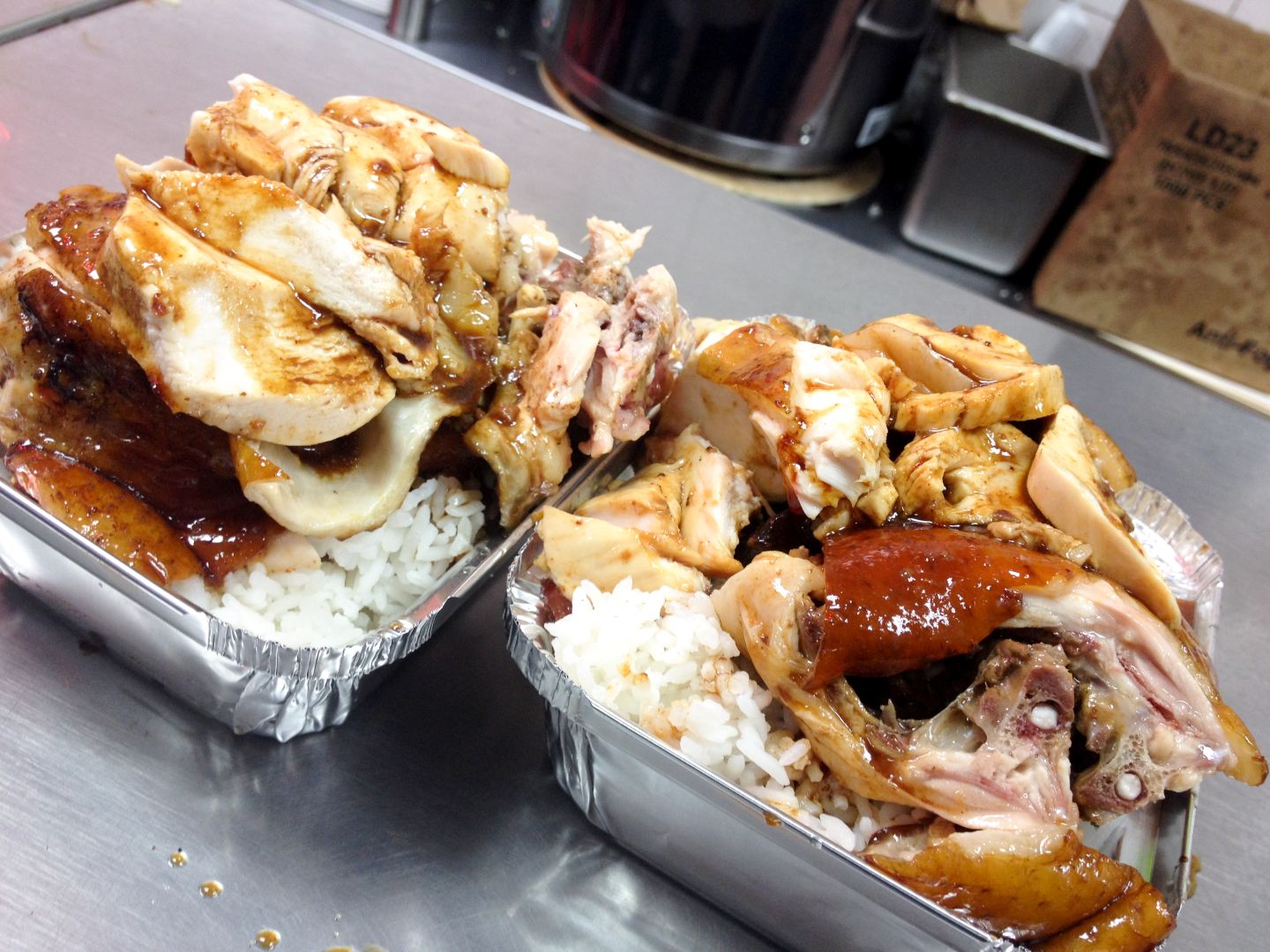
Order shrimp dumplings, pork siu mai and steamed roast pork buns. The restaurant also serves rice noodle rolls, one of my favorite dim sum dishes.
For something less formal, wander through the streets around Mott, Bayard and Grand.
Look for Chinese bakeries selling egg tarts, pineapple buns and sesame balls. Despite the name, pineapple buns don’t usually contain pineapple. They get their name from the cracked topping that resembles the fruit.
Chinese barbecue shops are another Chinatown tradition. You’ll recognize them by the roast ducks and glazed pork hanging in the windows.
Finish with a Classic New York Pizza Slice
After spending the day eating, you may only have room for a slice of pizza.
New York pizza developed from Italian immigrant food traditions in the early 20th century. Its signature style has a large, thin crust that is firm enough to fold, with tomato sauce and melted mozzarella.
For a classic slice, head west toward Greenwich Village and visit Joe’s Pizza on Carmine Street.
Joe’s opened in 1975 and has become known for traditional New York-style pizza.
Order a plain cheese slice. There’s something satisfying about pizza that doesn’t need a long list of toppings.
Day 2: Brooklyn’s Pizza, Markets and Food History
Brooklyn has one of the most interesting food histories in New York.
For generations, it was home to large communities of Italian, Jewish, German, Irish and Eastern European immigrants. Their food businesses helped shape the borough’s identity.
Today, Brooklyn has everything from old-school bakeries and neighborhood pizzerias to independent restaurants serving food from around the world.
Morning in DUMBO
Start by walking across the Brooklyn Bridge from Manhattan.
The bridge opened in 1883, connecting Manhattan and Brooklyn long before they became part of the same city.
You’ll arrive near DUMBO, which stands for Down Under the Manhattan Bridge Overpass.
Once an industrial district filled with warehouses and manufacturing businesses, DUMBO has become one of Brooklyn’s most expensive neighborhoods.
It’s a pleasant place for an early walk along the waterfront, especially before the streets fill with visitors taking photos of the Manhattan Bridge.
For lunch, consider Juliana’s Pizza, near the Brooklyn Bridge.
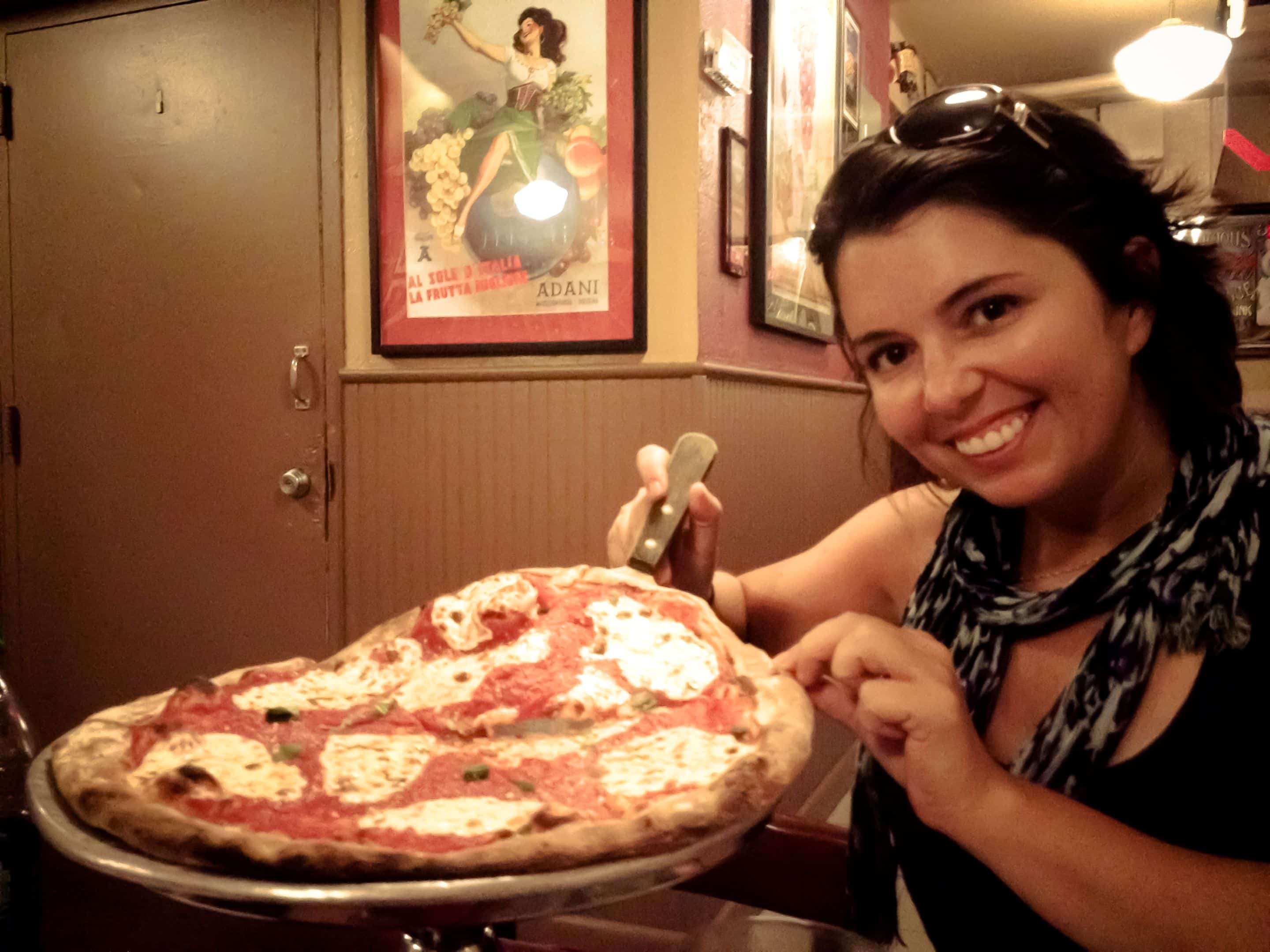
Juliana’s was opened by Patsy Grimaldi, a well-known figure in Brooklyn’s pizza history. Its coal-fired pizzas have thin crusts with a slightly charred edge.
This is a sit-down pizzeria, so expect to order a whole pie rather than individual slices.
Explore Williamsburg’s Food Scene
Williamsburg has undergone dramatic changes over the last few decades.
Long before it became known for expensive apartments and fashionable restaurants, the neighborhood had strong German, Italian, Jewish and Puerto Rican communities.
One of the most famous surviving restaurants is Peter Luger Steak House, established in 1887 when Williamsburg was a predominantly German neighborhood.
The restaurant is known for dry-aged porterhouse steak served with traditional sides such as creamed spinach and German fried potatoes.
It’s expensive and worth reserving in advance if you want to experience this piece of Brooklyn restaurant history.
Peter Luger also has an unusual payment policy. It accepts cash, US debit cards, checks with identification and its own restaurant card, but doesn’t accept regular credit cards for dining.
Eat Your Way Through Smorgasburg
For a more casual meal, visit Smorgasburg.
This large open-air food market began in Brooklyn in 2011 and has become a popular place for independent food vendors to introduce new dishes and businesses.
You’ll find a changing mix of cuisines, reflecting the city’s food scene.
Some vendors serve traditional dishes from their family backgrounds, while others experiment with combinations you might never see in a conventional restaurant.
During the 2026 season, the Williamsburg market operates on Saturdays at Marsha P. Johnson State Park, along the East River.
There’s also a Sunday location at Prospect Park’s Breeze Hill. The market is seasonal, so check its website before visiting.
The best way to experience Smorgasburg is to go with someone else and share a few dishes.
Brooklyn Pizza for Dinner
There’s an ongoing argument about which New York borough makes the best pizza, and Brooklyn has plenty of contenders.
One of the most talked-about modern pizzerias is L’Industrie in Williamsburg, known for its thin slices and carefully made dough.
For a more traditional sit-down pizza experience, you can also return to Juliana’s in DUMBO if you skipped it earlier.
Brooklyn pizza culture grew from the same Italian immigration that shaped Manhattan’s early pizzerias. Different neighborhoods developed their own favorite shops, with recipes passed down through generations.
The biggest mistake is trying to visit every famous pizzeria in one afternoon. Choose one or two, order a plain slice or classic pie and enjoy it while it’s hot.
Day 3: Queens, New York’s Most Interesting Borough for Food
If you’re interested in traditional food from around the world, Queens deserves more attention than it usually gets.
The borough is home to immigrant communities from Asia, Latin America, Europe and Africa. Many restaurants cater primarily to people who grew up eating these dishes.
You’ll find regional Chinese food in Flushing, Himalayan cooking in Jackson Heights and longstanding Greek restaurants in Astoria.
All three are worth visiting, although eating properly in every neighborhood would be ambitious for one day. Choose two based on your interests, or concentrate on one and explore it at a slower pace.
Flushing: Regional Chinese Food
Flushing is home to one of New York’s largest Chinese communities.
Unlike Manhattan’s historic Chinatown, which developed around predominantly Cantonese immigration, Flushing has a broader mix of regional Chinese restaurants and businesses.
You’ll find food from Sichuan, Shanghai, Taiwan, northeastern China and other regions.
Take the 7 train to Main Street and walk around Roosevelt Avenue. The streets are filled with supermarkets, bakeries, noodle shops and restaurants.
One of the easiest places to try several regional dishes is New World Mall, which has a large basement food court.
Vendors serve everything from hand-pulled noodles and dumplings to Uyghur lamb dishes and Taiwanese snacks.
Try Lanzhou-style hand-pulled noodles, usually served in a beef broth with sliced meat, herbs and chili oil.
For something different, look for Uyghur food. Uyghur cuisine comes from the Xinjiang region of northwest China and includes hand-pulled noodles, lamb kebabs and rice dishes influenced by Central Asian food traditions.
Flushing is also excellent for Chinese bakeries. If you still have room, try an egg tart or a sweet bun before leaving.
Jackson Heights: Himalayan and Latin American Food
Jackson Heights is one of New York’s great immigrant food neighborhoods.
Walking along Roosevelt Avenue and 37th Avenue, you’ll see restaurants and businesses representing communities from Nepal, Tibet, Bangladesh, India, Colombia, Ecuador and Mexico.
The neighborhood’s food reflects generations of immigration, with many small businesses serving dishes familiar to people from their home countries.
One of the most interesting foods to try here is momo, a filled dumpling eaten in Nepal and Tibet.
Visit Nepali Bhanchha Ghar, an independent restaurant opened by Nepali immigrant Yamuna Shrestha in 2015.
Its name means “home kitchen,” and the menu includes traditional Nepali dishes.
The restaurant has won the neighborhood’s Momo Crawl competition several times.
Order jhol momo, dumplings served in a seasoned broth. If you’ve only eaten Chinese-style dumplings, it’s interesting to see how Himalayan communities prepare their own versions.
The restaurant also serves sel roti, a ring-shaped Nepali rice bread traditionally eaten during festivals and family celebrations.
For Mexican food, try Birria-Landia, a food truck founded by two brothers from Puebla, Mexico.
They specialize in Tijuana-style beef birria, with slow-cooked meat served in tacos and accompanied by a rich consommé for dipping.
Jackson Heights is also an excellent neighborhood for Colombian bakeries, Indian sweets and South Asian grocery stores.
Leave time to walk around and see what people are buying. The neighborhood’s food shops tell as much of its story as the restaurants.
Astoria: Greek Food and Generations of Immigration
Astoria is particularly known for its Greek community, which grew significantly during the 20th century.
Greek restaurants, pastry shops, coffeehouses and Orthodox churches remain an important part of the neighborhood.
Although Astoria has become increasingly diverse, it’s still one of the best places in New York for traditional Greek food.
For a proper meal, visit Taverna Kyclades on Ditmars Boulevard.
This neighborhood favorite specializes in seafood and classic Greek dishes.
Start with tzatziki, taramosalata or skordalia, a garlicky potato-based dip. For a main course, try grilled whole fish or octopus.
Greek seafood restaurants often keep the preparation simple, using olive oil, lemon and herbs to let the fish stand on its own.
If you’re visiting with other people, order several dishes to share.
Afterward, explore the Greek bakeries around Ditmars Boulevard for baklava, galaktoboureko or other traditional pastries.
Galaktoboureko is particularly worth trying if you’ve never had it. It’s a custard dessert baked between layers of phyllo pastry and finished with syrup.
Astoria is a good place to finish a food-focused weekend with a long lunch.
Practical Tips for Eating Your Way Through New York
Use the Subway to Explore Different Neighborhoods
New York’s subway is one of the easiest ways to travel between boroughs.
You can pay with a contactless debit card, credit card or smartphone using the OMNY system. There’s no need to buy a separate transit card if your payment method is compatible.
Use the same card or device for each journey to take advantage of the MTA’s fare-capping system.
For Queens, the 7 train is particularly useful. It connects Manhattan with Jackson Heights and Flushing.
Understand Tipping and Restaurant Prices
In New York, tipping 18 to 20 percent is common at sit-down restaurants with table service.
Counter-service businesses may also display suggested tips on their payment terminals, although tipping is generally optional.
Remember that restaurant menu prices usually don’t include sales tax. In New York City, the combined sales tax is 8.875 percent on most taxable purchases, including restaurant meals.
The final bill can be considerably higher than the menu price once tax and a tip are included.
Carry Some Cash
Most restaurants accept cards, but having cash is useful for smaller food businesses, street vendors and bakeries.
Some longstanding restaurants also have their own payment rules.
Peter Luger, for example, doesn’t accept regular credit cards for dining.
Don’t Plan Every Meal
Some of New York’s most memorable foods are inexpensive things you find while walking.
A freshly baked Chinese bun, a slice of pizza or a small bag of roasted nuts from a street cart can be just as satisfying as a restaurant meal.
When exploring food neighborhoods, pay attention to what local residents are ordering. Grocery stores, bakeries and takeaway counters can be especially interesting places to learn about everyday food traditions.
For popular sit-down restaurants, make reservations when possible. But leave room between meals so you can explore the neighborhoods without constantly checking the time.
Give Yourself Enough Time to Reach the Airport
JFK is in Queens, but that doesn’t mean every Queens neighborhood is close to the airport.
Flushing and Astoria are in northern Queens, while JFK is in the southeastern part of the borough.
If you’re spending your final day exploring Queens, allow enough time to collect your luggage and reach the airport.
For a predictable public-transit route, the AirTrain connects JFK with Jamaica and Howard Beach. A taxi or private transfer may be easier with luggage, although road traffic can add considerable time to the journey.