Get out of the tourist areas with generic seafood dishes and discover the traditional Cartagena food locals really eat in everyday restaurants.
I have a love – hate relationship with Cartagena. It’s a beautiful city with a lot of history but also so many scams.
I find that tourists either love the walled city and its colorful streets that make postcard perfect Instagram photos or they have some kind of scam story.
The thing is Cartagena isn’t just the walled city, it’s not just Getsemani. There is so much more to Cartagena outside the tourist core.
I’ve visited 4 times and each time I learn so much. Traditional Colombian food is so diverse. It really changes from city to city. Food in Cartagena shares a story of the Spanish invasion that displaced the Indigenous and African slavery.
It is fascinating! But most people miss it.
So before you rush to the list of the food I urge you to understand WHY it tastes this way.
Because food in Cartagena is different from neighboring Santa Marta food and farther along in Riohacha. These cities have different histories, geography and so the food is different.
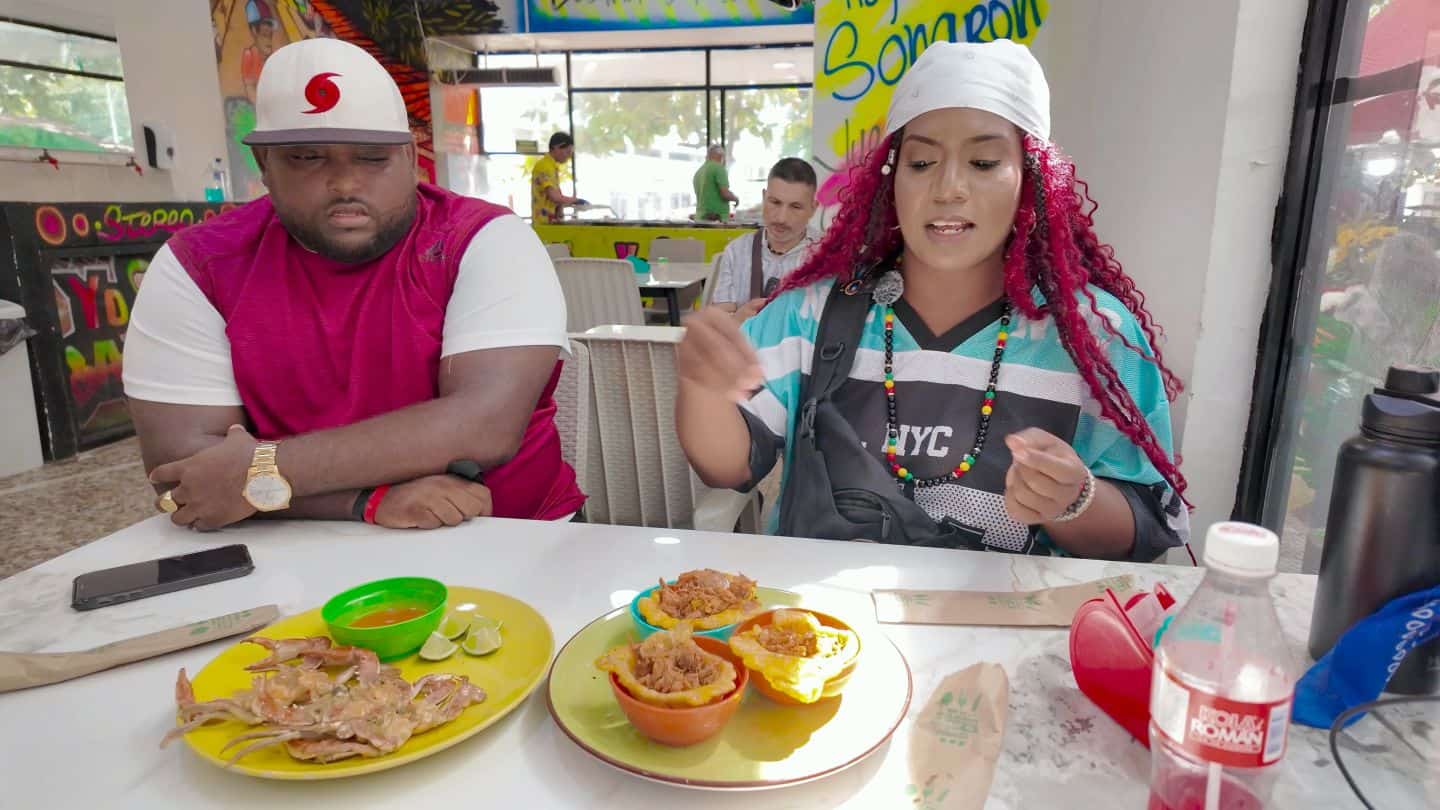
Cartagena Food Influence
I owe so much of what I know by taking multiple tours with Cartagena Cheap and Safe it’s a tour company dedicated to sharing the local side of the city.
And the creator Deimer and his partner Carmen, also uses it to fund numerous community programs to teach kids leadership through sport.And he knows all the local spots to eat the best food in Cartagena.
Obviously being on the coast you’re going to have amazing seafood from lobster to crabs cooked in coconut and spices. It’s not just fresh fish but how it is cooked.
The deeper flavors come from West African cooking brought over centuries ago. You’ll taste that influence in how people use coconut, in the way they prepare organ meats and offal and in dishes that stretch ingredients far and make them delicious.
Indigenous peoples (before being mostly displaced) were based in agriculture and shaped what grew here. Then came the Spanish invaders adding their own techniques and ingredients.
Is Colombia Safe?
Today traditional cooking still relies on staples like corn, cassava, plantains, rice and fresh seafood from the Caribbean. Coconut flavors almost everything, giving even savory dishes a sweetness. Local cheese and cream add richness.
You’ll also see a lot of fritos or fried food, which is the Afro-Colombian influence. There are fried food stalls all over, including the walled city, as locals love fried food so much there’s even an annual festival.
It’s cheap, delicious food on the go that many tourists just walk by without knowing what they are missing.
Watch on YouTube: Cartagena Street Food
Best Food in Cartagena
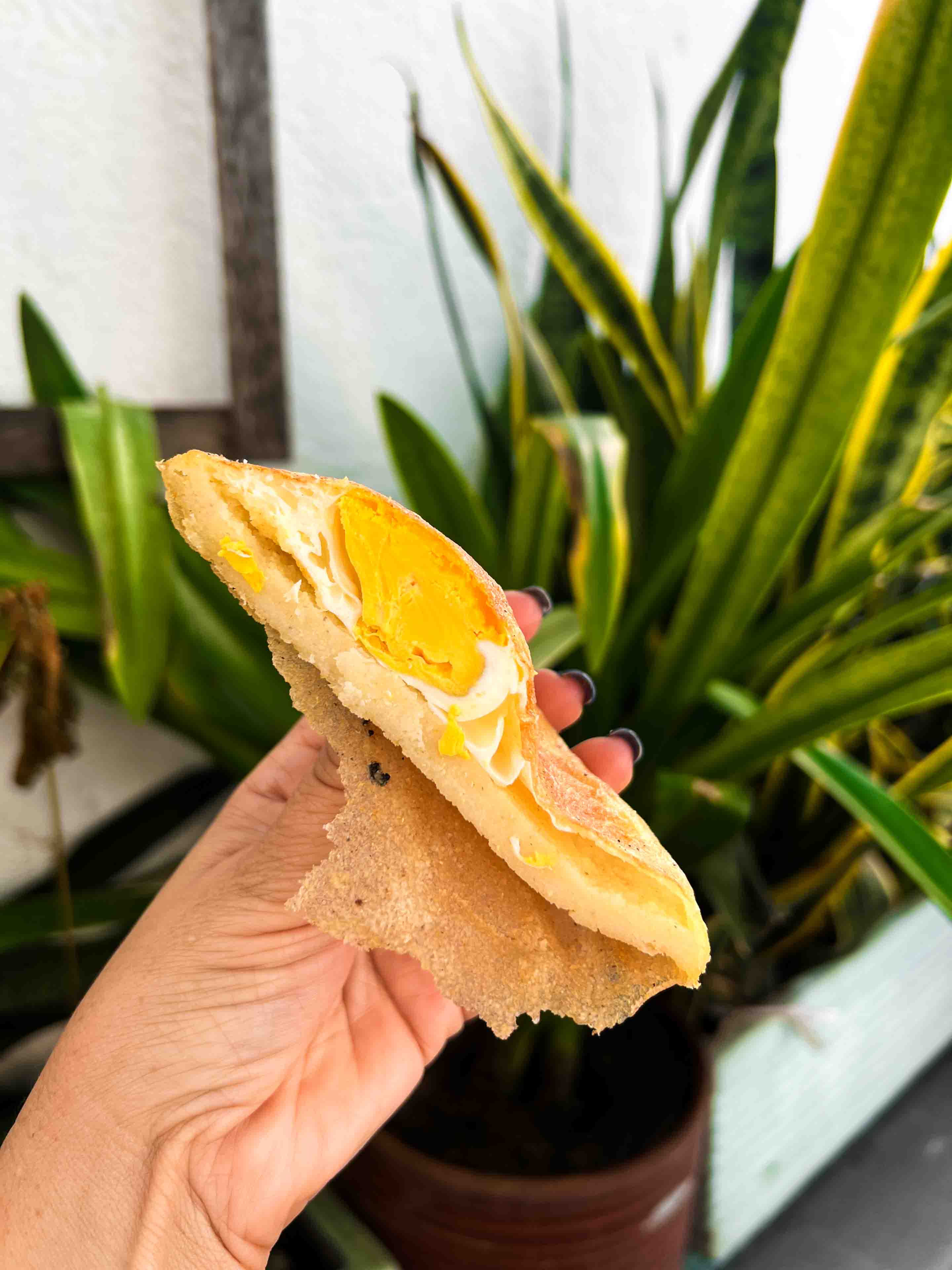
Arepa de Huevo | Deep-Fried Corn Cake with Egg
Arepa de huevo looks like a magic trick. How did they get the egg inside?
Cooking twice. The corn dough gets shaped and fried once to seal the outside, then a whole egg goes in through a small opening before it hits the hot oil a second time.
When it fries, the white sets and the yolk stays runny. The magic is when you bite into it and the egg yolk spills out, mixing with the corn.
Where to Eat Arepa de Huevo:
Donde Olano
Carrera 3 #33-81, Centro
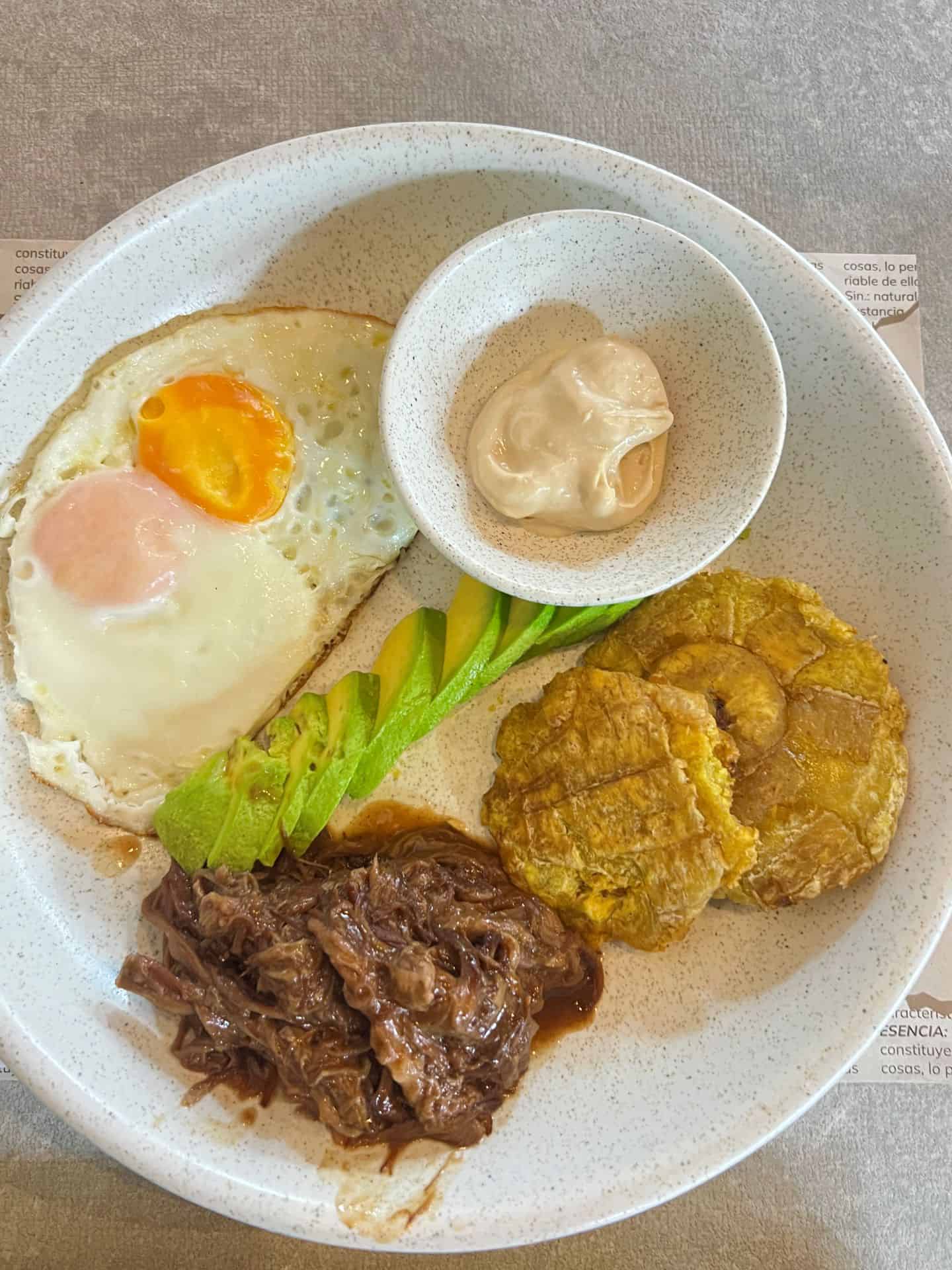
Posta Negra Cartagenera | Slow-Braised Beef
If you thought the Cuban food ropa vieja needed some sweetness this is for you.
Posta negra takes tough cuts of beef and lets them cook down slowly until they fall apart. The sauce is dark, built from spices and unrefined cane sugar.
But some cooks also use Coca Cola and beer to give it a secret punch.
Where to Eat Posta Negra Cartagenera:
La Cocina de Pepina
Calle Larga #9a-06, Getsemání
Is Colombia Safe?
Empanadas Cartageneras | Corn Empanadas with Beef
Cartagena empanadas have a thicker corn shell that fries up crispy and chewy, very different from the thin-skinned versions common in other parts of Colombia.
Inside is seasoned beef that’s been cooked down until it’s almost a paste, rich and savory. The thick corn shell is the point.
Where to Eat Empanadas Cartageneras:
Puesto de Cecilia
Inside Bazurto Market, food hall section
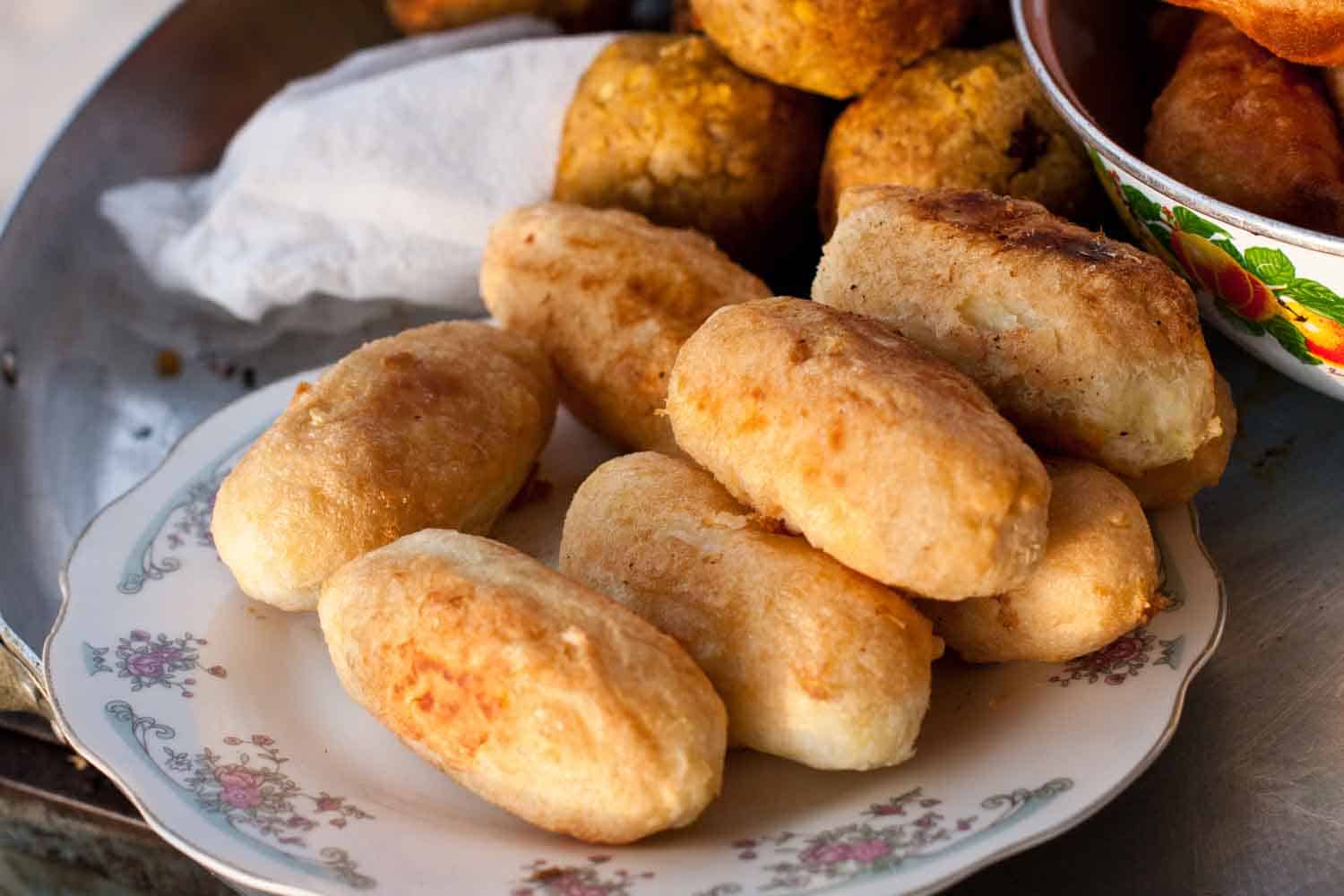
Carimañola | Fried Cassava Dough
Carimañola is fried cassava dough wrapped around a meat filling. Cassava gives it an earthy flavor and a denser texture than corn-based fritos, and the outside fries up golden and slightly chewy.
People eat these as a quick lunch or a snack. They’re cheap, filling and absolutely satisfying. Yuca is one of my favourite things to eat in South America and I love this dish.
Where to Eat Carimañola:
Quero Arepa
Calle Quero #37-130, San Diego
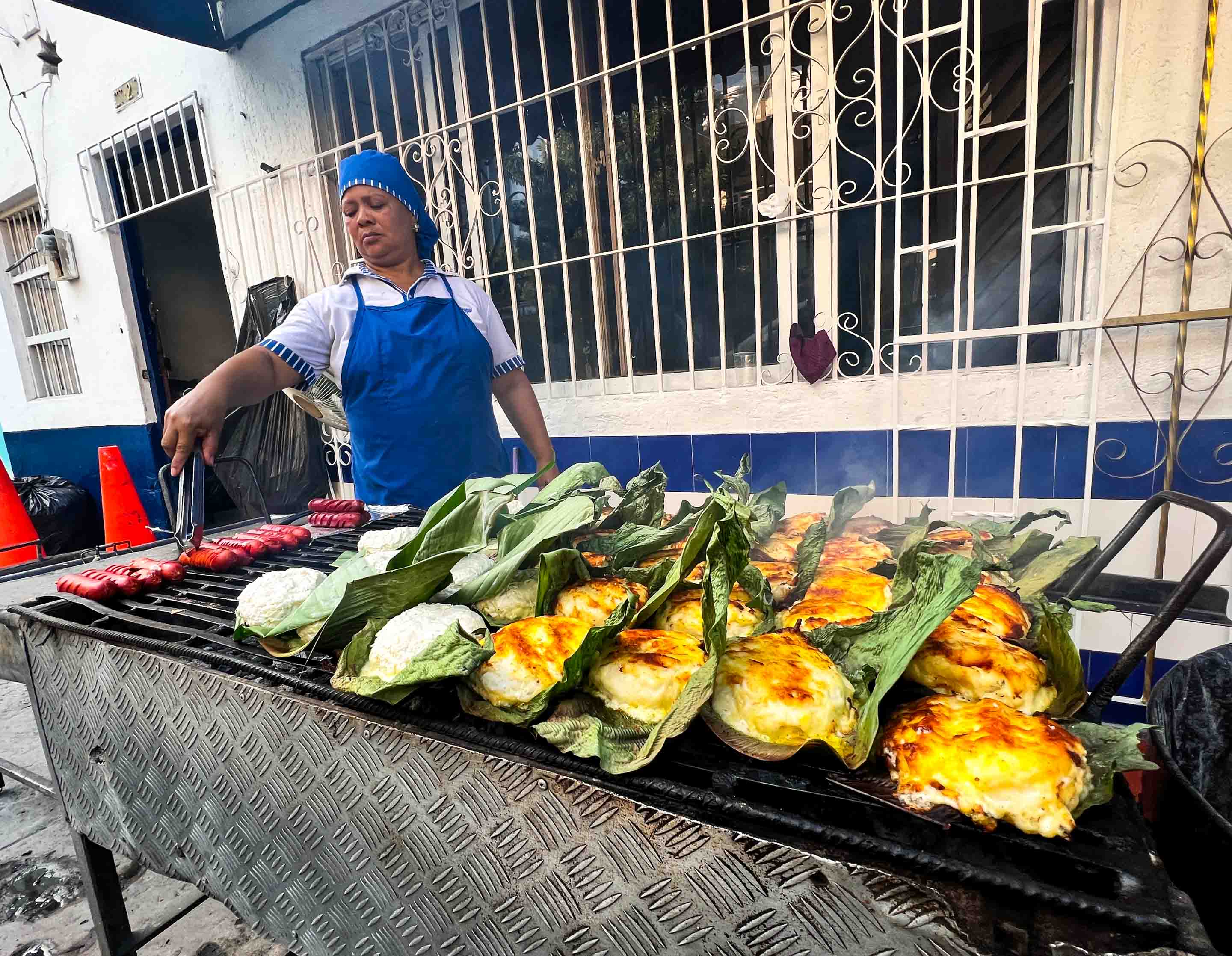
Arepa de Queso Costeña | Corn Cake with Salty Cheese
An arepa de queso costeña is a warm corn cake with local salty cheese cooked right into it. Sometimes it’s fried instead of griddled depending on where you go.
The cheese melts into the corn, giving you pockets of salt and richness in every bite.
Where to Eat Arepa de Queso Costeña:
La Esquina del Pandebono
Calle San Agustín #35-78
Deditos de Queso | Fried Cheese Fingers
Deditos de queso are thin fried dough sticks filled with melted salty cheese that stretches when you pull them apart.
They’re sold from street carts, and the best places have a line of locals waiting for a fresh batch straight out of the oil. The name literally means “little fingers,” and the shape earns it.
Where to Eat Deditos de Queso:
Street Carts at Muelle de los Pegasos
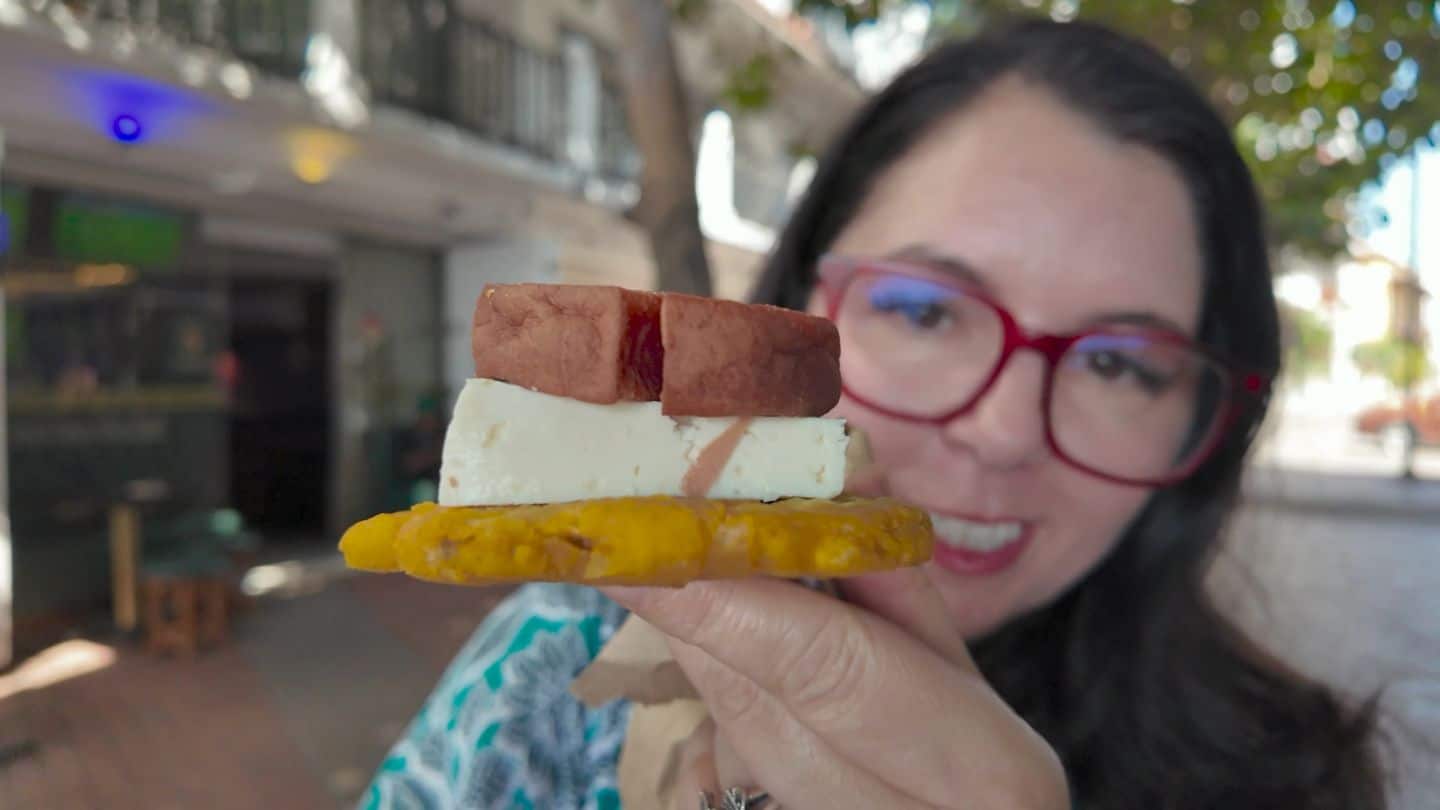
Patacones | Twice-Fried Green Plantains
Such a simple dish that you’ll find throughout Latin America and yet not everyone does it well. Patacones are green plantains cut into rounds and fried. Simple.
But in Colombia they are fried twice and it makes all the difference The first fry cooks them through. Then smash them flat and fry them again until the outside is crispy and the inside stays soft.
They come out salty and often served with salty cheese, salchicha and suero, the tangy local cream.
My favourite spot I learned from locals, Kiosko Palito de Caucho near the clock tower makes them to order and sells at local prices.
Where to Eat Patacones:
Kiosko Palito de Caucho
Plaza de la Paz
Colombian Slang
Queso Costeño | Salty Fresh Cheese
Queso costeño is a fresh, salty cheese from the coast. It’s another great food that was created before refrigeration, salt preserved dairy along the coast was essential.
It’s similar to queso fresco in Mexico, and yet you’ll taste the difference.
You can eat it plain or fried on its own but I think it can be too salty. I prefer it with patacones or in an arepa where it’s tasty but the salt isn’t overpowering.
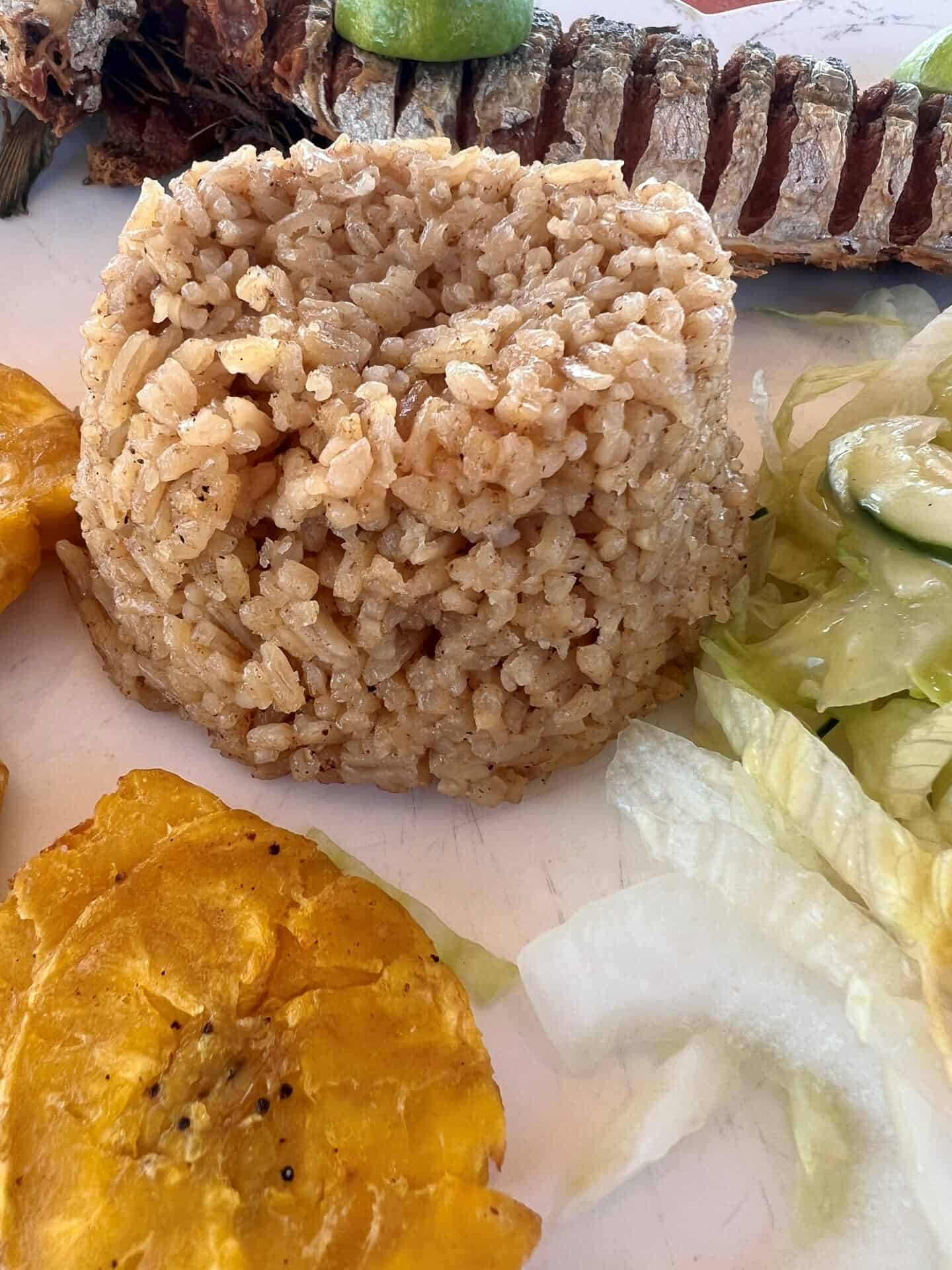
Arroz con Coco | Coconut Rice
Arroz con coco sounds quite basic but it’s a food in Cartagena that is quite distinct. Although they cook it the same way in the Rosario Islands, if you head farther down the coast it changes.
Rice cooked with coconut milk is common throughout the coast but the Cartagena version has a dark color from titoté. The caramelized coconut fat that forms when you render fresh coconut before adding the rice.
It is so sweet it’s almost a dessert. I like it for a special occasion but could not eat it every day.
Where to Eat Arroz con Coco:
Restaurante Espíritu Santo
Calle 35 #6-69
Colombian Snacks
Arroz con Menudencias | Rice with Chicken Organs
Menudencias are organ meats, and this rice dish uses chicken hearts, livers and other parts cooked down with rice until everything is rich and savory.
The West African influence on Cartagena’s cooking shows clearly here: using the whole animal and making it taste great.
It’s very affordable and because of the organ meats it’s very healthy and full of good nutrients like iron.
Where to Eat Arroz con Menudencias:
Caserito Cartagenero
Avenida Venezuela
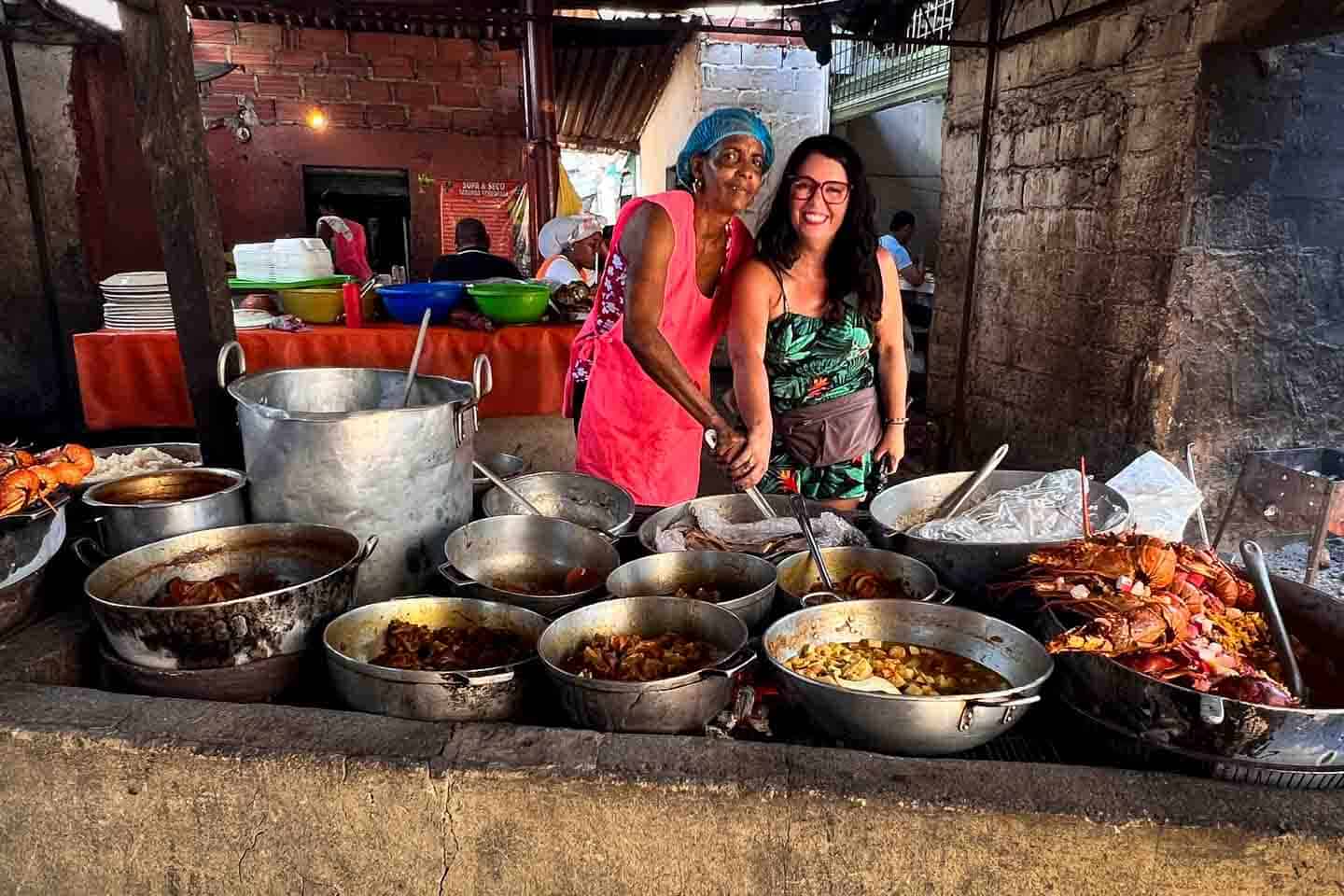
Arroz de Lisa | Smoked Mullet Rice with Coconut
Lisa is a mullet fish that is smoked then cooked with rice and coconut milk. It is rich, smokiness and one of the best dishes in the market.
Sadly many restaurants no longer serve it so if you find it somewhere order it.
Where to Eat Arroz de Lisa:
Bazurto Market
Puesto de Doña Bertha
Colombian Christmas Traditions
Lengua Guisada | Beef Tongue in Sauce
The first time I tried tongue was in a bus station in Colombia and I was instantly hooked.
Lengua guisada is beef tongue slow-cooked in sauce until it’s so tender it falls apart. The sauce is savory and the tongue itselfis so tender after being slow cooked.
It’s almost like filet mignon but costs much less.
Where to Eat Lengua Guisada:
Restaurante Espíritu Santo
Calle 35 #6-69
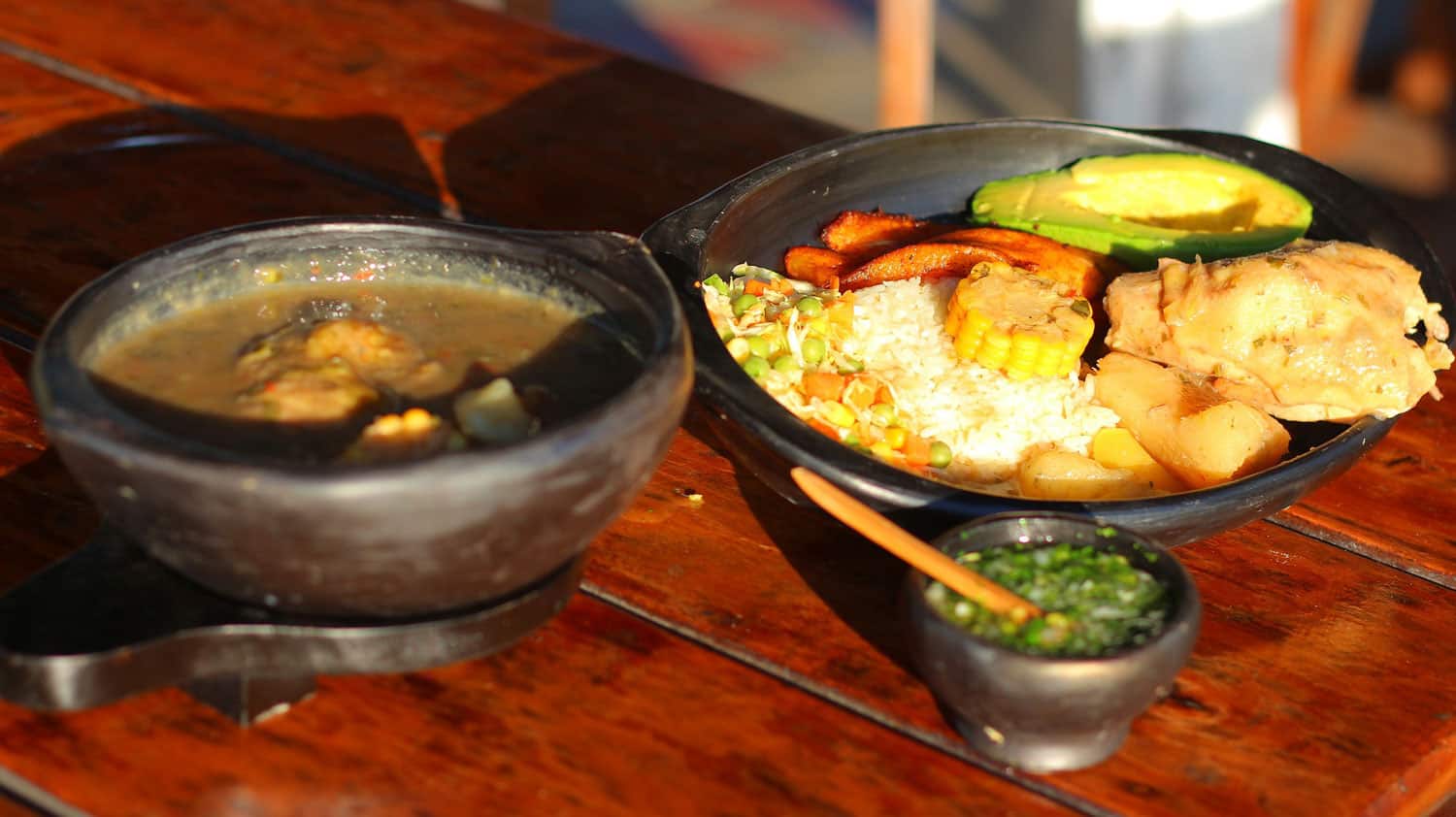
Sancocho de Gallina | Hearty Chicken Soup
Sancocho is a soup that exists all over Colombia and actually Latin America and there’s no one recipe as it reflects tradition and availability of ingredients.
In Cartagena it uses a hen or gallina, which traditionally was no longer laying eggs so was no longer useful. But it was also known to make the best deep broth because of it’s age.
It’s a good old fashioned chicken soup that is simmered until tender and served with local herbs and root vegetables.
Where to Eat Sancocho de Gallina:
Restaurante El Coroncoro
Carrera 10 #31-22, Getsemání
Sopa de Pescado Seco | Dried Fish Soup
Cooking with dried fish was an established technique from both people enslaved in the Caribbean and also Spanish colonizers who were accustomed to dried cod.
It is most common during Semana Santa (Holy Week) to adhere to the restriction against eating red meat.
Where to Eat Sopa de Pescado Seco:
La Mulata
Calle Quero #9-58
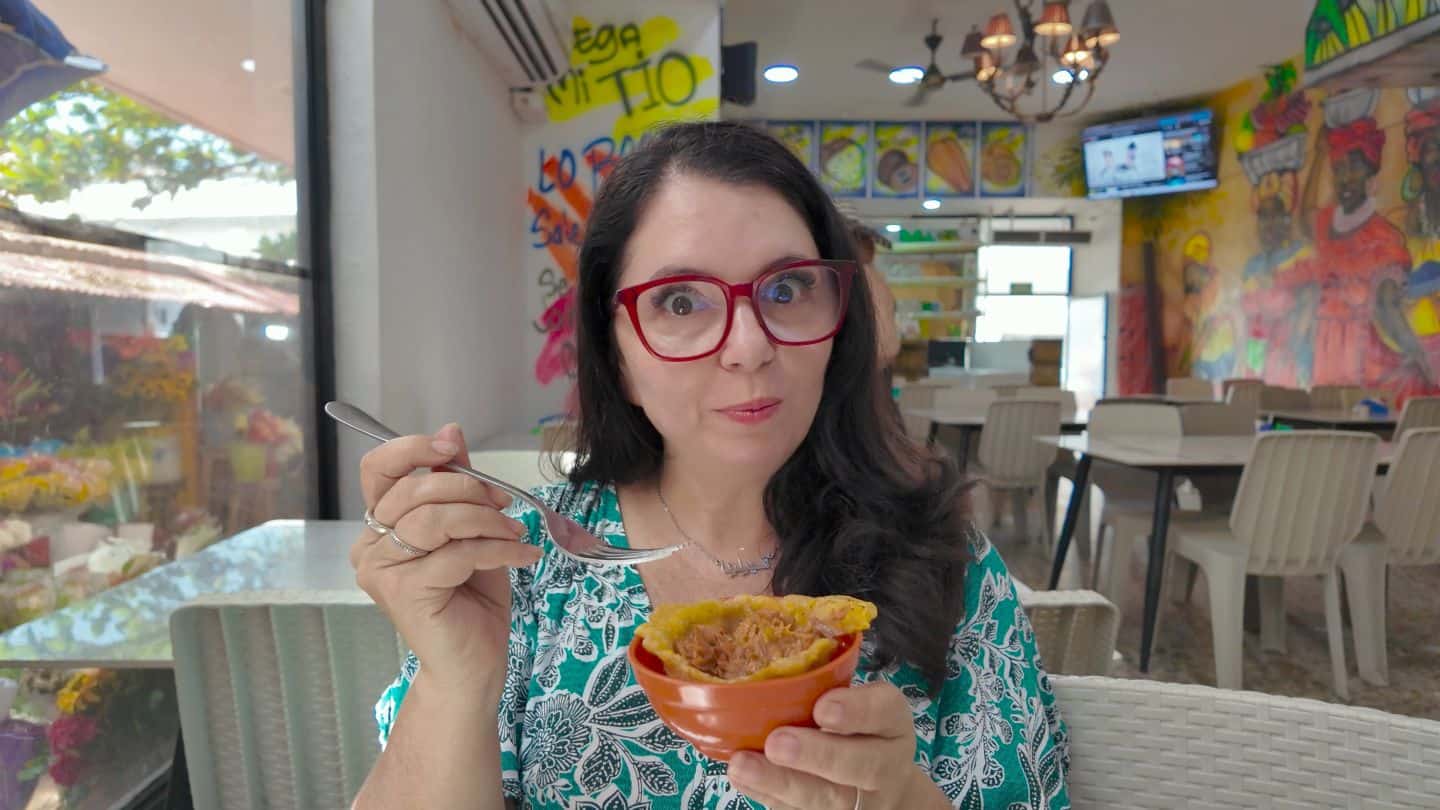
Cazón Guisado | Stewed Shark
Cazón is a small species of shark that is not endangered. Colombians prefer to eat it when it’s guisado, or stewed with spices and served with rice.
The meat is mild and flaky, taking on the flavors of the stew beautifully.
The dish is influenced by Venezuela, specifically Margarita Island but is associated in Colombia with the Palenqueras, the women from San Basilio de Palenque who worked in the markets. It was one of the first free African towns in the Americas and a place with its own distinct food traditions.
It was one of my favorite days in Colombia, you can see the Palenque video here. Cartagena Cheap and Safe run an awesome tour.
Where to Eat Cazón Guisado:
It is common in the Bazurto Market but if you prefer a sit down spot Yo Amo Bazurto shares the best food in the market and is a local favorite.
Mondongo Costeño | Tripe Stew
I first tried this soup with a Colombian friend who swore it was the local cure for hangovers, which may be why it’s so popular on the weekends.
Mondongo is tripe slow-cooked until it’s tender and packed with flavor from spices and long-simmered broth.
The dish has deep roots in both Indigenous and African cooking traditions. Cartagena’s coastal version leans on local spices that set it apart from inland versions.
Where to Eat Mondongo Costeño:
Restaurante El Recuerdo
Calle 26, Manga
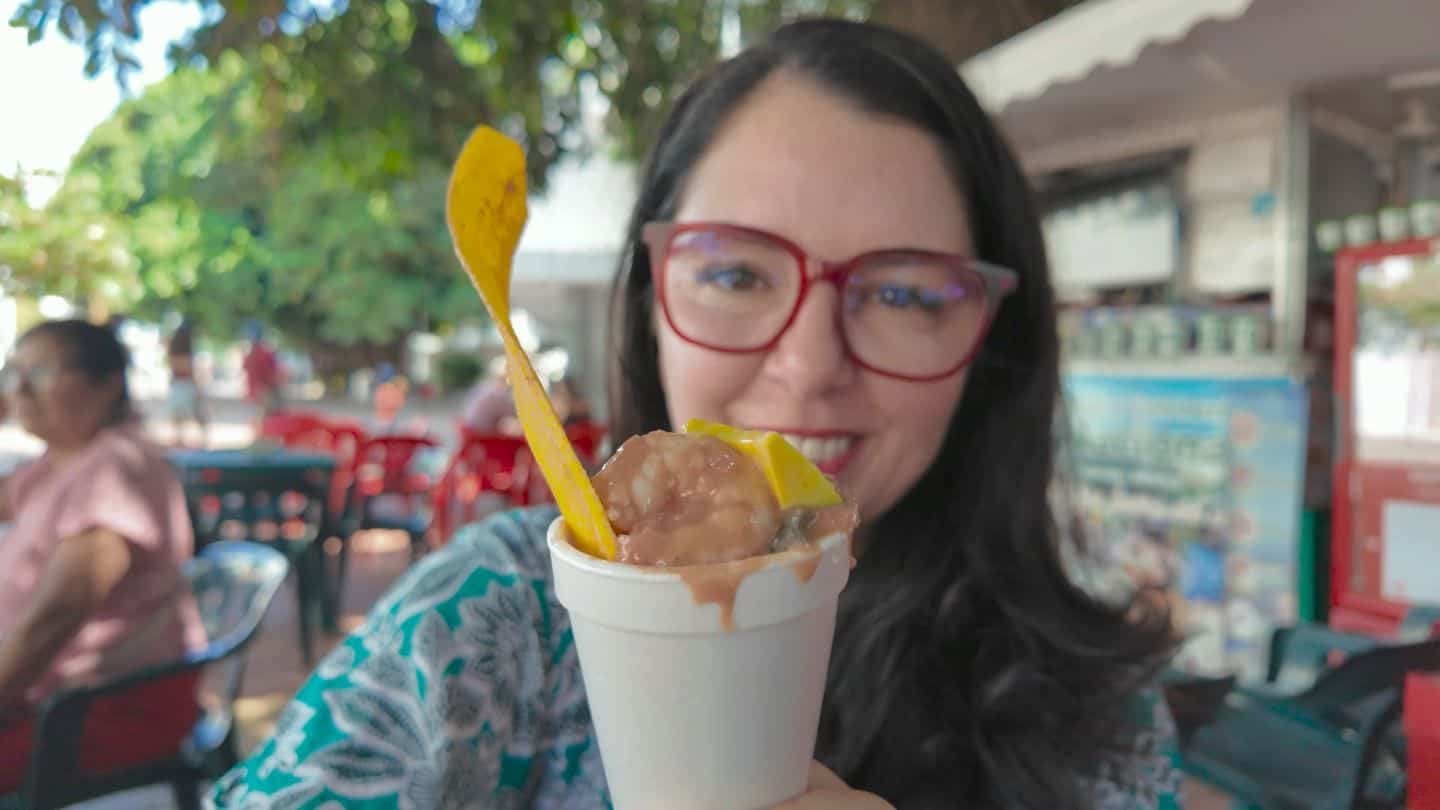
Coctel de Camarones | Street Shrimp Cocktail
Coctel de camarones is street food sold in small cups. Shrimp come with a tangy pink sauce, lime juice and hot sauce.
You eat it with a small spoon or a cracker and it’s refreshing and sharp. The kiosks near the clock tower keep the seafood refrigerated and move a lot of volume, which means the seafood stays fresh all day.
Where to Eat Coctel de Camarones:
Ostrería El Kiosco
Avenida Venezuela
Hígado Encebollado | Liver with Onions
I know most people hate liver but Colombians cook it differently.
Hígado encebollado is liver cooked with onions and it’s solid, everyday food. The liver needs to be cooked just right so it stays tender, and the onions should be soft and sweet.
I used to hate liver but Colombia changed my mind!
Where to Eat Hígado Encebollado:
Restaurante Donde Socorro
Calle Larga #8B-112
Bollos de Mazorca | Steamed Sweet Corn Dough
Bollos de mazorca are steamed corn dough wrapped in corn husks. The corn is ground fresh and mixed with a bit of sugar, then steamed until warm and slightly sweet.
Women sell them from coolers on street corners in the early morning, and they’re gone by mid-morning.
Where to Eat Bollos de Mazorca:
Corner of Calle de la Inquisición
Near the Cathedral
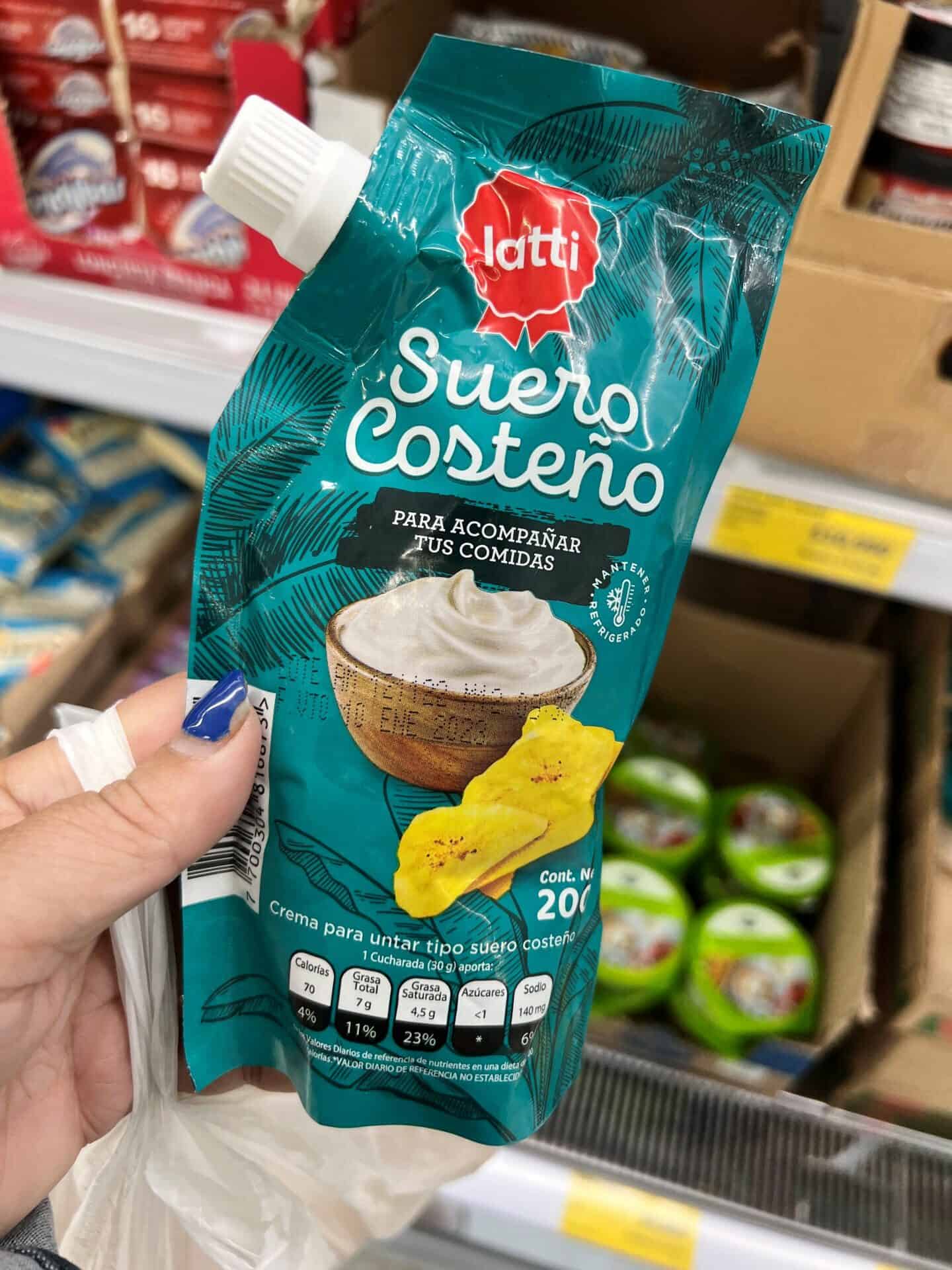
Suero Costeño | Tangy Fermented Cream
If you like sour cream you’re going to want to eat this on your first day because it’s so much better.
Suero costeño is a fermented cream that’s tangy and a perfect dipping sauce. The fermentation gives it a sharp flavor and a thinner consistency than regular crème fraîche or sour cream.
It goes on patacones, it goes on arepas and it makes almost everything taste better. The best ones are homemade but if you’re heading home there are also commercial brands you could take a souvenir.
Where to Eat Suero Costeño:
Lácteos La Esmeralda
Avenida Pedro de Heredia
Enyucado | Baked Cassava Cake
Enyucado is cassava cake baked with coconut, sugar and anise. The cassava gives it a dense, chewy texture, the coconut adds sweetness and the anise cuts through with a slight licorice note that keeps it from being too rich.
I don’t love overly sweet things so I prefer versions that use local salty cheese baked into the batter that balances the sweetness.
Where to Eat Enyucado:
Portal de los Dulces
Stall #12, Plaza de los Coches
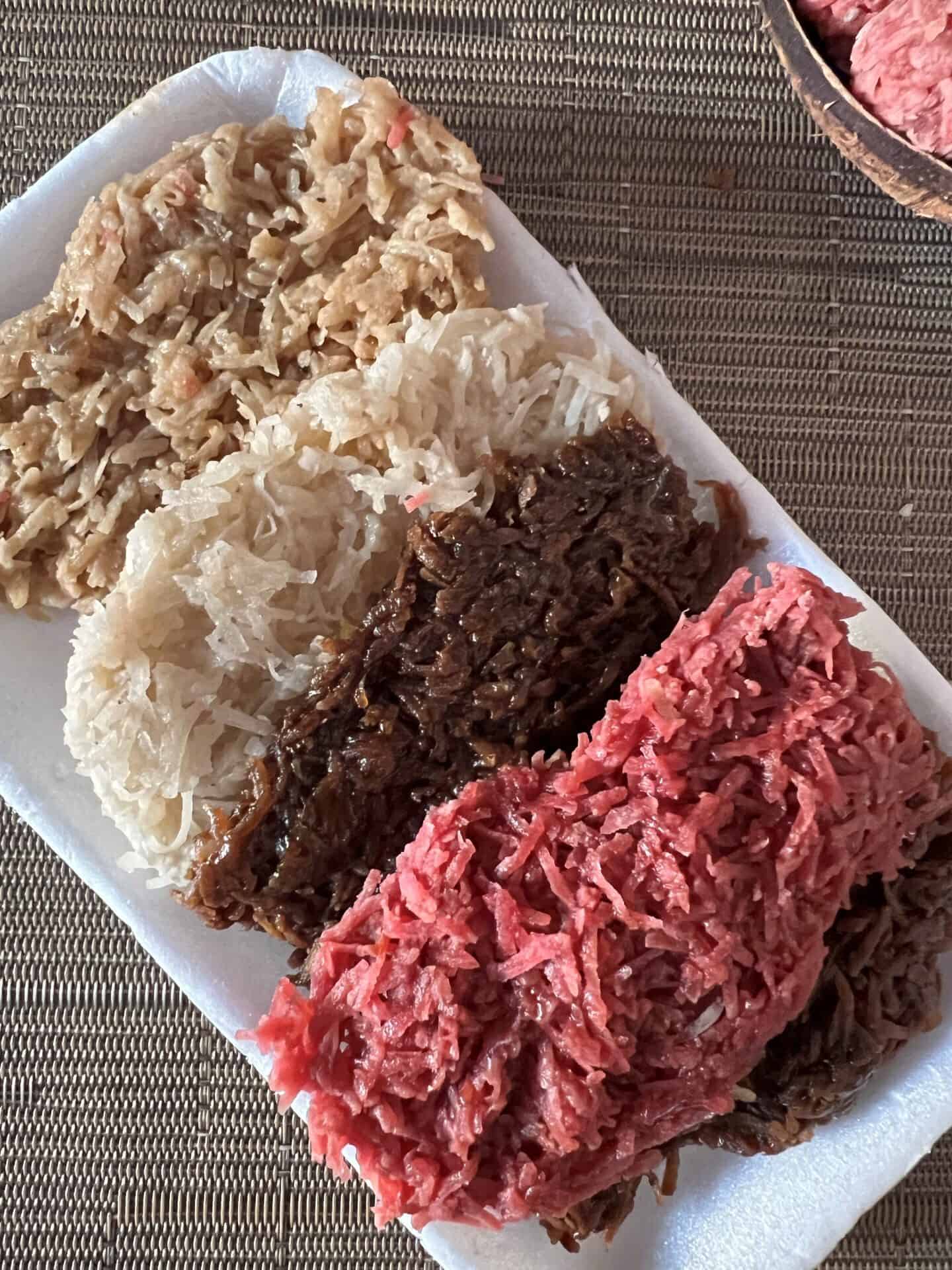
Cocada | Coconut Sweets
There are so many Colombian desserts but this is one of the most beloved. Cocada is coconut candy sold on the streets by Palenquera vendors, the women in traditional bright dresses from San Basilio de Palenque.
The flavors change depending on what gets mixed in, personally I think the best ones are made with ajonjolí (sesame) or guayaba (guava).
Where to Eat Cocada:
Palenquera Vendors
Plaza de Santo Domingo
Bollo de Yuca | Dense Cassava Dough
Bollo de yuca is cassava dough, denser than corn-based bollos and slightly sweet. Also known as cassava, it is one of the oldest staple crops in the Americas and if you love potato you must try it.
The best ones are made fresh and hand-wrapped daily, and the market has the widest selection because women bring their fresh batches there to sell.
Where to Eat Bollo de Yuca:
Bazurto Market
Cartagena Drinks
In tropical countries there are so many ways of hydrated I wrote an entire post dedicated to drinks in Colombia.
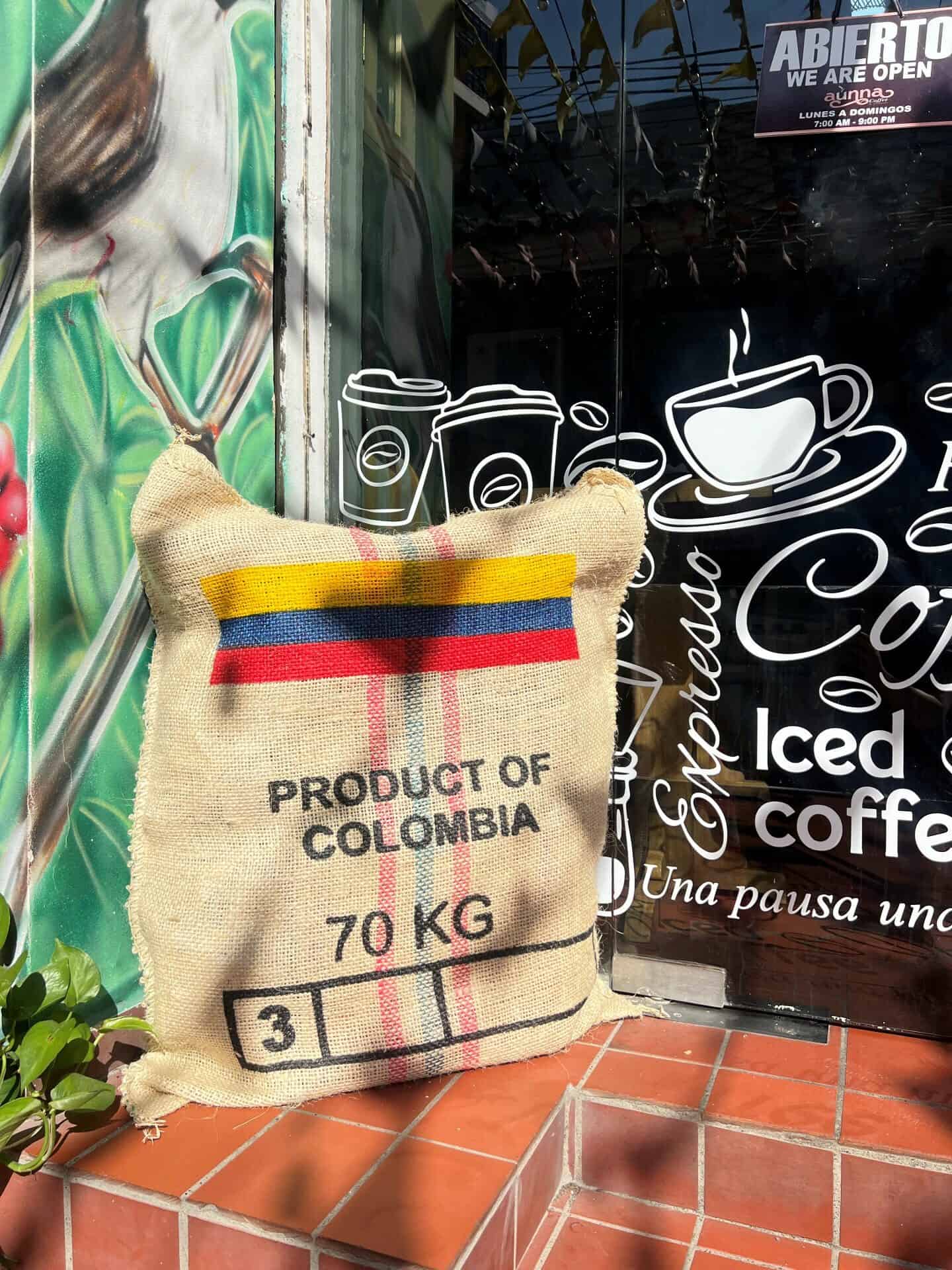
Everyone knows great Colombian coffee but there are 3 drinks specific to Cartagena that I think are worth trying.
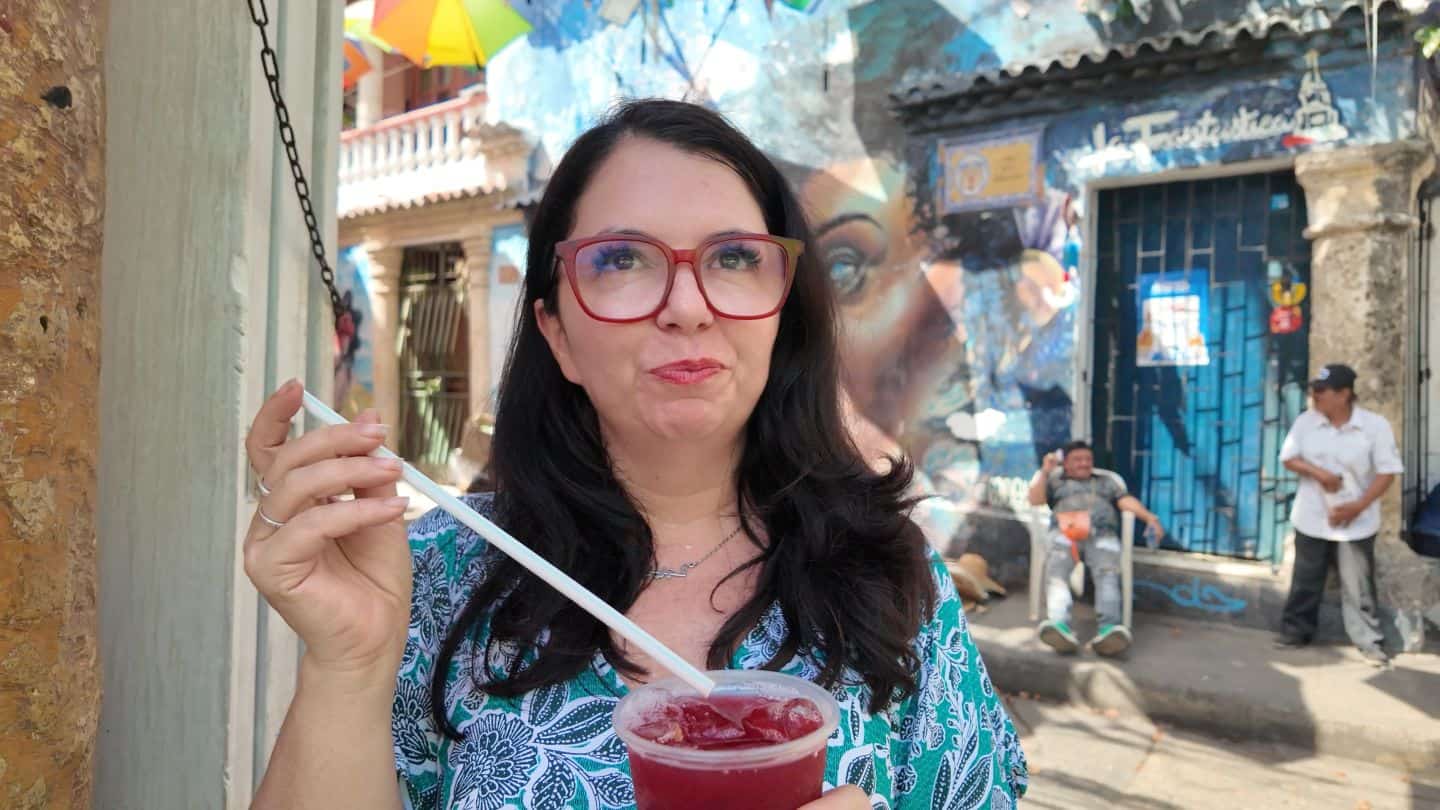
Corozo | Palm Fruit
Corozo is a unique Colombian fruit I haven’t found elsewhere. It looks like a bunch of grapes or cherries but corozo is a palm fruit in the Colombian coast.
I find it’s most common on the streets in Cartagena but I’ve also had it in Riohacha and also Santa Marta.
It is very tart and so it’s often made into jams and preserves. But during the season you can also find local vendors selling it on the street as school children love it.
They use commercial ice so it’s safe to drink and worthwhile to support the local tradition.
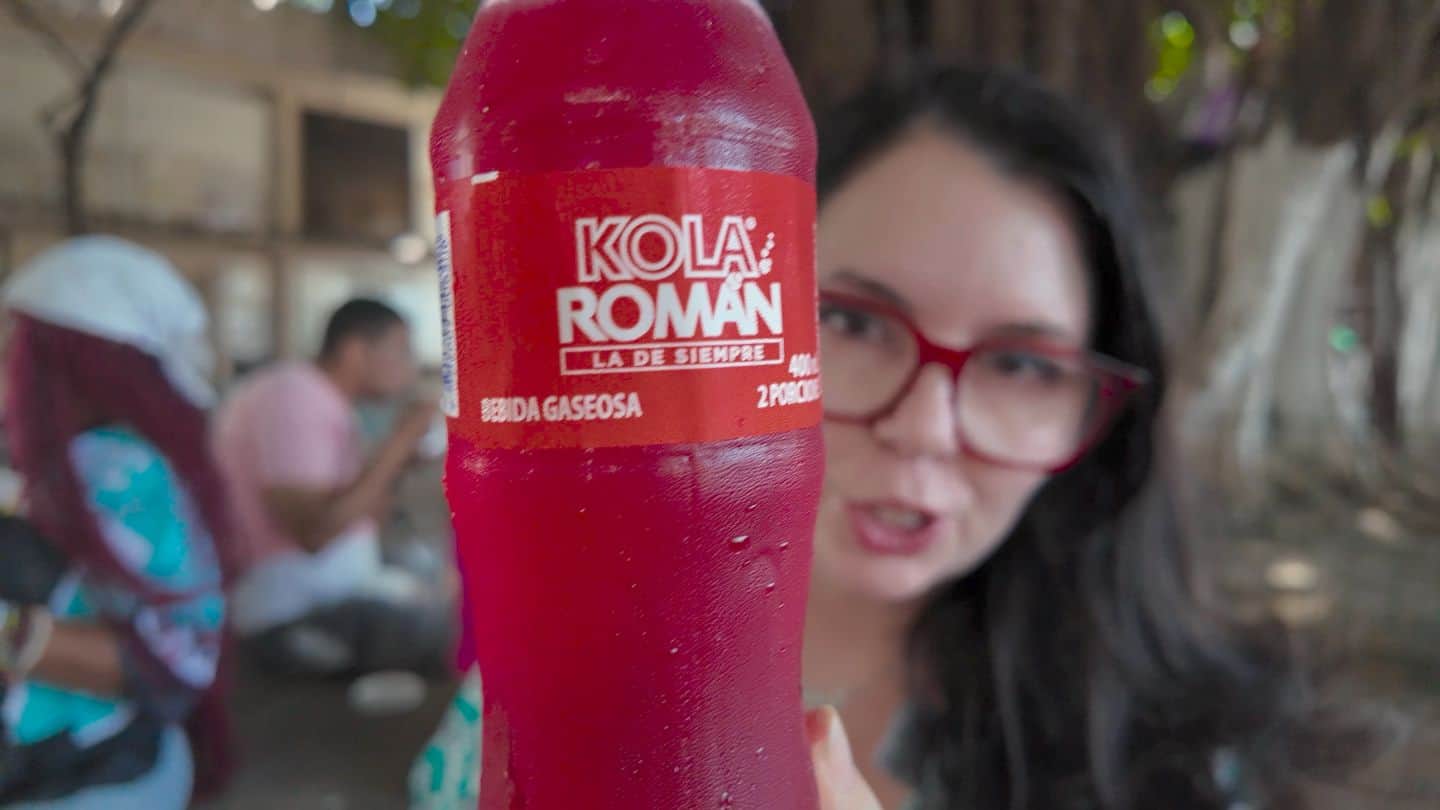
Kola Roman
Kola Román was first created in Cartagena in 1865 by Don Carlos Román, a Spanish immigrant from the Román family.
Originally, Kola Román was similar to a champagne soda, but it was reinvented in the early 1900s by Don Henrique Pio Román, who perfected the formula to create the sweet vanilla flavor and bright pink color that Cartagena is famous for.
Like many early soft drinks, it was originally sold in pharmacies as a medicinal tonic before becoming one of Colombia’s most recognizable Caribbean sodas.
People say that it was so popular that for every seven Kola Románs sold there was only one Coca-Cola sold in the region. Unlike in other countries where Coca-Cola reigned, they could not beat the popularity of Kola Román.
In 1970, Kola Román merged with Coca-Cola bottling operations in the Caribbean region.
If you can’t beat ’em, join ’em.
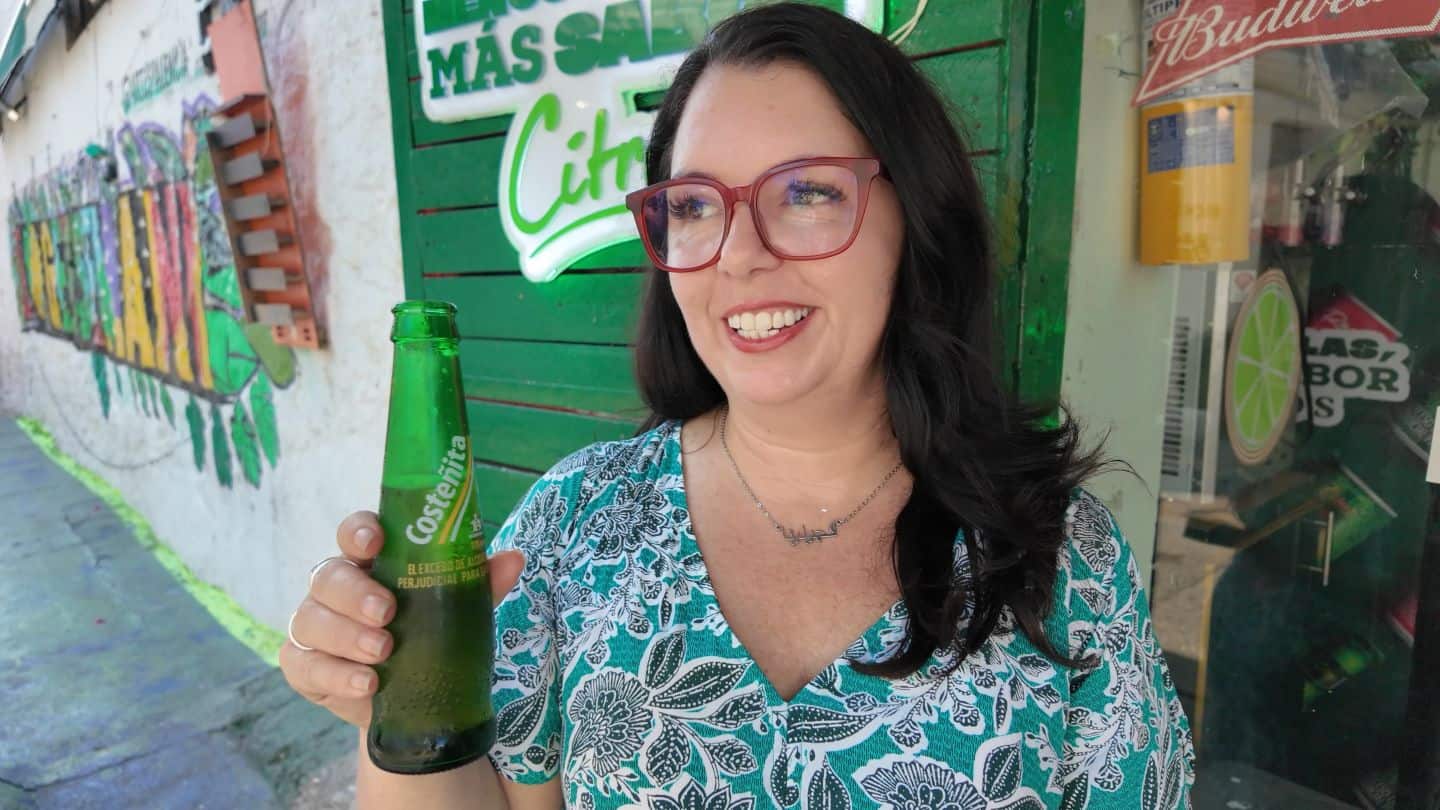
Costeñita Beer
A tasty light lager beer produced by Cervecería Bavaria, a Colombian brewery company founded in 1889. Costeñita is a smaller-sized “snack beer” whose name literally means “little girl from the coast.”
The beer’s history begins with Costeña, which was launched in 1934 as a beer specifically created for the Caribbean coast.
The popularity of Costeña led to the creation of Costeñita as a smaller version, packaged in a compact 175-milliliter bottle, which is much smaller than the standard 350-milliliter beer bottle.
Costeñita became deeply tied to Colombia’s Caribbean coast culture and is especially associated with Cartagena and Barranquilla.
The light lager is cheap, light, and designed for the tropical heat. It is perfect for traditional Cartagena food like fried seafood, arepas or street snacks. You can find it in corner shops and neighborhood bars throughout Cartagena.
Pin it: Best Food in Cartagena