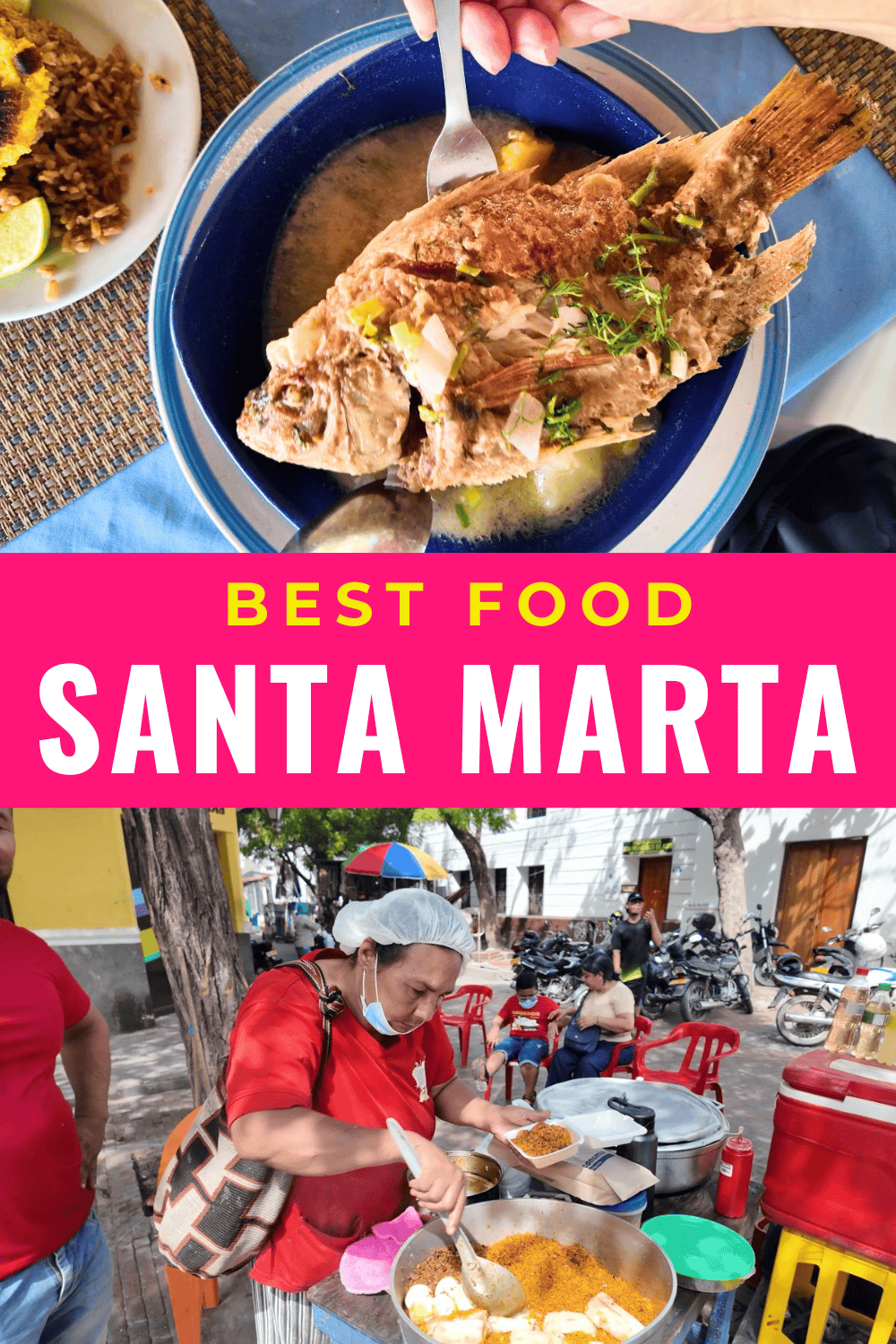
Santa Marta is my favorite city in Colombia. I’ve been there four times and each visit reveals something new about its incredible food culture.
Unlike Cartagena or Barranquilla, Santa Marta remains refreshingly local. Although many national tourists visit it feels like the tourist zone is limited to one street leading to Parque de los Novios.
The rest of the city belongs to the people who live here and the food reflects that authenticity.
I come from the east coast of Canada along the ocean. Walking through Santa Marta’s fish market reminded me of home. The eyes on the fish are crystal clear. The market doesn’t smell. These are signs of quality no matter where you go.
The people here will call you over to talk about their catch. They want to share their knowledge. This warmth and Colombian sincerity that defines Santa Marta.
Watch on YouTube: Best Food in Santa Marta
Santa Marta Food Influences
Santa Marta is Colombia’s oldest city, perfectly located between the Caribbean Sea and the incredible Sierra Nevada mountains. It’s history and geography have a unique impact on food in Santa Marta.
The green banana defines this city’s food in a way that sets it apart from other coastal Colombian cities.
In the early 20th century the United Fruit Company operated here and shipped ripe bananas to the United States. The green bananas that weren’t suitable for export were left behind and sold cheaply.
People in Santa Marta learned to transform these green bananas into sustaining food. You’ll find green banana in soups, stews and side dishes throughout the city.
While Cartagena and Barranquilla favor green plantain, Santa Marta’s heart belongs to the green banana.
Indigenous communities have lived in the Sierra Nevada de Santa Marta for thousands of years. Their influence on traditional Colombian food appears in the use of corn, cassava and native herbs. The relationship between mountain and sea creates a unique ingredient palette.
The African diaspora brought through slavery shaped coastal Colombian cooking. You see this in the use of coconut, seafood stews and fried foods. The cazuela de mariscos shares DNA with meal-stretching seafood dishes found across the African diaspora.
Spanish colonizers introduced rice, pork and specific cooking techniques. The fusion of these influences with Indigenous and African traditions created something entirely new.
Traditional Santa Marta Food
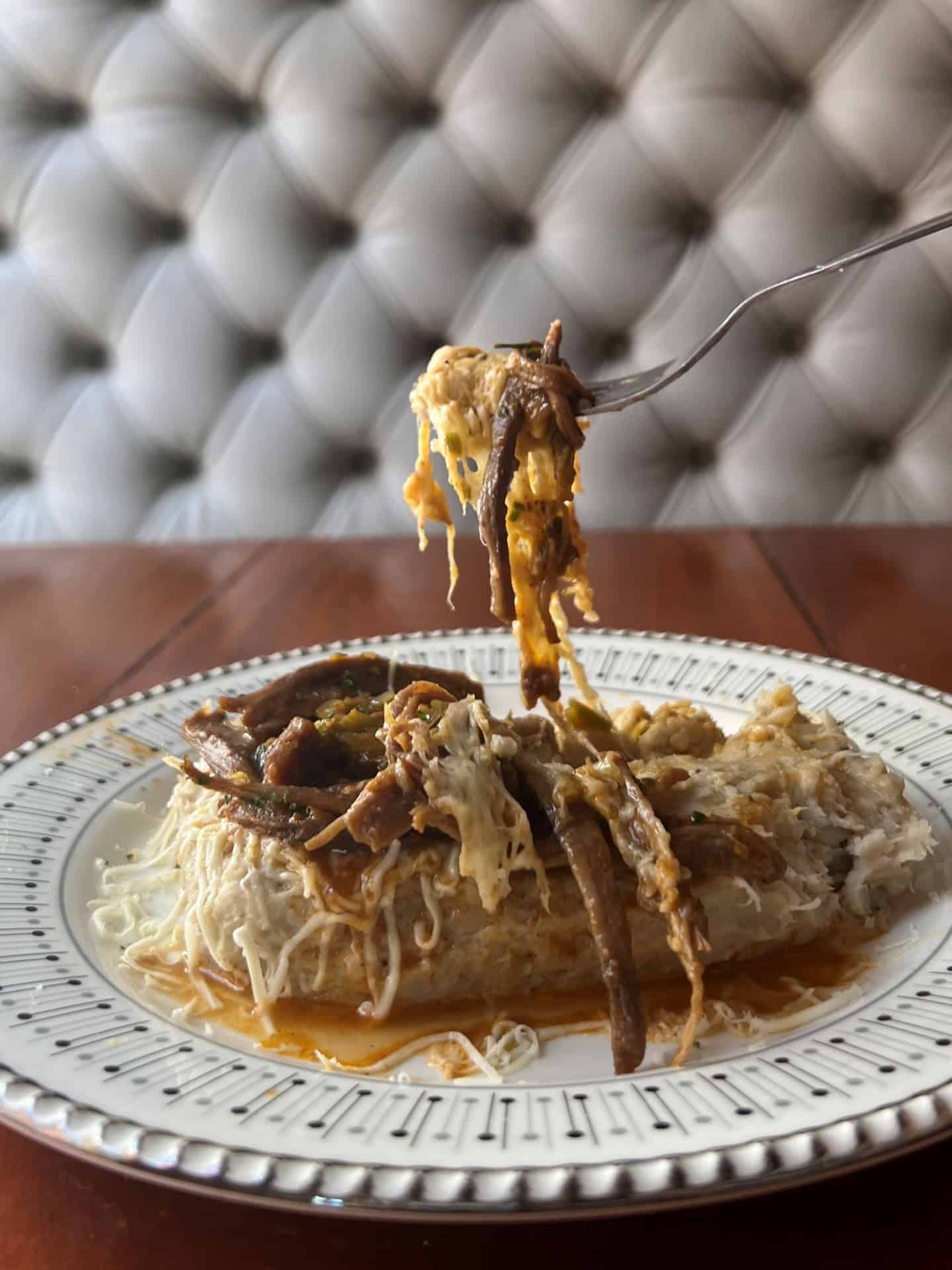
Cayeye | Mashed Green Banana
One of the best breakfasts in Colombia, but you will need a big appetite.
Cayeye is the number one dish you need to eat in Santa Marta. This is the city’s signature breakfast and the dish that tells the story of the United Fruit Company’s legacy.
Cooks boil green bananas until they surrender to a fork then mash them with butter or oil into a smooth puree.
The mashing releases the banana’s natural starches and creates a texture somewhere between mashed potatoes and polenta. Crumbled coastal cheese adds sharp saltiness that cuts through the mild banana. Many versions crown the dish with fried fish, shredded beef or huevos pericos.
Where to eat cayeye:
Cafe Bendito, Cra 12 #26B-155, Barrio Bavaria Santa Marta
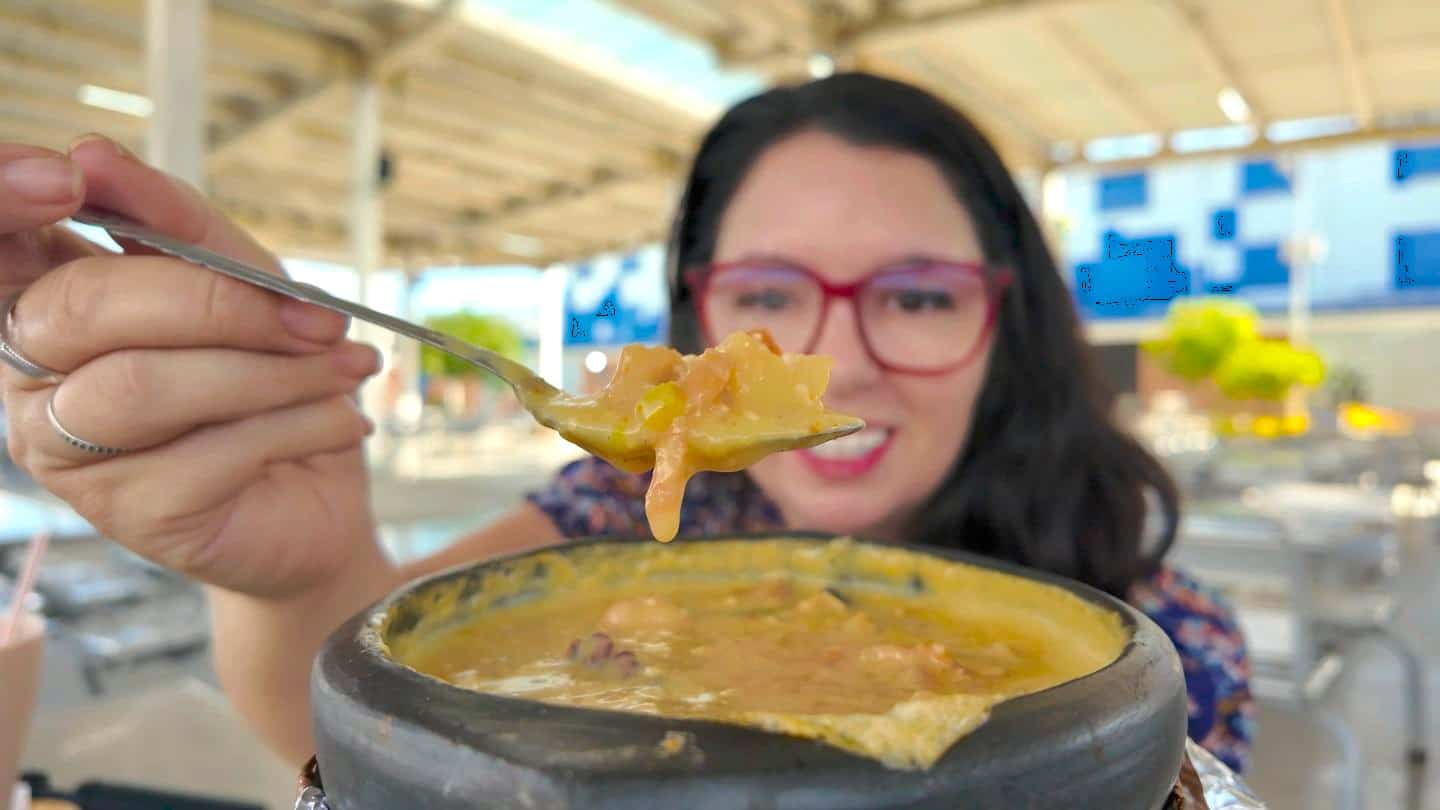
Cazuela de Mariscos | Seafood Stew
This thick seafood stew is found across Colombia but Santa Marta’s version stands out for its sheer abundance and African-influenced technique.
Fresh octopus, shrimp, sea snails and chunks of white fish swim in a rich broth built from the seafood itself. Cooks simmer the shells and heads first to extract ocean flavor.
Green banana pieces dissolve partially into the broth and thicken it naturally through their starches. Cream, white wine and coconut milk enrich the broth, the coconut milk being the African influence that distinguishes coastal Colombian cooking.
Grated cheese melts across the top just before serving. The dish arrives at your table still sizzling in its clay cazuela. Steam rises and carries the smell of the sea mixed with melted cheese.
This is a meal stretcher in the best tradition. Samarians take the pieces that won’t sell whole – the octopus tentacles, the smaller shrimp, the fish collars, and transform them into something more valuable than the sum of parts.
The technique mirrors seafood chowders and stews across the African diaspora where cooks learned to make luxury from scraps.
And the technique reminded me of home with our own Nova Scotia chowder.
Where to eat cazuela:
The fish market (Mercado Público de Santa Marta) has restaurant stalls where women cook the morning catch. It comes with a double starch of patacones and coconut rice.
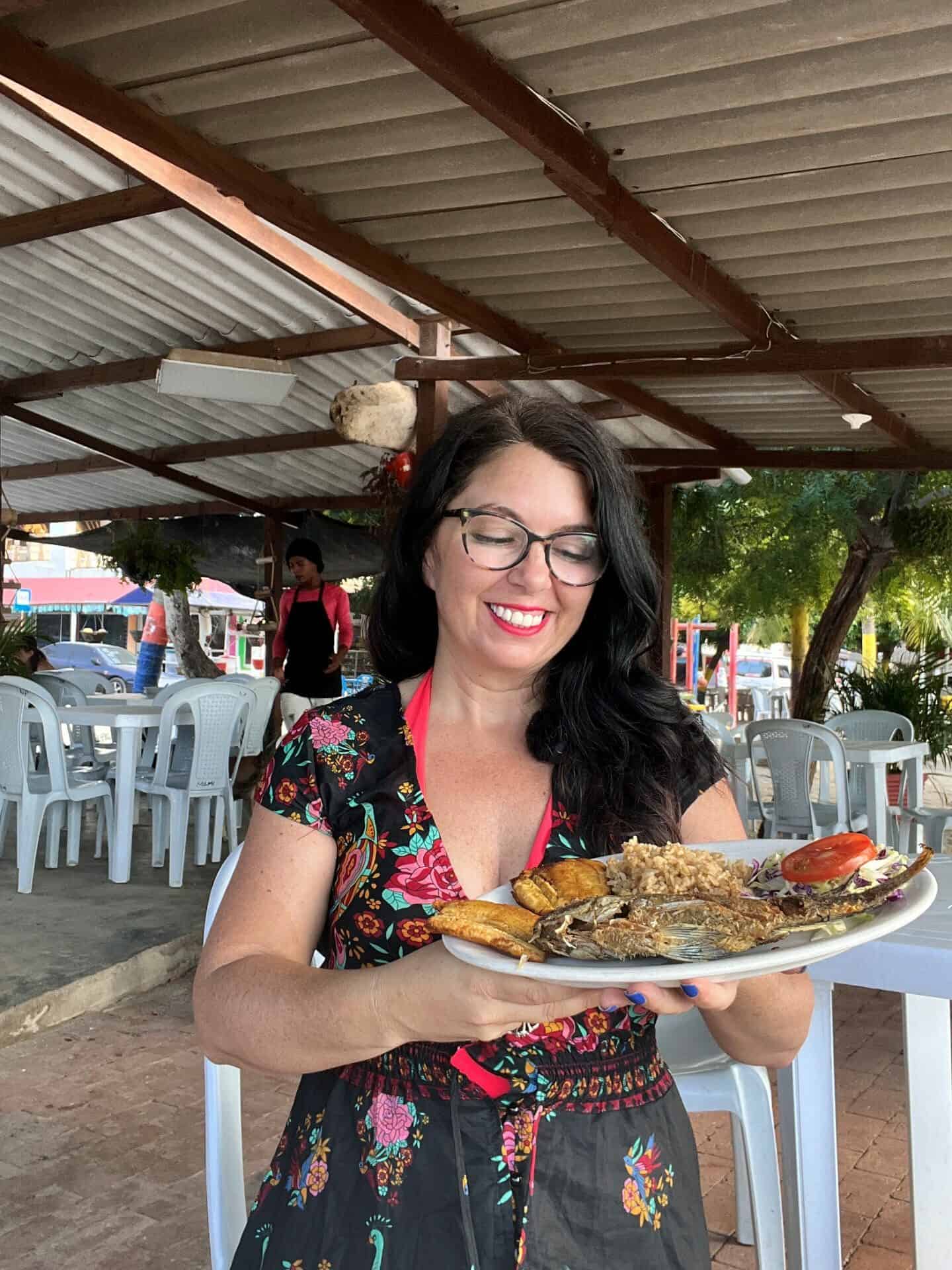
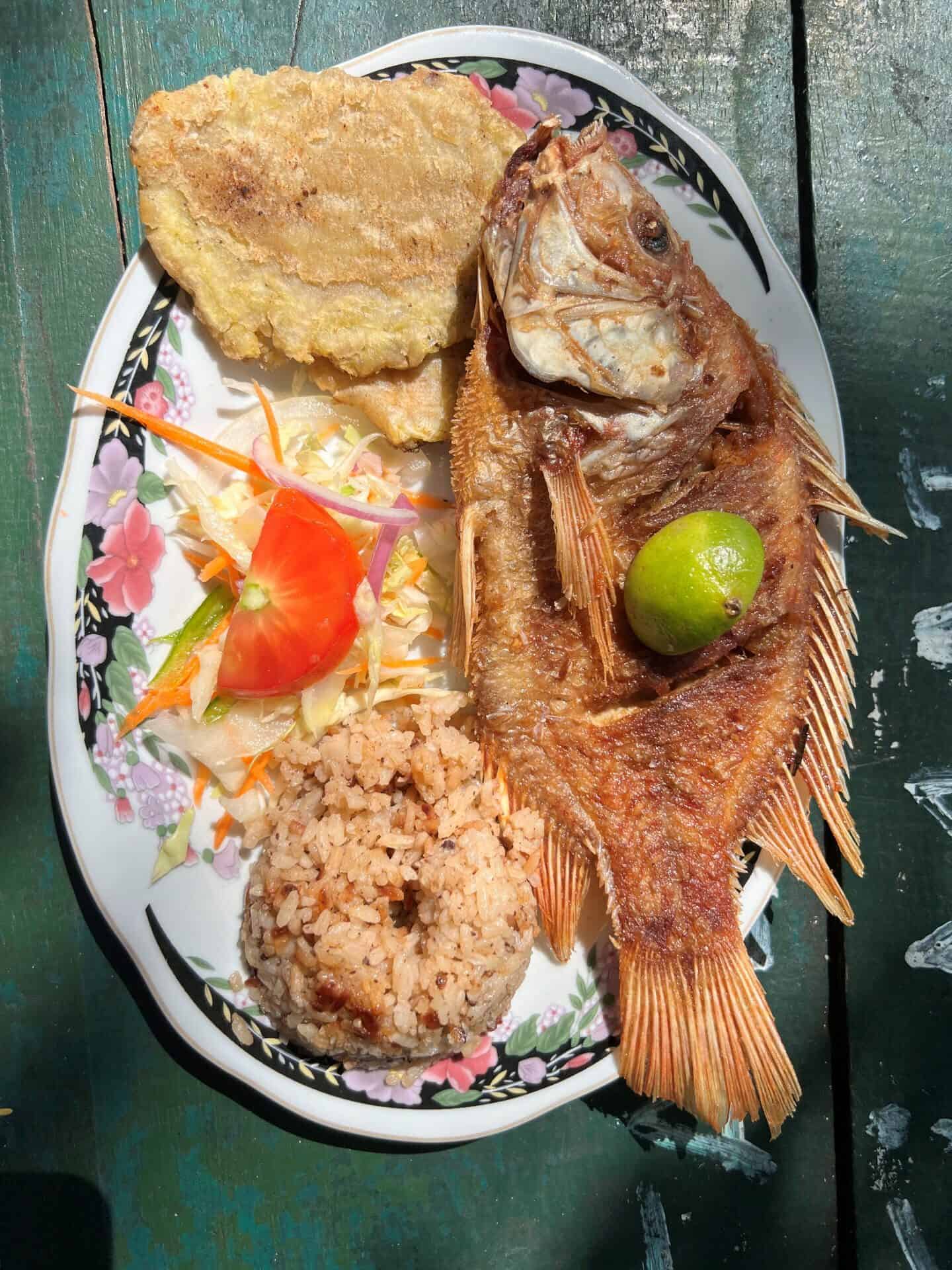
Mojarra Frita | Fried Tilapia
Whole mojarra is the working person’s fish in Santa Marta.
The fish gets a simple seasoning of salt, garlic and sometimes cumin. Deep frying makes the skin shatteringly crisp while keeping the flesh moist.
It is served with lime, rice and patacones. Nothing fancy but perfectly executed.
Where to eat it: The fish market or any local restaurant. I had the dish above on a day trip to Playa Cristal and it is one of the best tours in Santa Marta.
Colombia Safety Tips
Arroz con Coco | Coconut Rice
Coconut rice appears with almost every meal in Santa Marta but cooks here take a different approach than in Cartagena.
Cartagena’s coconut rice leans toward dessert territory with intense sweetness. Santa Marta’s version shows restraint. Cooks extract the coconut milk fresh, mix it with water and rice, then add just enough salt and spices to keep the dish savory.
Some cooks add a bit of sugar to help the rice caramelize slightly on the bottom of the pot. This creates a layer of crispy rice called concón that gets fought over at family meals.
Where to eat arroz con coco:
Any local restaurant serving fish will have good coconut rice.
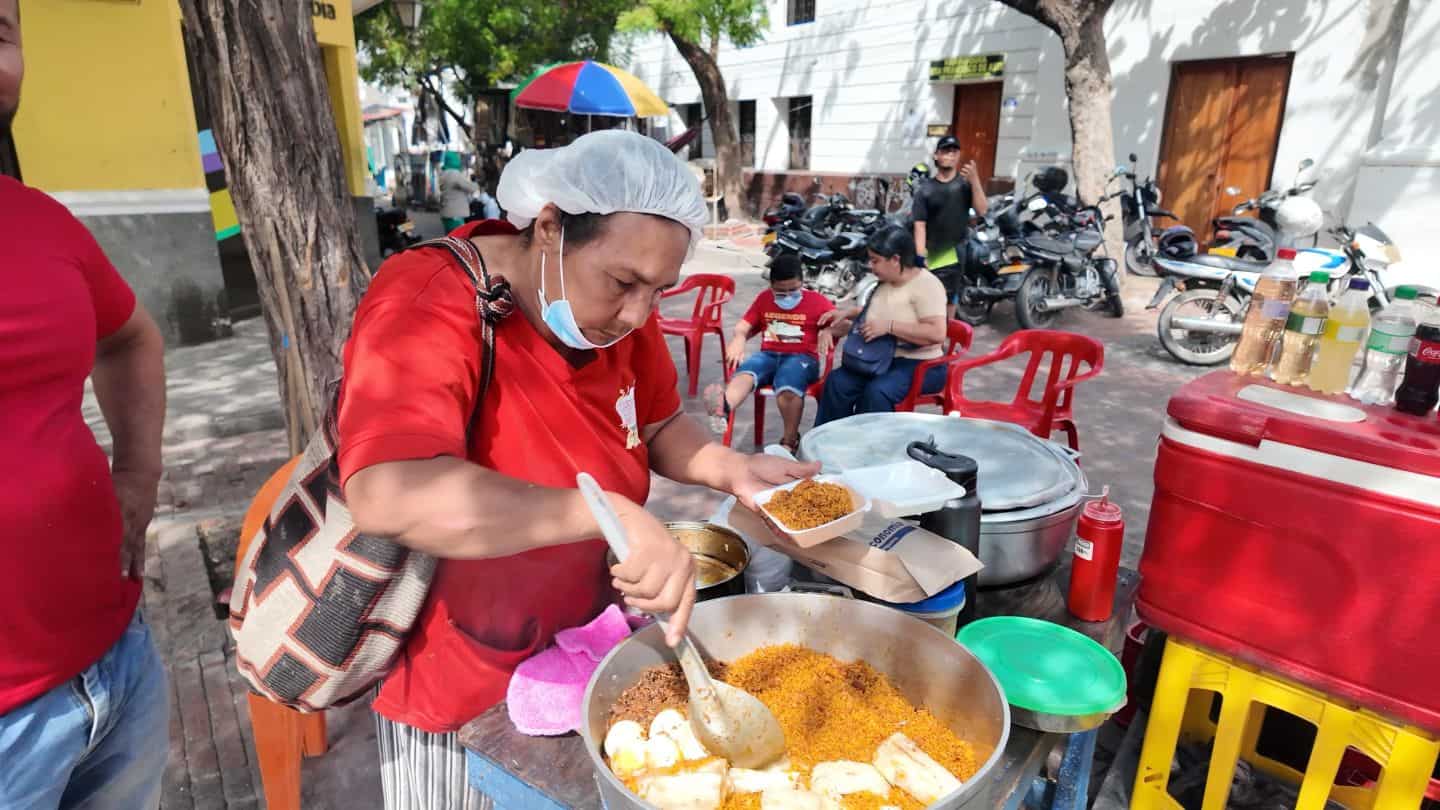
Arroz con Camarones | Shrimp Rice
This is not fried rice. Fresh shrimp are cooked with tomatoes, peppers, onions and spices then mixed with rice.
The shrimp release their flavor into every grain. Some versions add peas and carrots. The dish comes topped with more whole shrimp.
Where to eat arroz con coco:
Look for Liliana in Plaza de San Francisco in the historic district. She also serves an even better albacore fish with coconut rice and will do a half shrimp/half fish portion. She doesn’t speak English but her son Schneider, who is often there does.
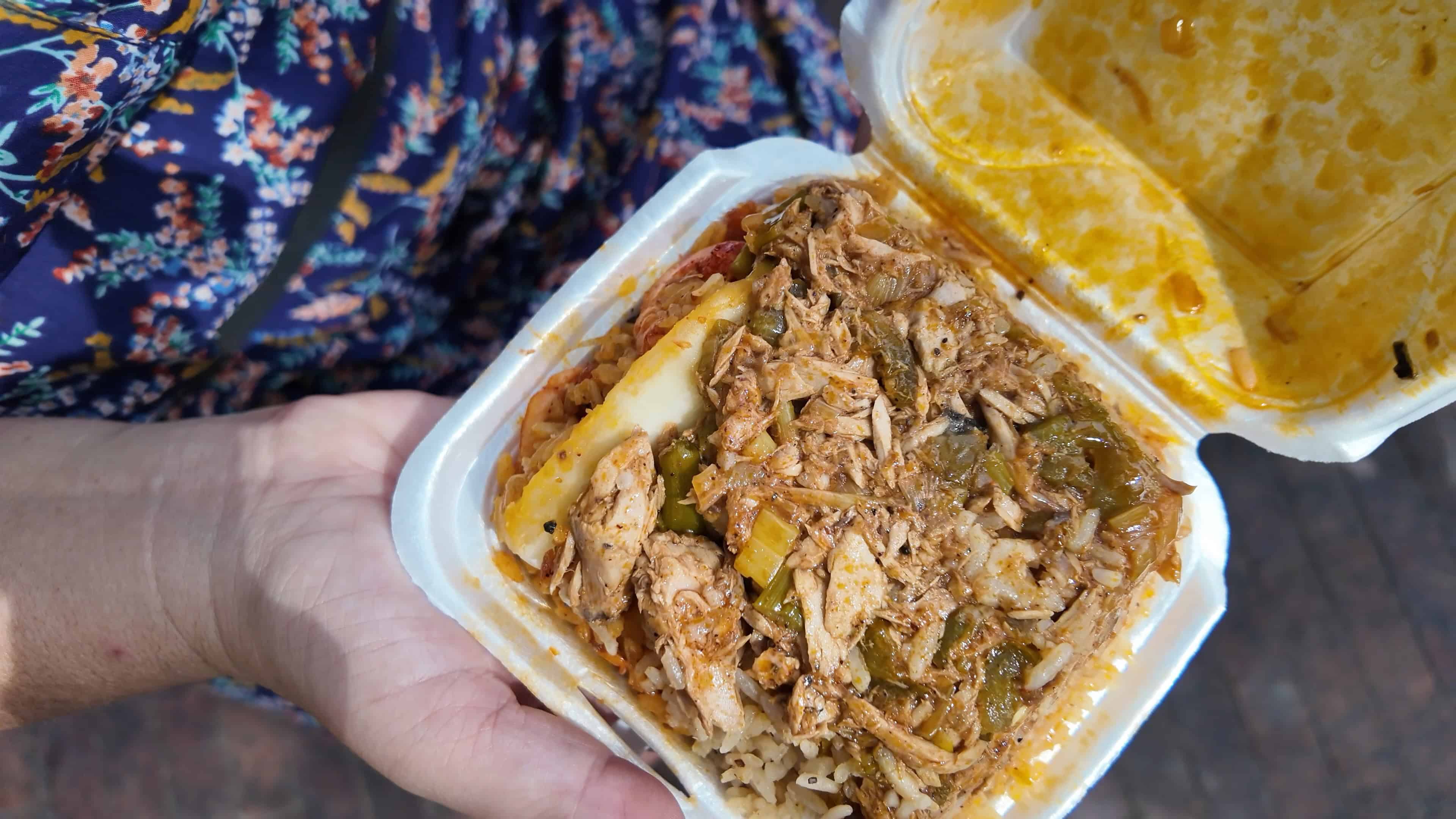
Pescado con Arroz de Coco | Fish with Coconut Rice
Another one of Lilian’s amazing dishes. While I thought I would love the shrimp most I had to ask her about this fish which is simmered in tomatoes and spices. It is so savory and balances the slightly sweet rice.
She told me it was because she uses albacora or what we know as albacore tuna, it was meaty, tasty and really a stand out dish.
Where to eat pescado con arroz de coco: Look for Liliana in Plaza de San Francisco in the historic district.
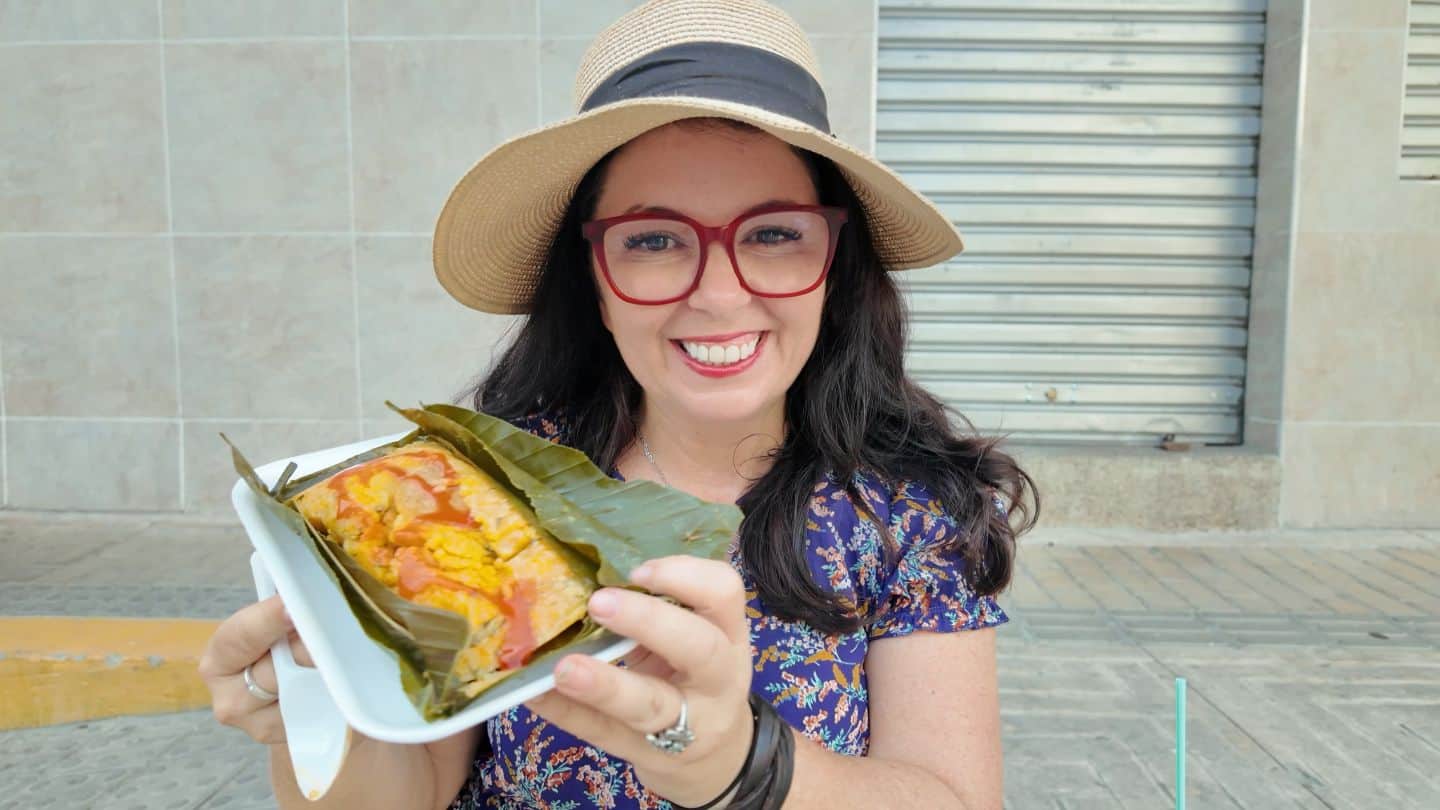
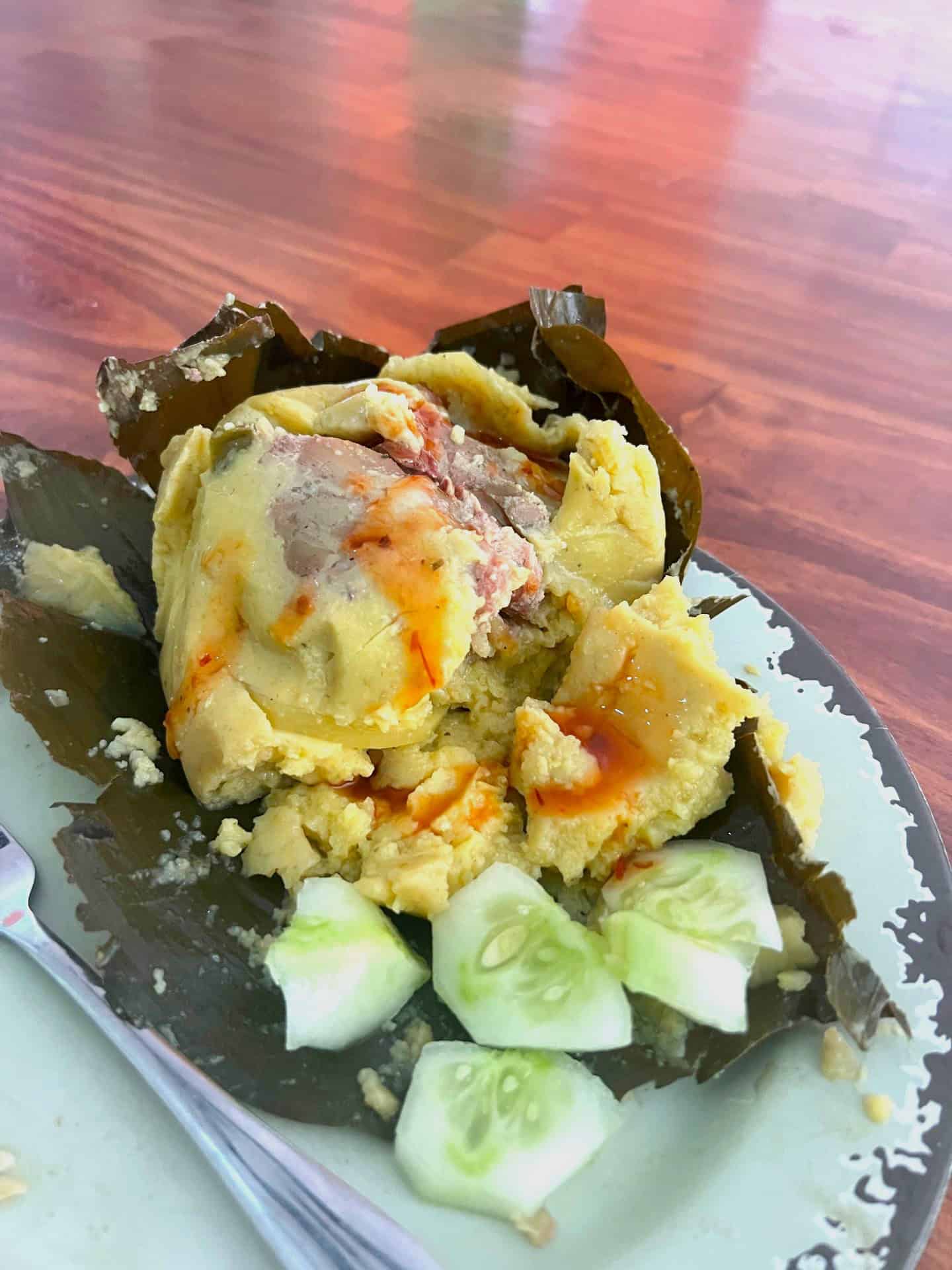
Pastel | Rice Tamal
This isn’t your typical tamal. Pastel represents a uniquely coastal approach to the tamal tradition that spans Latin America.
Cooks mix rice with a number of ingredients that may include diced pork, chicken, potatoes or carrot and a spice blend heavy on cumin and achiote. The mixture cooks first in a pot until the rice absorbs the pork fat and the spices.
Then comes the distinctive second cooking. The cook wraps portions in bijao leaves, the broad leaves from banana trees that grow everywhere in the coastal lowlands.
The bijao leaves release a subtle vegetal flavor during steaming. More importantly the second steam creates a specific texture.
The rice partially congeals and firms up inside the leaf packet. When you unwrap a pastel the rice holds its shape but yields easily to a fork.
Where to eat it: Street vendors sell these from carts, especially on weekends. Look for the distinctive green leaf bundles.
Bollo Tres Puntas | Three-Pointed Corn Cake
This is very specific to Santa Marta and actually one neighborhood on the outside of the city. Ground corn is mixed with butter or oil and wrapped in corn husks with three pointed ends.
The corn is white and the texture is dense but not heavy. This is sustaining food meant to fuel physical work. Some versions add cheese. Others stay plain to let the corn flavor shine.
Where to eat it: In the Mamatoco neighborhood of Santa Marta.
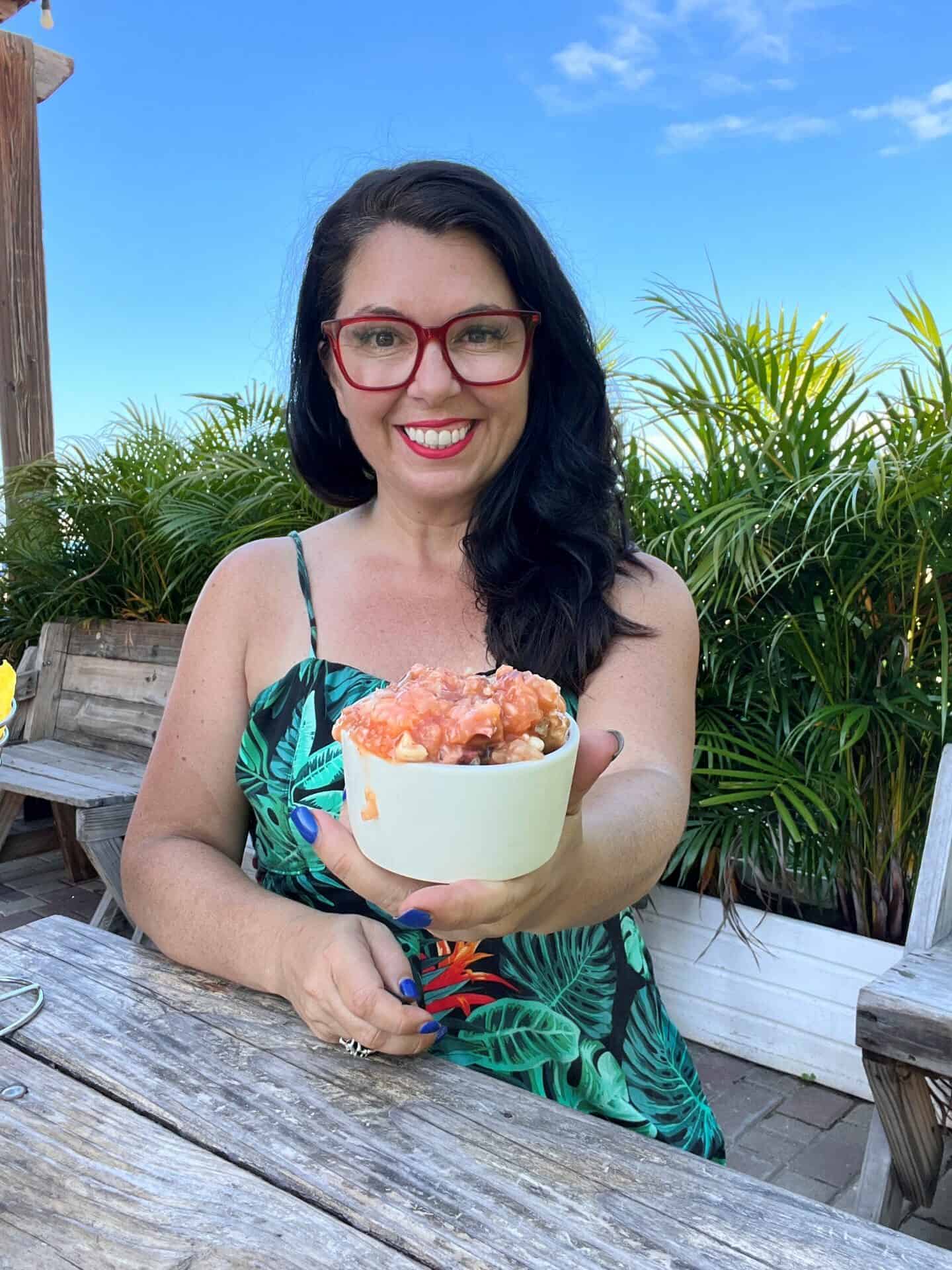
Cóctel de Camarones | Shrimp Cocktail
Seafood in Santa Marta is next level and while many eat ceviche, just like traditional Cartagena food, seafood cocktails are even more popular.
Fresh shrimp are poached and served in a tomato-based sauce with onions, cilantro and lime juice. This is beach food. Light and refreshing.
The sauce has a little kick from aji. Saltine crackers come on the side for scooping.
Where to eat it: Beach vendors and restaurants along the waterfront.
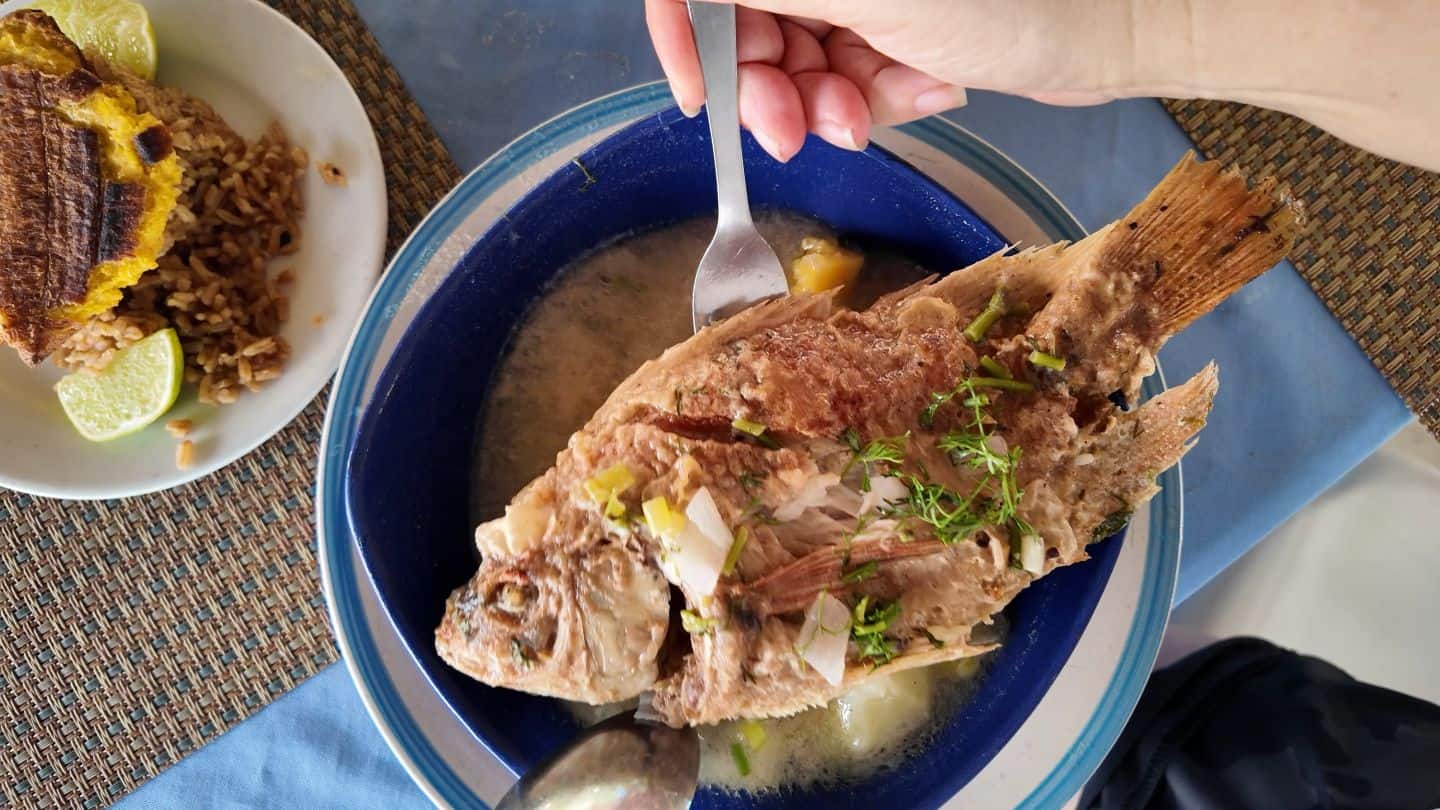
Sancocho de Pescado | Fish Soup
Sancocho exists throughout Colombia but the coastal version built around fish creates something distinct from its highland chicken or beef cousins.
Cooks start with a whole fish, usually a firm white fish that won’t fall apart during long simmering. The fish goes in bone-in and often head-on because these parts contribute flavor and body to the broth.
The starchiness of cassava (yuca) chunks, potato, green plantain and corn on the cob thicken the broth naturally. This creates a broth that coats a spoon, it is somewhere between soup and stew.
Some cooks add coconut milk which signals the African influence in coastal cooking. Others keep it simple and let the fish and vegetables speak for themselves.
Where to eat it: Local comedores and market stalls. I had it on an overnight trip to Rosario Islands, which remains one of my favourite places along the Caribbean in Colombia.
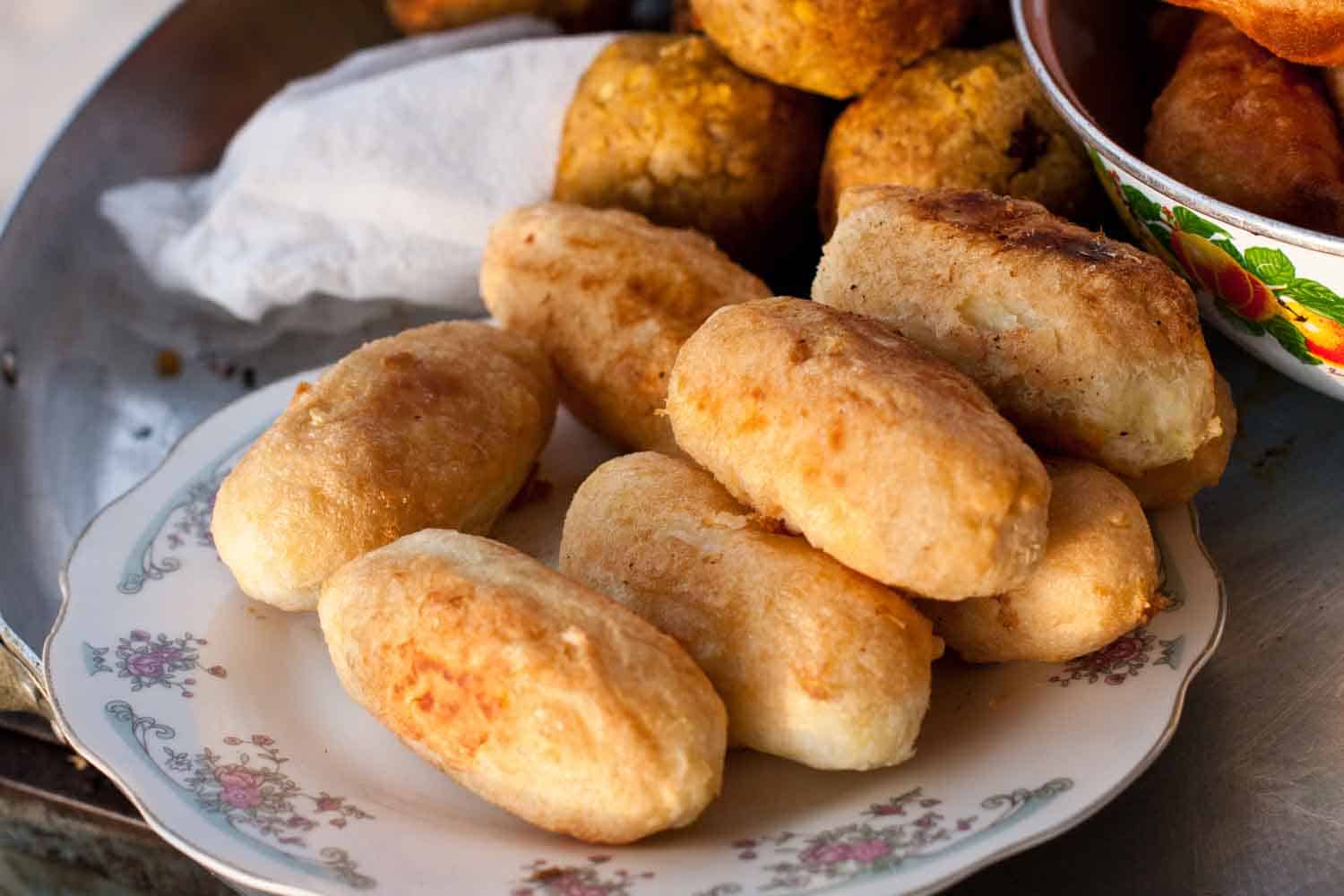
Carimañola | Yuca Fritter
Carimañola is yuca (cassava) in its most indulgent form and shows how the same dish transforms across Colombia’s regions.
Cooks boil cassava until a fork slides through easily then drain it thoroughly. It is mashed while still hot and the mashing releases sticky starches that bind the dough. Some cooks add a bit of butter or lard to make it more pliable.
The dough wraps around fillings that vary by location. On the Caribbean coast cheese is traditional, usually a salty white cheese that melts slightly during frying.
In Bogotá the filling switches to seasoned ground beef mixed with hard-boiled egg and rice. Santa Marta offers both versions depending on the vendor.
You’ll find them as ovals or football shapes.
Where to eat it: Street vendors and traditional breakfast spots. Morning vendors often have both versions ready.
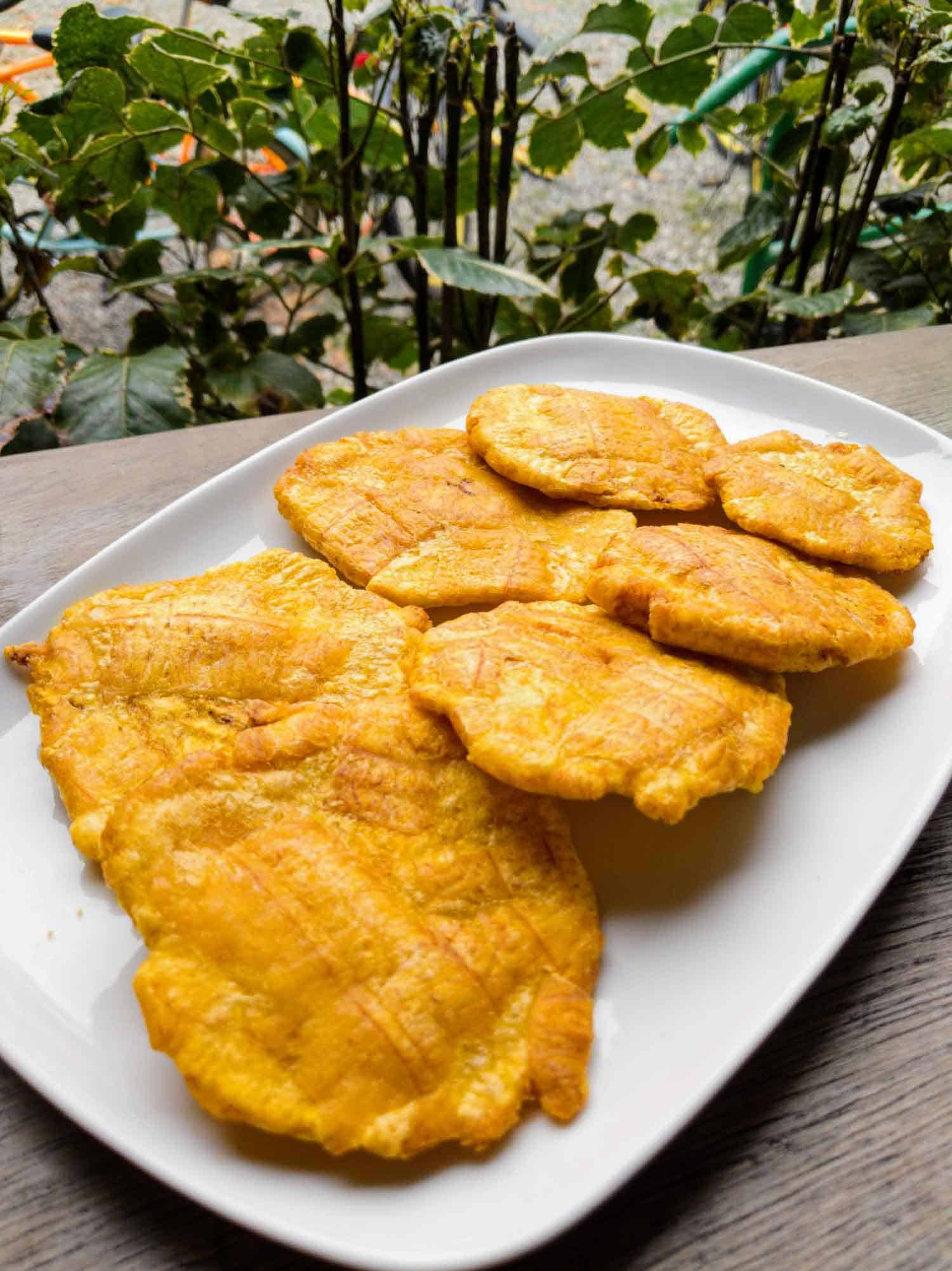
Patacones con Salsa Rosada | Fried Plantain with Pink Sauce
Patacones demonstrate how double frying creates magic from humble ingredients.
Cooks slice green plantains into thick rounds and fry them briefly in hot oil. This first fry partially cooks the plantain and sets the exterior.
The plantains come out of the oil and smashed flat, traditionally between two wooden blocks but modern cooks use anything from a pot bottom to a special press.
The smashing serves several purposes. It increases surface area dramatically. It creates an irregular surface with peaks and valleys. When the smashed plantain returns to the hot oil these irregular surfaces crisp differently and create textural variety in each bite.
The second frying turns the plantains golden and crispy. The exterior becomes crispy and the interior stays creamy. Salt hits the patacones while they’re still hot and oil-slicked.
Salsa rosada is pure Colombian pragmatism that I love, ketchup and mayonnaise mixed together. Some cooks add minced garlic. The sauce is sweet, creamy and provides contrast to the salty fried plantain.
It’s considered essential by most Colombians even though visitors often skip it.
You’ll also find patacones served with suero, which is similar to sour cream but more tangy. I love both options.
Where to eat it: Everywhere. Every restaurant and bar serves these. Street vendors sell them fresh from the fryer.
Colombian Fruits
Tajaditas | Thin Fried Plantain Chips
Basically plantain chips. Ripe plantains are sliced paper-thin and fried until crisp. These chips are sweet from the ripe plantain. They make a great snack or side dish.
Where to eat it: Street vendors and markets. You can even buy commercial packaged plantain chips in store but the fresh warm ones are best.
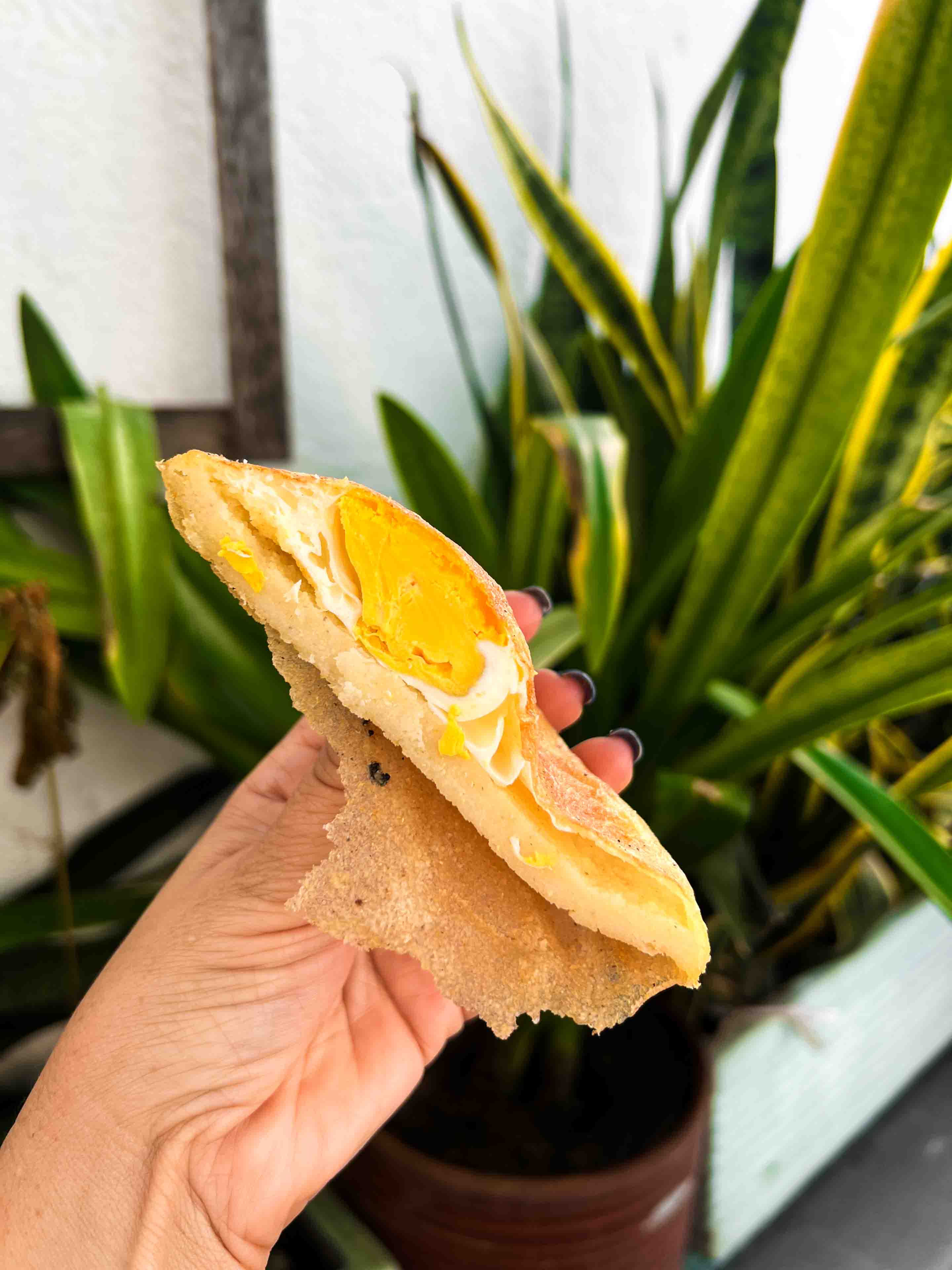
Arepa de Huevo | Egg-Stuffed Arepa
This coastal specialty is a remarkable technique hidden inside simple street food.
The cook fries a corn arepa in hot oil until it puffs and creates a pocket inside. She pulls it from the oil at exactly the right moment, when the arepa has puffed but before the pocket collapses.
She cracks a whole egg and slides it into the hot pocket. The arepa returns to the oil with the egg sealed inside.
The second frying cooks the egg while crisping the exterior. Done right the yolk stays slightly runny. The whites set but remain tender. Breaking into the arepa releases a flow of hot yolk that mixes with the corn.
Where to eat it: Street vendors, especially in the morning. Watch for vendors with large pots of oil and baskets of eggs.
Arepas de Queso | Cheese Arepas
Street food in Colombia is taken very seriously, it’s not just a snack it is often enough for a meal.
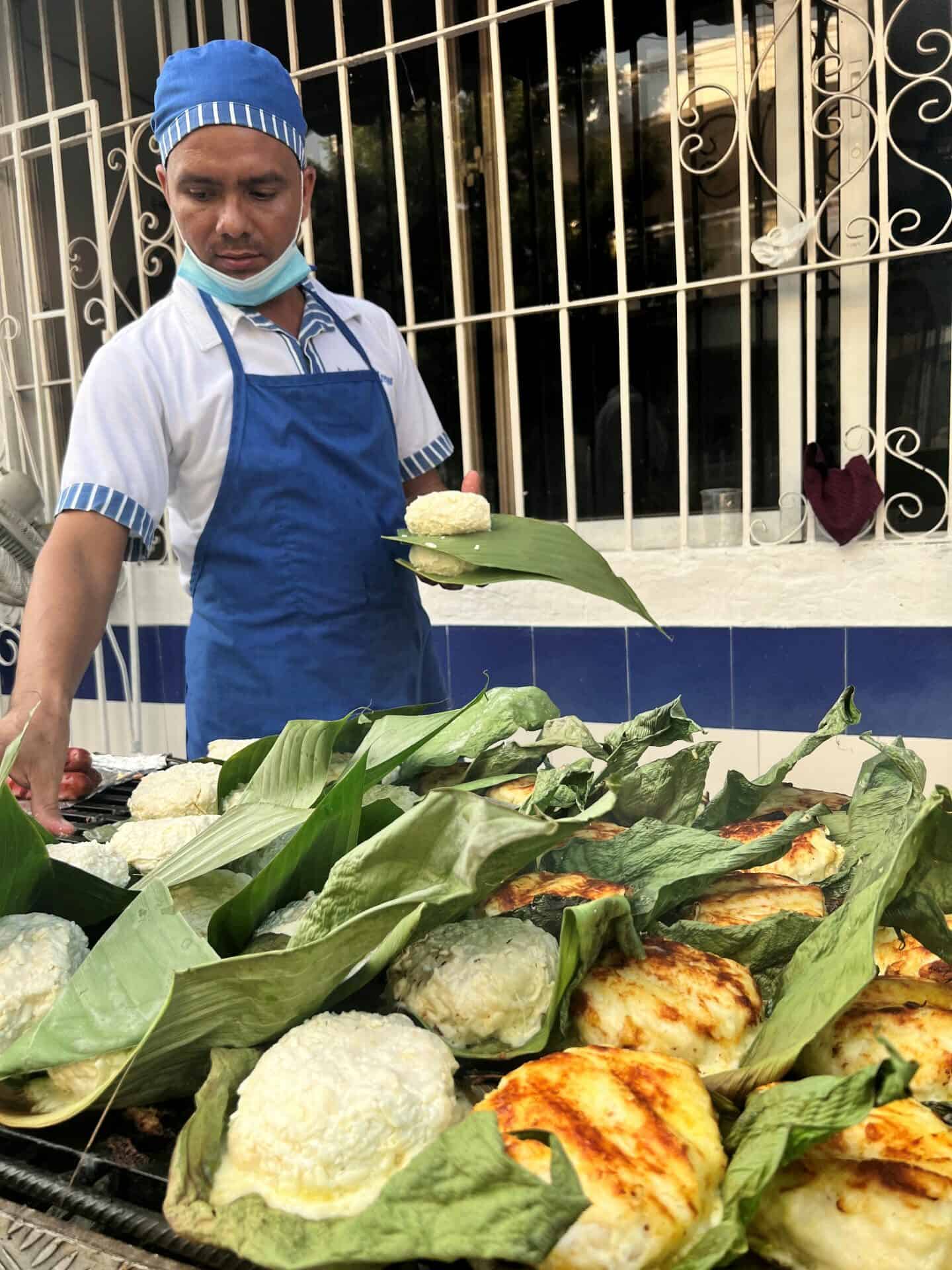
Santa Marta is home to some of the tastiest arepas. But please come hungry because they are so filling. White cheese and corn dough form a patty to cook over an open grill in bijao leaves.
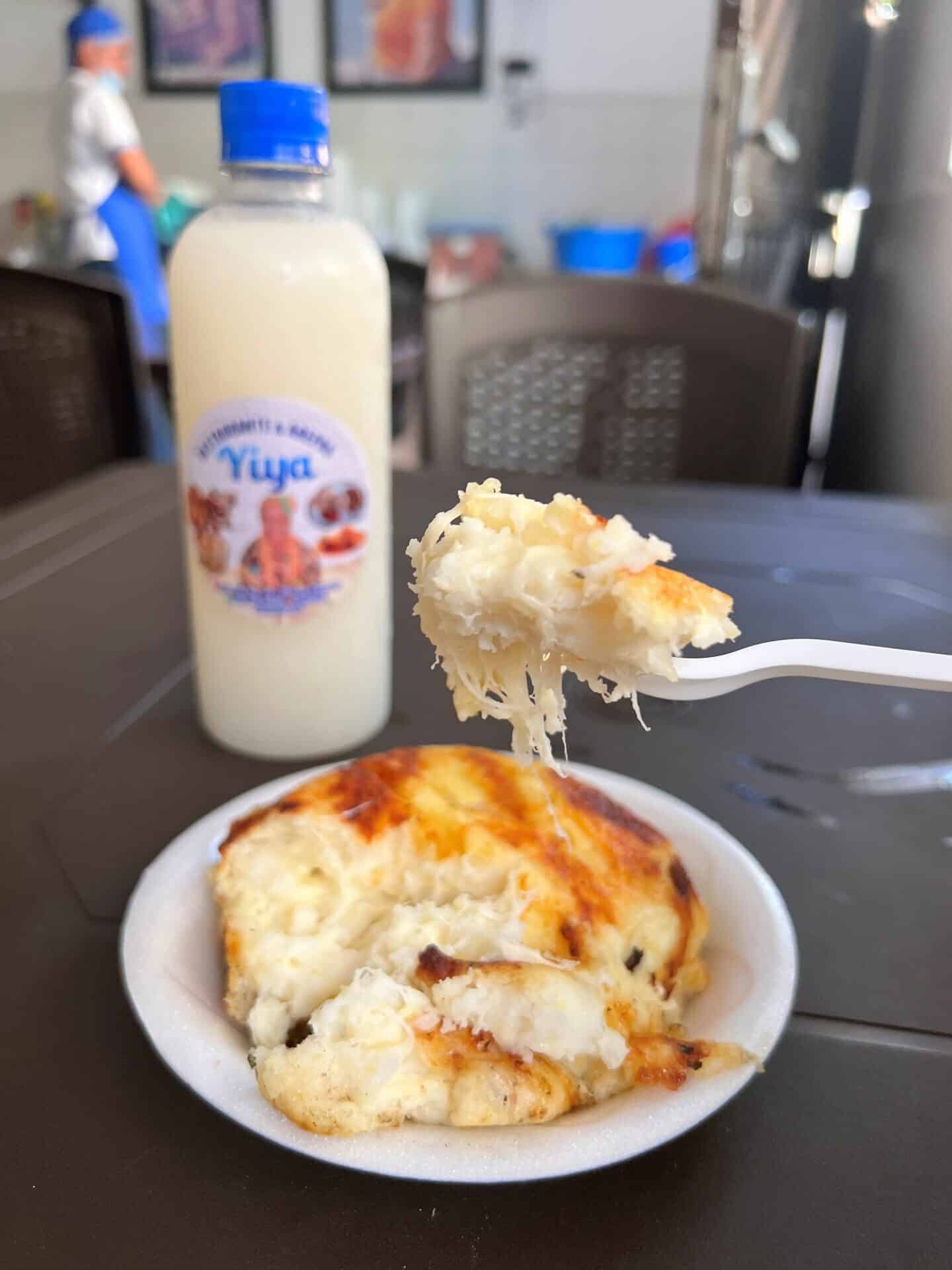
These arepas are grilled until the cheese melts inside. The exterior gets crispy while the interior stays soft and cheesy.
It almost feels like a thick cheese stuffed potato cake, but so much better.
Where to eat it:
Arepas de Yiya has been serving these amazing arepas for 85 years and many say it’s the best in the country. The owner still opens seven days a week from 4pm.
Arepitas de Maíz Verde | Green Corn Arepas
Ground fresh green corn mixed with cheese to make small arepas. The green corn has a different sweetness than dried corn. The texture is more tender.
These are breakfast food, served hot off the griddle. And almost feel like softer, tastier tortilla chips.
Where to eat arepitas de maiz verde:
Mas Que Pan, Calle 14 con carrera 4, Santa Marta
Christmas Traditions in Colombia
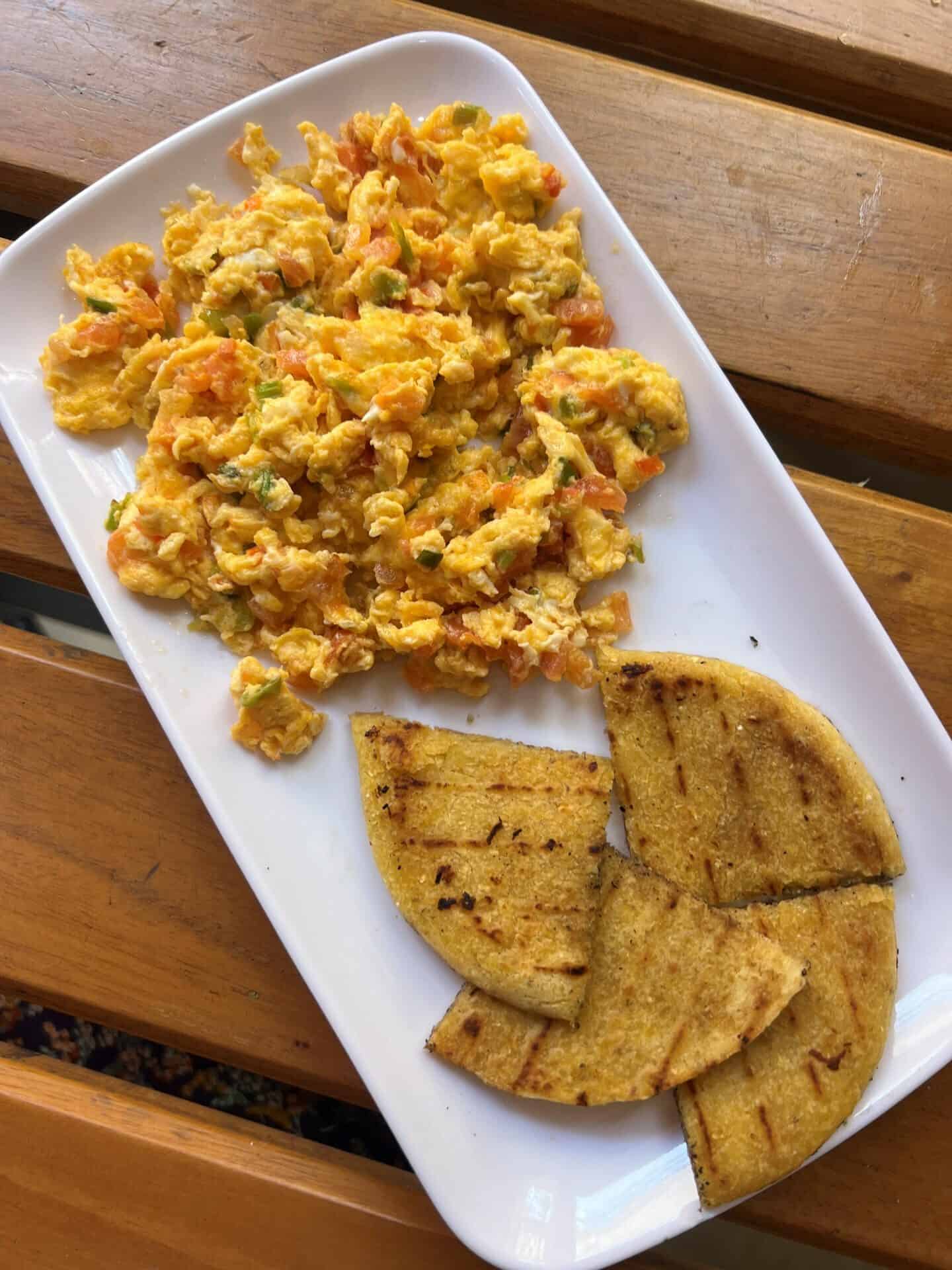
Huevos Pericos | Scrambled Eggs with Vegetables
Eggs scrambled with tomatoes, scallions and sometimes peppers. This is standard Colombian breakfast but Santa Marta serves it with coastal sides like green banana or patacones.
It is also common in Venezuela and is named after the colors of a parrot.
Where to eat huevos pericos:
Mas Que Pan, Calle 14 con carrera 4, Santa Marta
Enyucado | Cassava Cake
Enyucado is a traditional Colombian baked dessert using grated yuca/cassava mixed with coconut, sugar, butter and cheese.
The result is sweet, dense and chewy. Coconut flavor dominates. Locals eat it for dessert or a sweet snack with coffee.
Where to eat it: Bakeries throughout the city.
Cocadas | Coconut Sweets
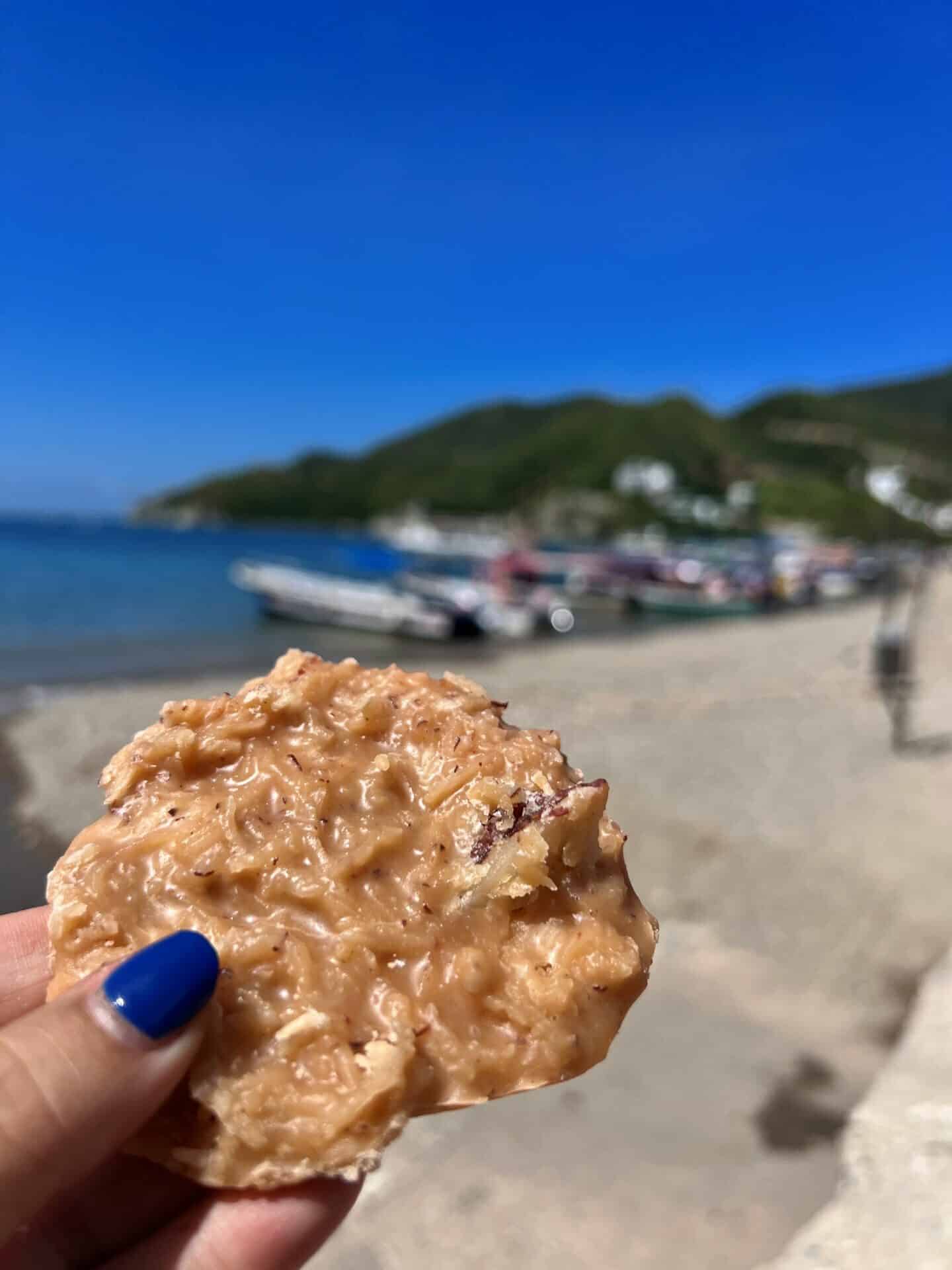
Cocadas are one of the most popular Colombian desserts wherever you find coconut. Shredded coconut is cooked with sugar until it forms a candy.
White cocadas are made with coconut and sugar only. Brown cocadas add panela (unrefined cane sugar) for a deeper flavor. I prefer this much more as I find they taste less sweet.
The nice thing is these sweets are sold individually so it’s hard to say no to trying just one.
Where to eat it: Street vendors, especially near beaches and tourist areas.
Bolas de Tamarindo | Tamarind Balls
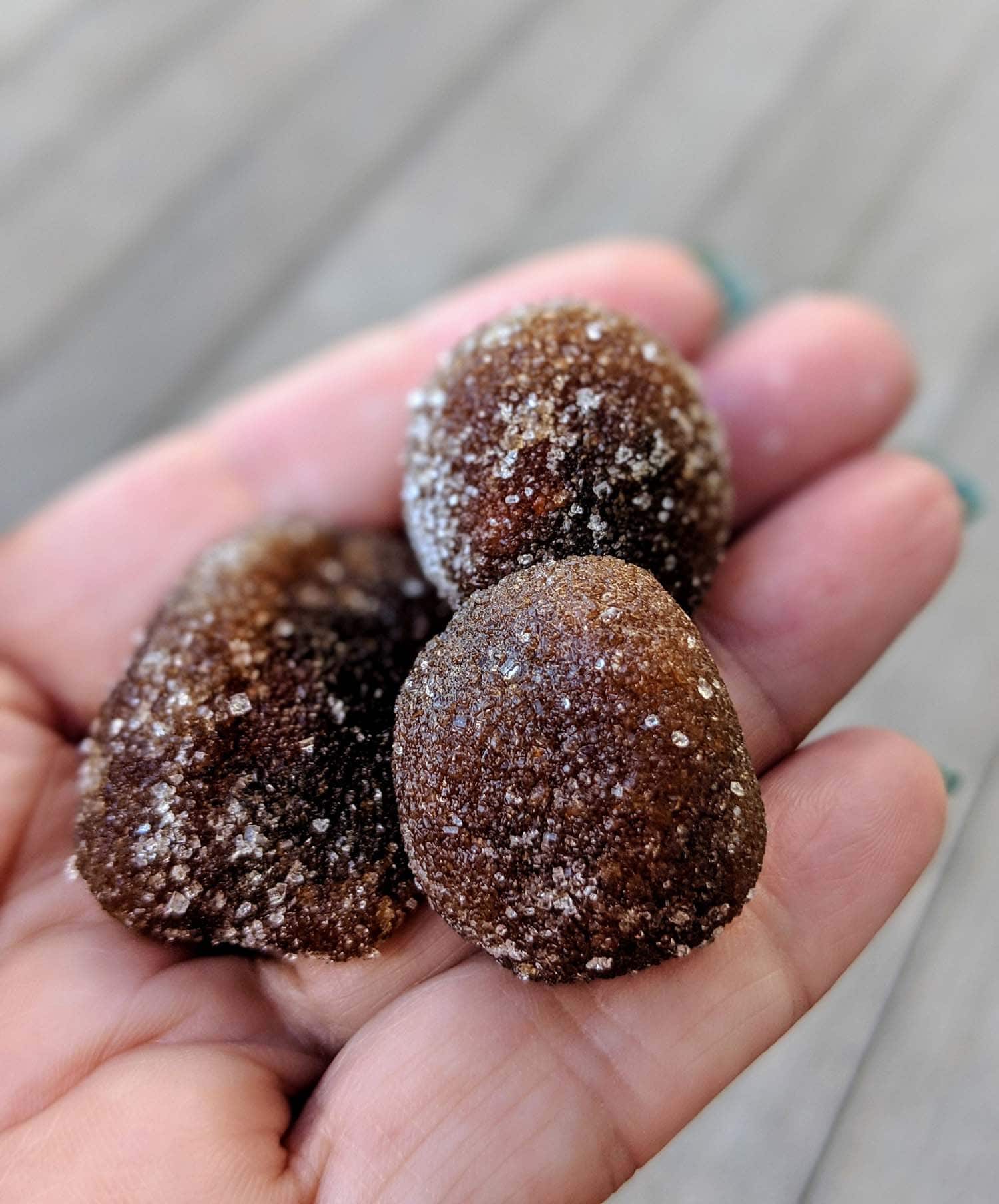
Tamarind pulp is mixed with sugar and sometimes chili powder then rolled into balls.
The flavor is sweet, sour and sometimes spicy. These are traditional Colombian candy but you’ll also find them in other Caribbean culture, as they are a popular Jamaican food too.
Where to eat tamarind balls:
Street vendors and markets. And if you like them you can find commercially packaged sweets in the supermarket.
Dulce de Ñame | Candied Yam
This sweet is essentially cooked yam with panela, cinnamon and cloves. It’s cooked down a sweet thick pudding. It’s very dense so get a small portion but well worth trying.
Where to eat it: Markets and some traditional restaurants.
Arepa de Anís | Anise Arepa
These sweet arepas are flavored with anise seeds. The anise gives a licorice-like flavor. These are dessert or even breakfast. I don’t love licorice but actually they are great with coffee.
Where to eat it: Bakeries and street vendors.
Aguapanela con Limón | Panela Water with Lime
There are so many unique Colombian drinks but I love this simple one the most.
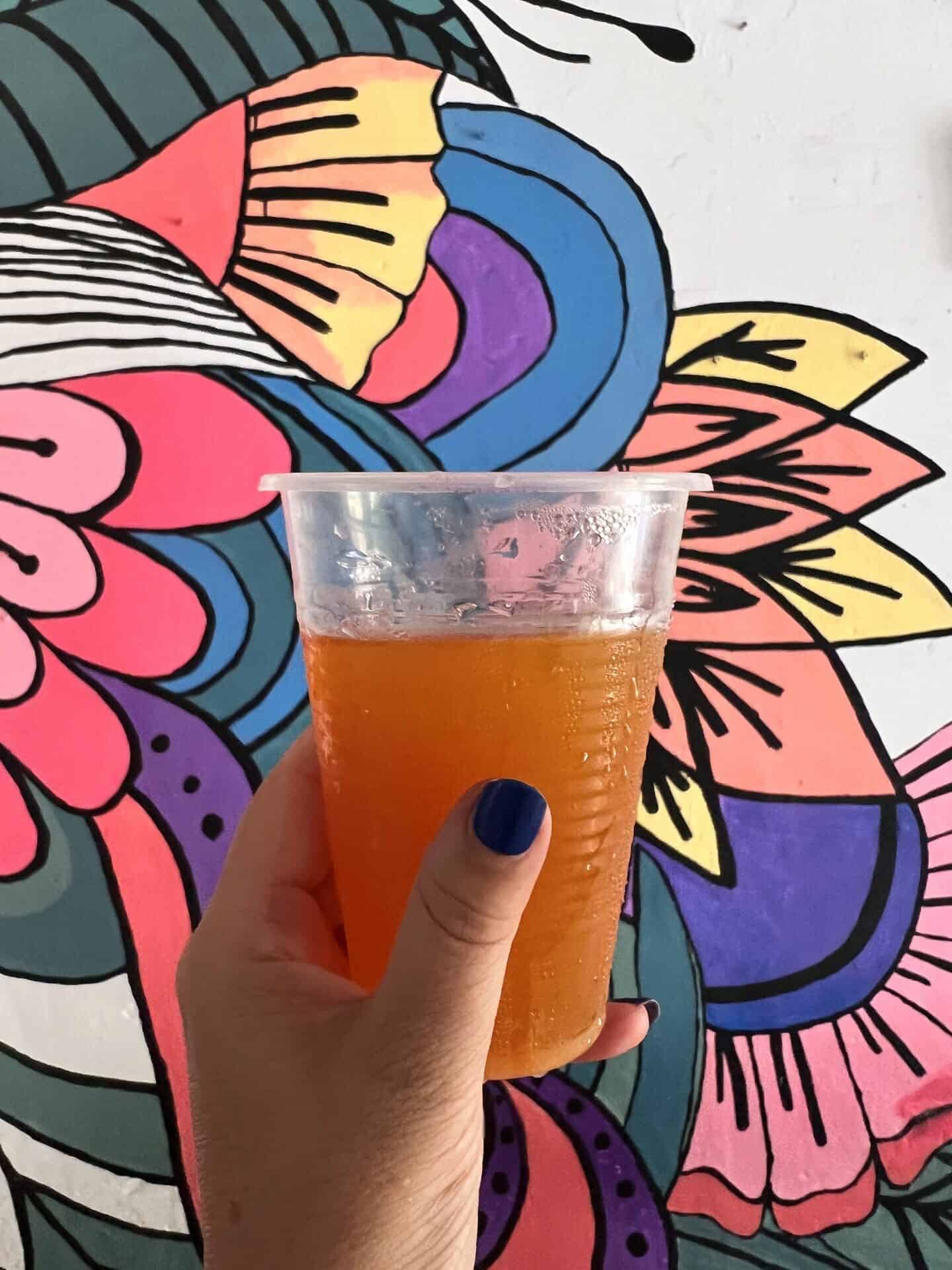
This drink represents Colombian rural life distilled into a glass. Making aguapanela requires only three ingredients: panela, water and lime.
Cooks boil chunks of panela, unprocessed sugar cane that is formed into blocks. Lime juice cuts the heavy sweetness and adds brightness.
The drink works hot or cold. In the Andean highlands people drink it hot as morning fuel or an afternoon pick-me-up.
On the coast of Santa Marta you’ll find cold aguapanela. Street vendors keep large containers of cold aguapanela and ladle it into plastic bags with straws.
And it’s like a local iced tea or lemonade, you’ll find it everywhere. And while it has a sugary base it’s also high in iron and magnesium and the perfect way to cool off.
Where to eat it: Any restaurant or street cart. Many breakfast spots serve it automatically with your meal.
Mazamorra | Corn Drink
Cracked corn is cooked with milk and sugar until thick.
This drink is served cold. The texture is between a drink and a pudding.
Some versions add cinnamon. Very filling.
Where to eat it: Street vendors and juice stands.
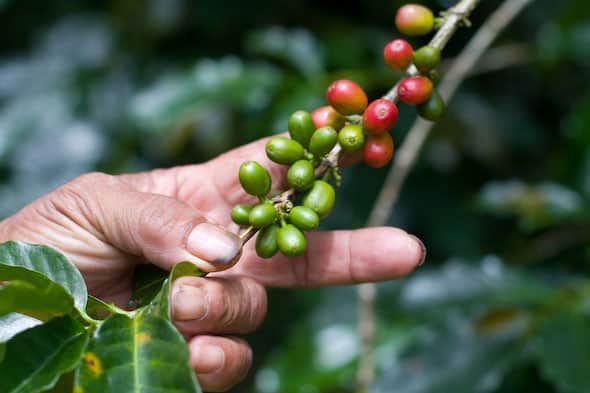
Tinto | Colombian Coffee
Small cups of black coffee served sweet. Santa Marta sits near the coffee-growing region. The coffee here is good. Tinto is served throughout the day from thermoses carried by street vendors.
Where to eat it: Literally everywhere. Street vendors walk around with thermoses.
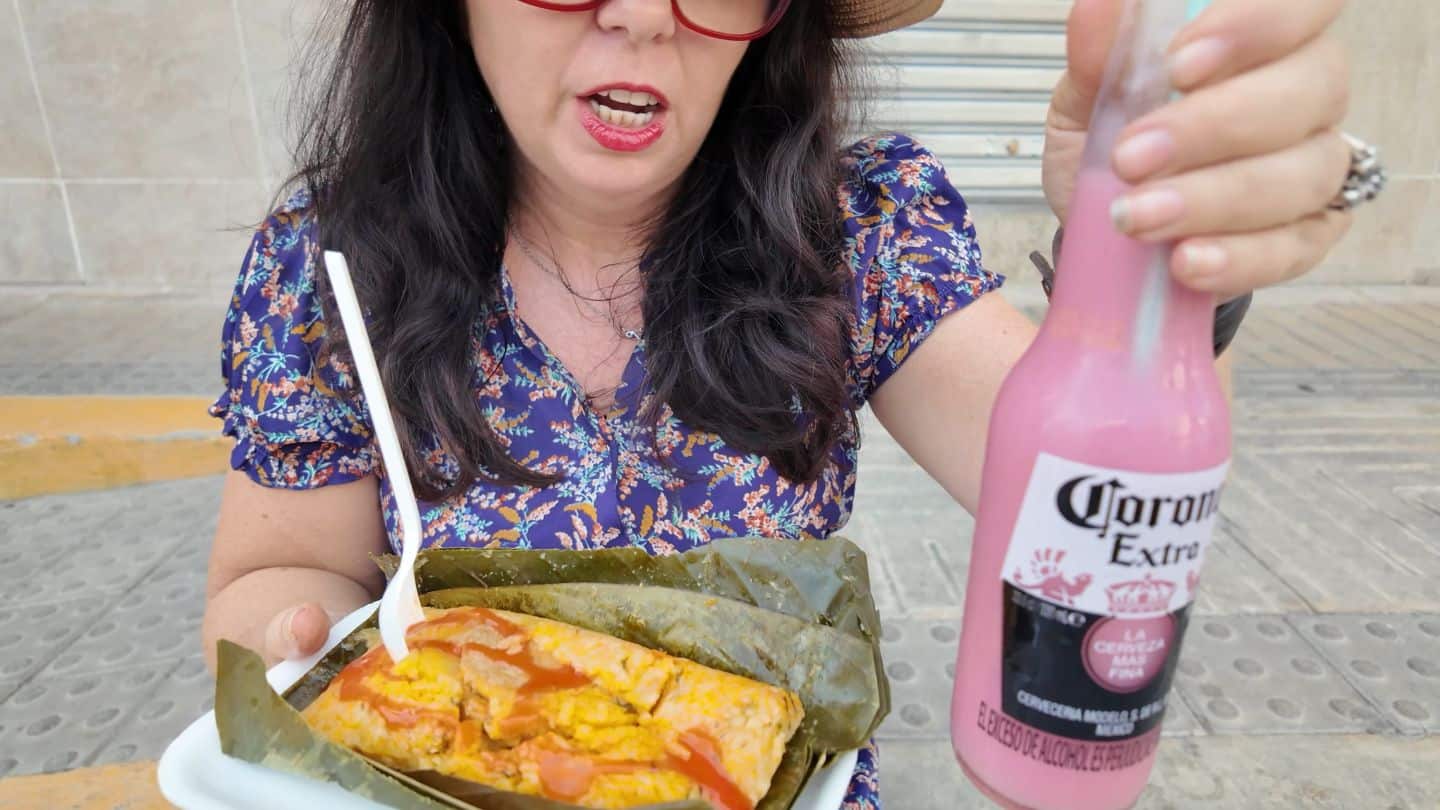
Chicha | Fermented Corn Drink
Chicha has Indigenous roots that are before Spanish colonization. The name and technique span the Americas but each region creates its own version.
Traditional chicha uses corn soaked in water for days. Natural fermentation begins and the corn develops a slight sour funk. Cooks grind the fermented corn with fresh water then strain out the solids.
They add sugar and spices like cinnamon or cloves. The mixture ferments further or gets served fresh depending on the maker’s preference.
Santa Marta also makes chicha from rice instead of corn. This variation is more recent and caters to modern tastes.
The rice version ferments less and tastes sweeter. I had one that had a cream soda flavor profile. Some vendors add pink coloring though this serves no purpose beyond aesthetics.
I prefer the corn version with its funky fermented flavor. The rice version appeals to those wanting something sweeter and more approachable.
Where to eat it: Street vendors, especially on weekends. Look for vendors with large plastic containers displaying different colors.


Food Culture in Santa Marta
The weekends in Santa Marta are loud. Music blasts from every corner. Cars honk. People gather to eat and drink.
The food culture here is generous. If you can’t finish your meal it’s completely normal to offer it to someone else. This isn’t considered an insult in Colombia. Many people don’t have sufficient access to food and sharing is built into the culture.
The fish market opens early. Fishermen bring in the catch and their families run the cooking stalls. The fish is so fresh the market doesn’t smell.
Most restaurants are small family operations. The same woman might cook the same dish every day for decades. Arepas Yiya has been open for 85 years with the same family running it.
The best food comes from market stalls, street vendors and small comedores in residential neighborhoods. These are the places where locals eat every day. The portions are huge and the prices are fair.
That’s the spirit of Samarian food.
Pin it: Best Food in Santa Marta