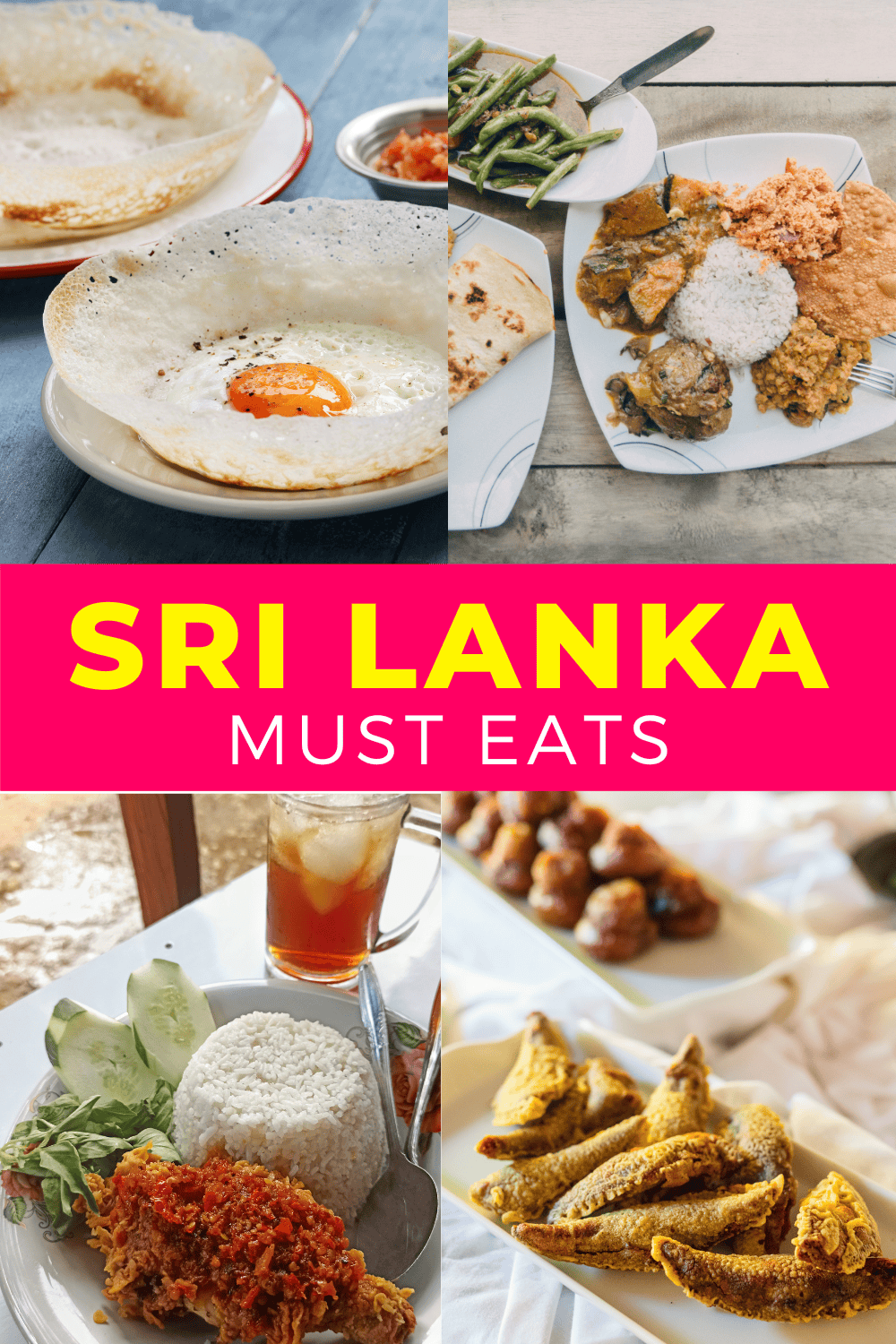
One of my favorite parts of visiting Sri Lanka was discovering the incredible diversity of Sri Lankan cuisine.
This island nation has some of the most flavorful and aromatic food I’ve ever tasted, with influences from South India, the Middle East, Malaysia and colonial Portuguese, Dutch and British rulers.
The only challenge is that Sri Lankan food can be seriously spicy. Like, tears-streaming-down-your-face spicy.
I spent one month traveling around Sri Lanka, starting in Colombo, heading north to Jaffna, Trincomalee and then onward to the hill country tea plantations and finally a scenic Ella ride back to the capital.
My advice: do not compare it to Indian food.
What makes foods in Sri Lanka special is the perfect balance of spices, coconut and fresh local ingredients that create memorable dishes you will crave long after your visit.
Every meal tells a story of cultural influences from South Asia, Southeast Asia and European colonizers all filtered through distinctly Sri Lankan sensibilities.

Sri Lankan Culinary Influences
Sri Lankan cuisine reflects the island’s history of trade, colonization and regional differences. The food varies significantly from region to region with each area having its own specialties and cooking methods.
North: Strong seafood and Tamil dishes dominate the northern cuisine. The Jaffna Peninsula features spicy, tangy flavors that reflect Tamil culinary traditions. Seafood curries and dishes using palmyra palm products are common here.
Highlands: In the central highlands around Kandy and Ella, you will find vegetable-based and rice-focused foods. The cooler climate supports different produce, and festive foods often feature prominently. Meals tend to be less spicy than coastal areas.
South: Southern Sri Lankan food embraces bold flavors with coconut-heavy and seafood-driven dishes. The southern coast specializes in fish curries, especially the famous sour fish curry known as Ambul Thiyal.
The foundation of Sri Lankan food comes from the abundant use of coconut in various forms: milk, oil, grated flesh and flour. Rice is usually the staple, complemented by an array of curries, sambols (spicy condiments) and pickles.
Spices like cinnamon, cardamom and cloves grow naturally on the island, giving Sri Lankan foods their amazing aroma.
You usually smell the meal before you see it.
Watch the Sri Lanka Travel Documentary
Must Try Sri Lankan Foods
Rice & Curry
This is the backbone of Sri Lankan cuisine and nothing like the simple rice and curry you might imagine.
A proper Sri Lankan rice and curry meal includes a mound of rice surrounded by at least five or six different curries and side dishes.
You’ll get a main curry, which could be fish, chicken, beef or mutton. Then there are vegetable curries, dhal curry, a mallung (shredded greens with coconut), sambols and papadums.
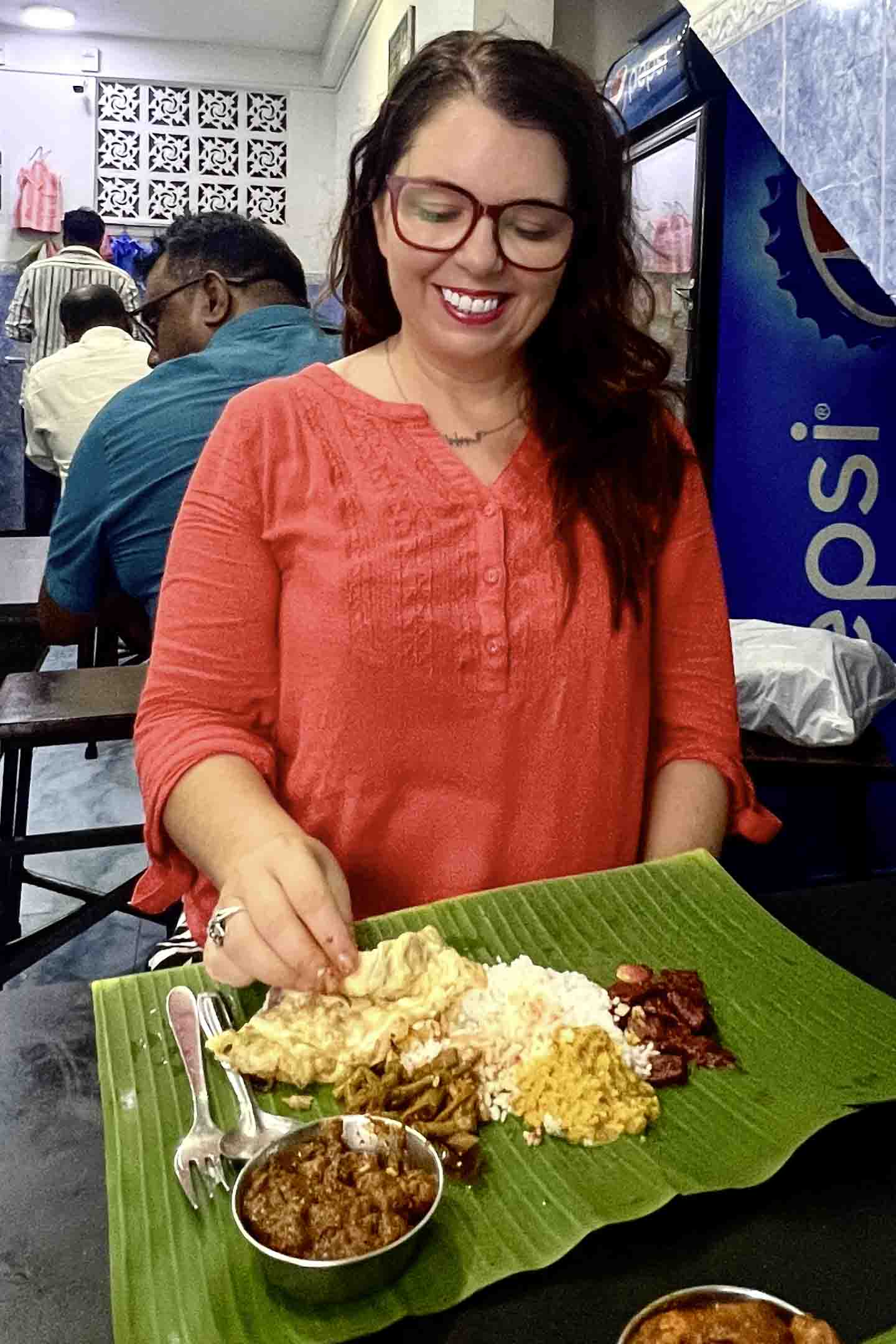
Everything is served at once on a large plate or banana leaf. You mix it all together with your hands, which is the traditional way to eat in Sri Lanka.
The photo above was my first taste of rice and curry and I finally learned to eat with my hands. Something I committed to the entire trip and I loved every meal.
The flavors are incredible because each curry has different spices. Some are creamy with coconut milk, others are dry and intensely spiced.
Ambul Thiyal | Sour Fish Curry
Ambul thiyal is a southern Sri Lankan fish curry where chunks of tuna are simmered with goraka (a dried fruit that acts as a souring agent), black pepper, cinnamon, garlic and curry leaves until the liquid evaporates completely.
The dish has an intensely sour and spicy flavor profile with a dry texture. The preservation technique concentrates the flavors into the fish, creating a deeply satisfying taste.
This dish is unique to southern Sri Lanka, particularly in coastal areas. The cooking method was traditionally used to preserve fish for long journeys.
Kottu Roti | Chopped Flatbread Stir-fry
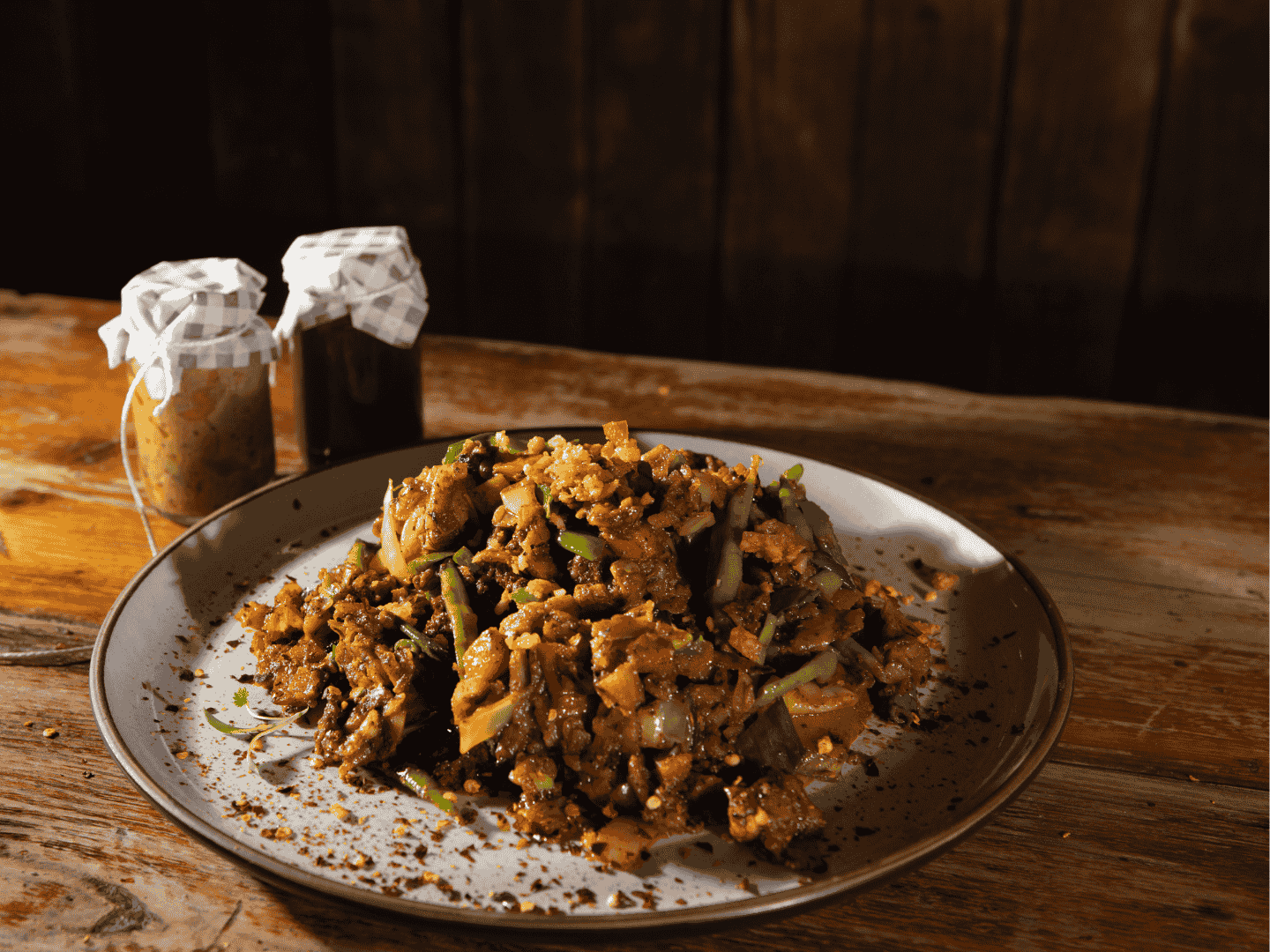
Kottu is a popular Sri Lankan street food made by chopping flatbread (godamba roti) with vegetables, eggs, meat and spices on a flat griddle using two metal cleavers.
Kottu tastes like a savory, spicy stir-fry with a unique texture from the chopped flatbread. Each bite delivers a mix of soft bread pieces with crunchy vegetables and protein.
It is also probably the most tourist friendly dish if you’re a picky eater, who doesn’t love bread?
This dish originated in the eastern coastal areas but is now found throughout Sri Lanka. Kottu represents Sri Lankan cooking ingenuity, created as a way to use leftover godamba roti.
Street food vendors start preparing kottu in the evening, with the metallic chopping sounds attracting hungry customers.
Most Sri Lankans consider it the perfect late-night meal.
Jaffna Crab Curry
Jaffna crab curry features fresh lagoon crabs cooked in a rich gravy of roasted curry powder, fenugreek, fennel seeds and tamarind. The curry is thickened with coconut milk and intensely spiced.
Although I saw this dish all over Colombo I decided not to try this famous sweet crab meat contrasting with the spicy, tangy sauce until I arrived in Jaffna.
That was a mistake as we arrived during the Nallur Kandaswamy Festival and almost all the restaurants were closed!
This northern Sri Lankan specialty showcases the unique Tamil culinary influence in Jaffna. The dish highlights the abundance of seafood in the northern peninsula.
But it gave me a reason to return to Jaffna!
Ala Theldala | Deviled Potatoes
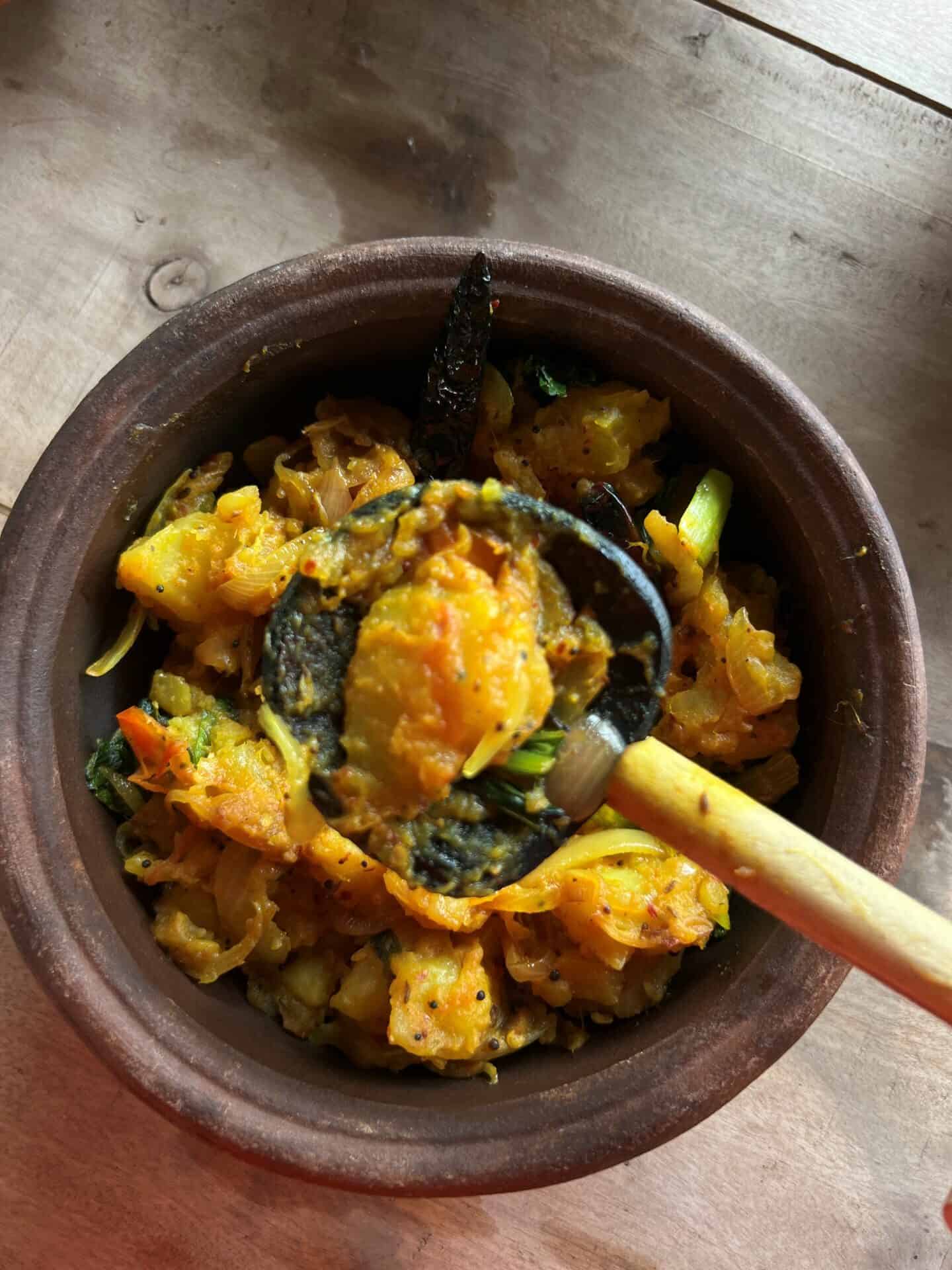
These spicy stir-fried potatoes are a Sri Lankan take on the deviled style of cooking.
Potatoes are cut into chunks, fried until crispy on the outside, then tossed with onions, peppers, tomatoes, chili paste and a sweet-spicy sauce.
The sauce is thick and glossy, coating every piece of potato. It’s made with tomato paste, soy sauce, chili sauce and sometimes a bit of ketchup for sweetness.
What makes ala theldala special is the contrast between the crispy fried potato exterior and the creamy interior, all covered in that sticky, intensely flavored sauce.
I had this at a small restaurant in Trincomalee and couldn’t stop eating it. The heat level was intense but the potatoes helped balance the spice.
Gotu Kola Sambol | Pennywort Salad
Gotu kola sambol is a fresh salad made from finely chopped pennywort leaves mixed with grated coconut, red onions, chili, lime juice and salt.
This refreshing salad offers a grassy, slightly bitter taste balanced by coconut sweetness and lime acidity. The texture is light and crisp with every ingredient finely chopped.
The pennywort plant is also revered for its medicinal properties, including improved memory and longevity. The dish shows how Sri Lankan food often blends nutrition with flavor.
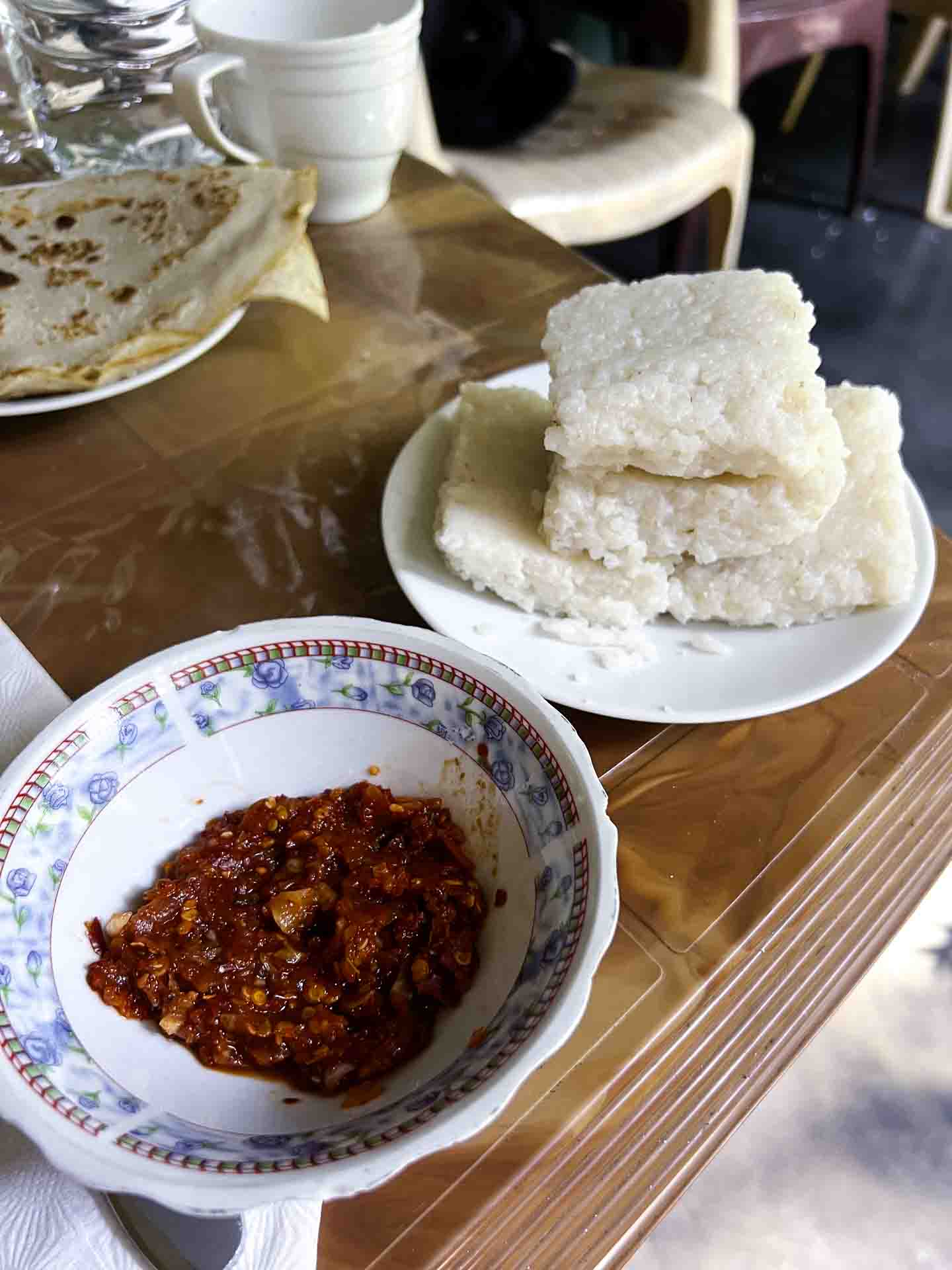
Kiribath | Milk Rice
Kiribath is one of the most common foods in Sri Lanka, but it holds special significance in the central highlands where it’s a staple during festivals and celebrations.
It’s also where I first tried it in Ella. We stayed at a local hotel in Ella and they offered a fantastic breakfast.
And while it’s similar to rice dishes found in other Southeast Asian countries, it’s distinctly Sri Lankan and became my favorite thing to eat for breakfast.
Kiribath is made by cooking rice with thick coconut milk until creamy, then allowing it to set into firm, cake-like portions.
The dish has a rich, creamy texture with a subtle coconut flavor. It’s usually eaten with a spicy sambol or curry to create a pleasant contrast of mild and spicy flavors.
Kool | Seafood Soup
Kool is a northern Sri Lankan seafood soup thickened with palmyra root flour. It contains a mix of seafood (crab, shrimp, fish), vegetables and greens cooked together with tamarind and spices.
The soup has a viscous, stew-like consistency with a complex flavor profile that balances sourness from tamarind, spice from chili, and sweetness from the seafood and vegetables.
I love sour foods and so the tamarind is what makes it special for me.
You’ll need to visit northern Sri Lanka, as it’s most common here, particularly in Jaffna. It reflects the region’s reliance on seafood and palmyra palm products but also its history during difficult times.
Kool has been prepared for generations and was born out of necessity during times when food was scarce. Families would contribute whatever seafood or vegetables they had to create a communal meal.
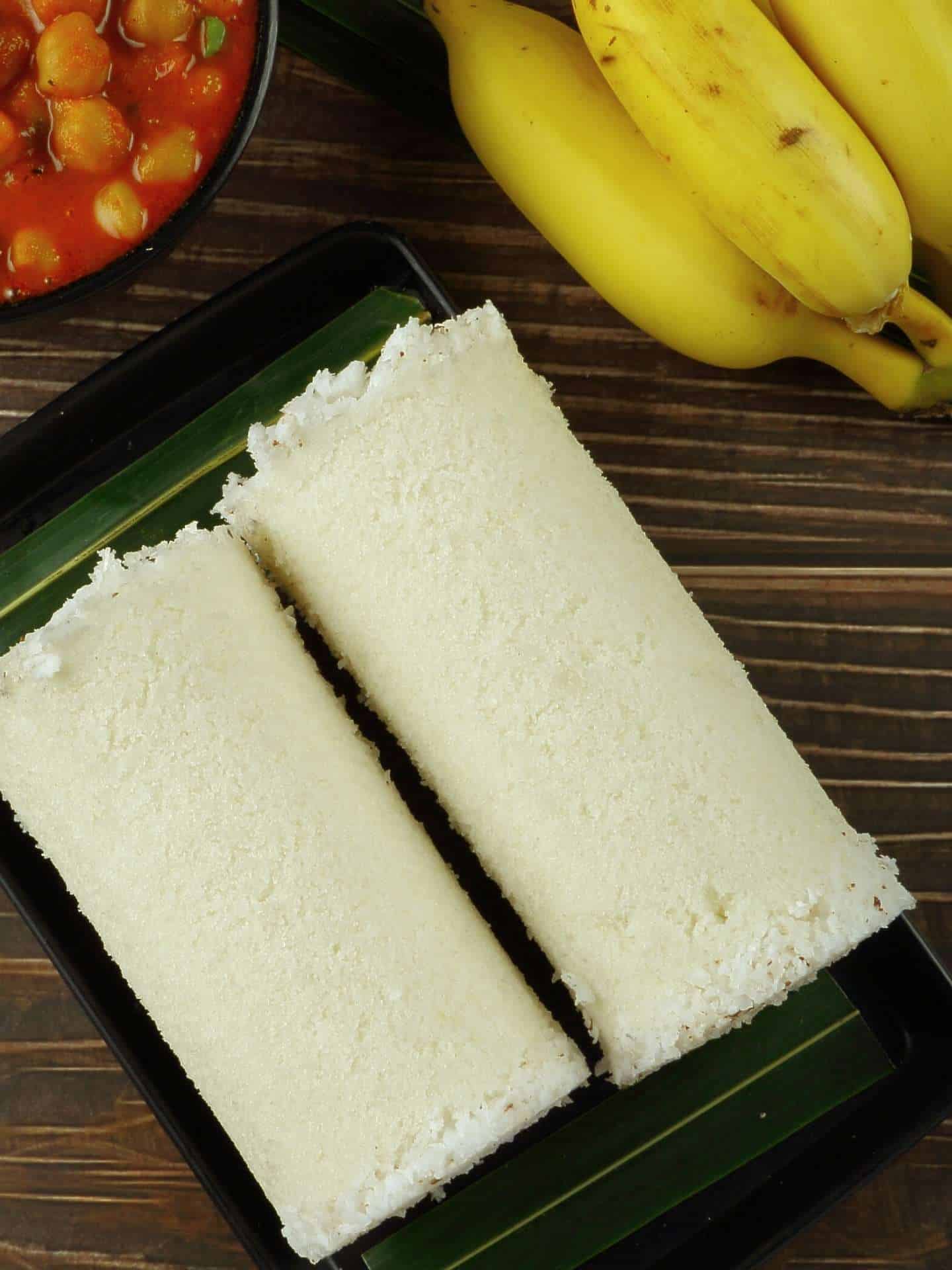
Pittu with Coconut Milk & Curry | Steamed Rice Flour Cylinders
Pittu on the surface just looks like a steamed cylinders of rice flour and grated coconut, traditionally formed in bamboo molds.
It’s usually served with coconut milk and a spicy curry. And initially I resisted trying it as I was trying to cut back on rice.
But at a hotel in Trincomalee, they insisted pittu is an integral part of the dish for texture AND flavor. It has a light, crumbly texture that absorbs the flavors of the curry and rice. The subtle coconut flavor of the pittu contrasts with the rich coconut milk and spicy curry.
Over time I really started to appreciate this and decided I could cut back on rice when I left Sri Lanka
Wambatu Moju | Eggplant Pickle
Wambatu moju is a mixture of deep-fried eggplant slices caramelized with sugar, vinegar, green chili, mustard seeds and spices. Once mixed it is left to naturally ferment.
It’s a specialized pickle unique to Sri Lankan cuisine. More importantly, it is a great example of how the complexity of Sri Lankan food is not given fair credit.
This pickle balances sweet, sour and spicy flavors with a slight bitterness from the eggplant. The texture is soft yet maintains some firmness after frying and marinating.
It shows how a mix of preservation and balanced spices create complex flavor.
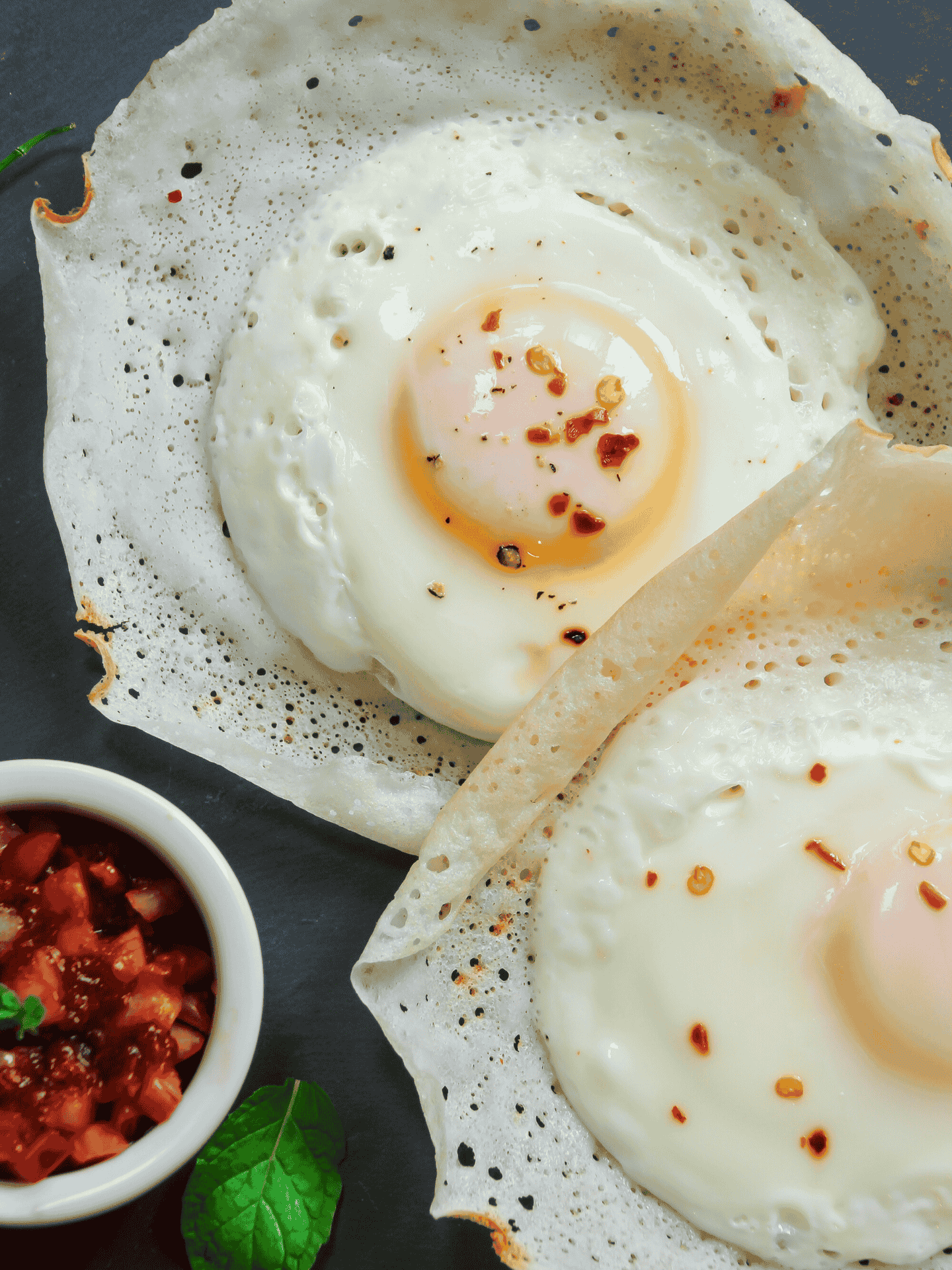
Hoppers (Appa) | Bowl-Shaped Pancakes
The exact origins of hoppers are unclear, but they’ve been part of Sri Lankan cuisine for centuries. The name “hopper” is an anglicized version of the Sinhala word “appa.”
Maybe best compared to small pancakes made from rice flour, coconut milk and a hint of sugar. They have a tangy, slightly sour taste from fermentation with a textural contrast between the crisp edges and spongy center. They’re often served with an egg cooked in the middle.
I love the tanginess and that you can finding them for breakfast through to the evening. They are often compared to Indian dishes but the bowl shape and preparation method are distinctly Sri Lankan.
Sini Sambol
This Malay-influenced dish shows the Muslim contribution to Sri Lankan food. Onions are caramelized until dark and sweet, then mixed with Maldive fish, tamarind, chili and spices.
It’s sweet, sour, spicy and deeply savory all at once. Sini sambol is often eaten with hoppers or roti. The complex flavors make it one of my favorite sambols.
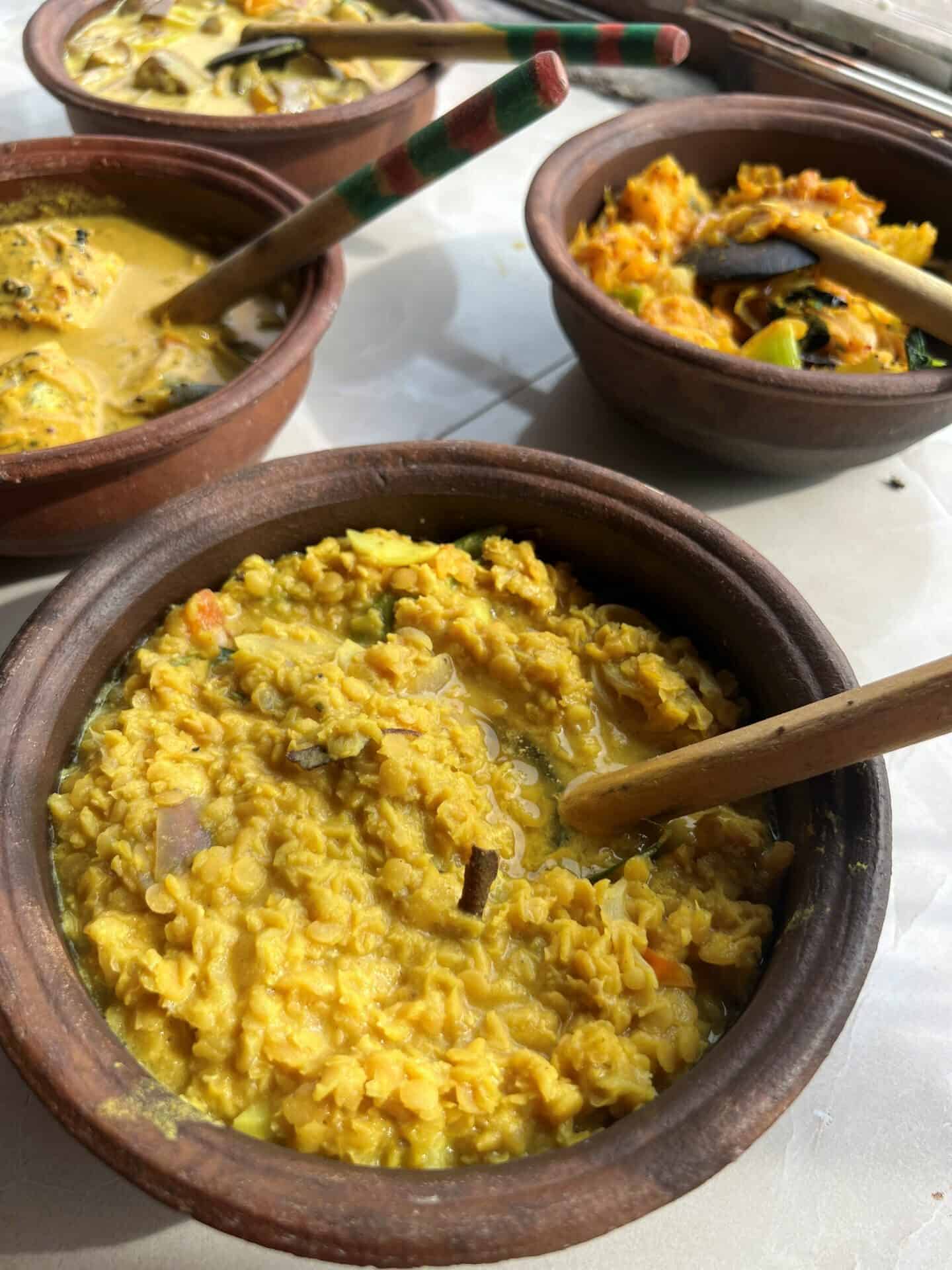
Dhal Curry (Parippu) | Lentil Curry
I ate Sri Lankan dal at least once a day for 30 days and I have no complaints at all.
It is made with red lentils cooked with turmeric, then tempered with onions, curry leaves, dried chili and mustard seeds fried in oil. Coconut milk is often added for richness, but the recipe changes from region to region.
A cook told me that this is often the first food most children learn to eat. And as adults they see it as a comfort food.
Batakola Mallum | Leafy Greens Stir Fry
Batakola mallum is finely chopped greens (often Malabar spinach) quickly cooked with grated coconut, green chilies, onions and lime juice. The ingredients are lightly tossed together to wilt the greens.
As someone who is always trying to eat more greens when they travel I loved this dish.
This Sri Lankan food has a fresh, green flavor with coconut sweetness and chili heat. The texture is soft but still maintains some crispness from the briefly cooked greens.
This is key as so many cook the health benefits right out of leafy greens.
It is most common in the central highlands where various greens grow abundantly.
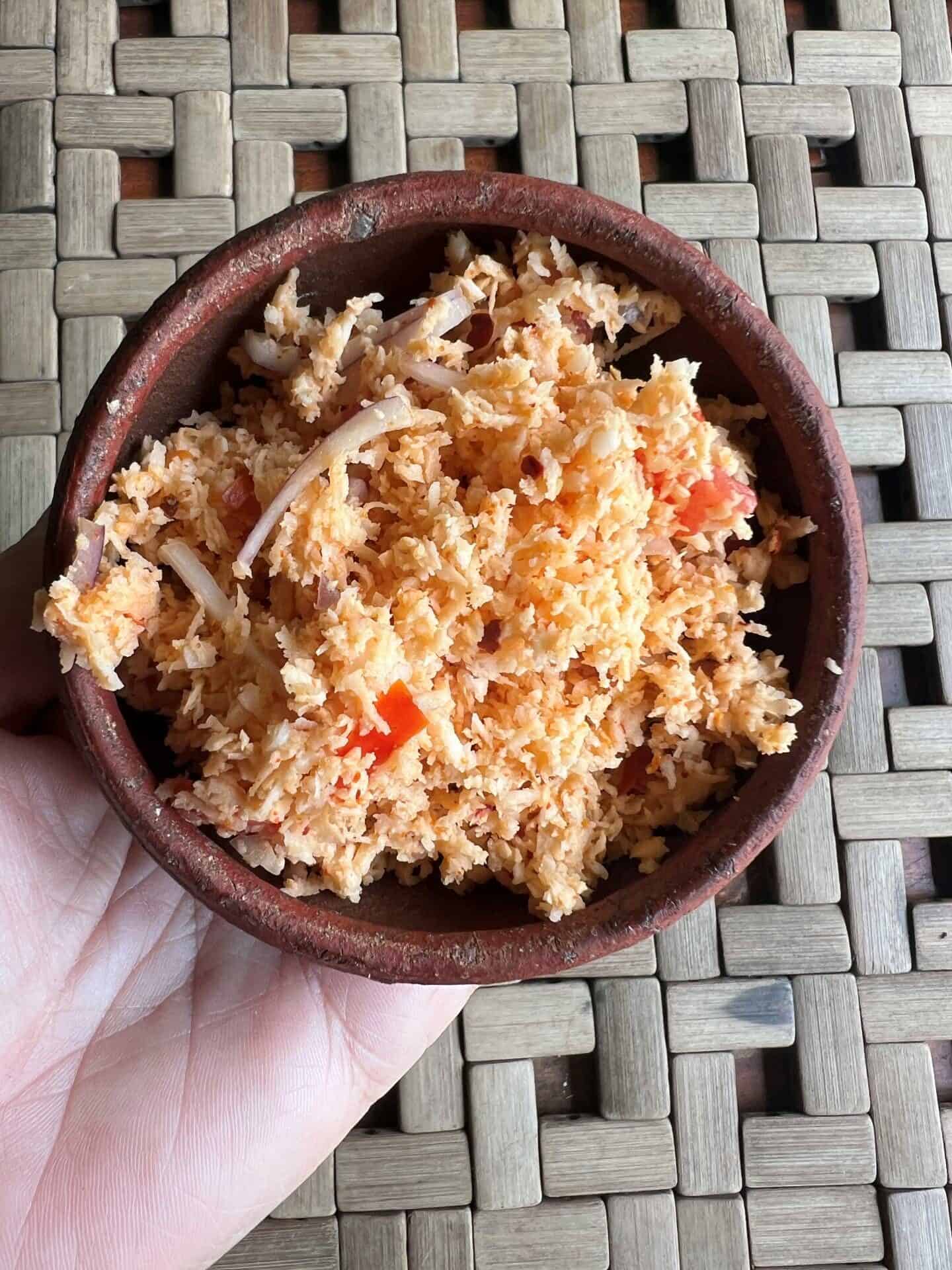
Pol Sambol | Coconut Relish
You would really have to twist my arm to pick a favorite Sri Lankan food. But if it were to choose a condiment pol sambol would fall from my lips before your question was done.
It is a relish made from freshly grated coconut mixed with red chili powder, lime juice, small red onions and Maldive fish (dried tuna).
It delivers a punch of flavor with spicy, tangy and umami. And unlike spicy sambols the texture is coarse and dry, providing a perfect contrast to the softer rice and curry dishes it accompanies.
The first time I tried it I was blown away and so if it didn’t appear alongside my meal I would ask for it. In Trincomalee I also tried a version where they flash fry it to bring out more flavors.
Exotic Fruits in Sri Lanka
Polos Curry | Young Jackfruit Curry
Western cultures haven’t quite discovered the magic of jackfruit, whereas it is a popular curry ingredient in many countries.
I first tried it in Indonesia so I was excited to see it heres
Polos curry is made from young, unripe jackfruit cooked with roasted curry powder, pandan leaves, fenugreek and coconut milk until tender.
Polos curry is often called “vegetarian meat” due to its texture. But carnivores eat it too because it’s so good.
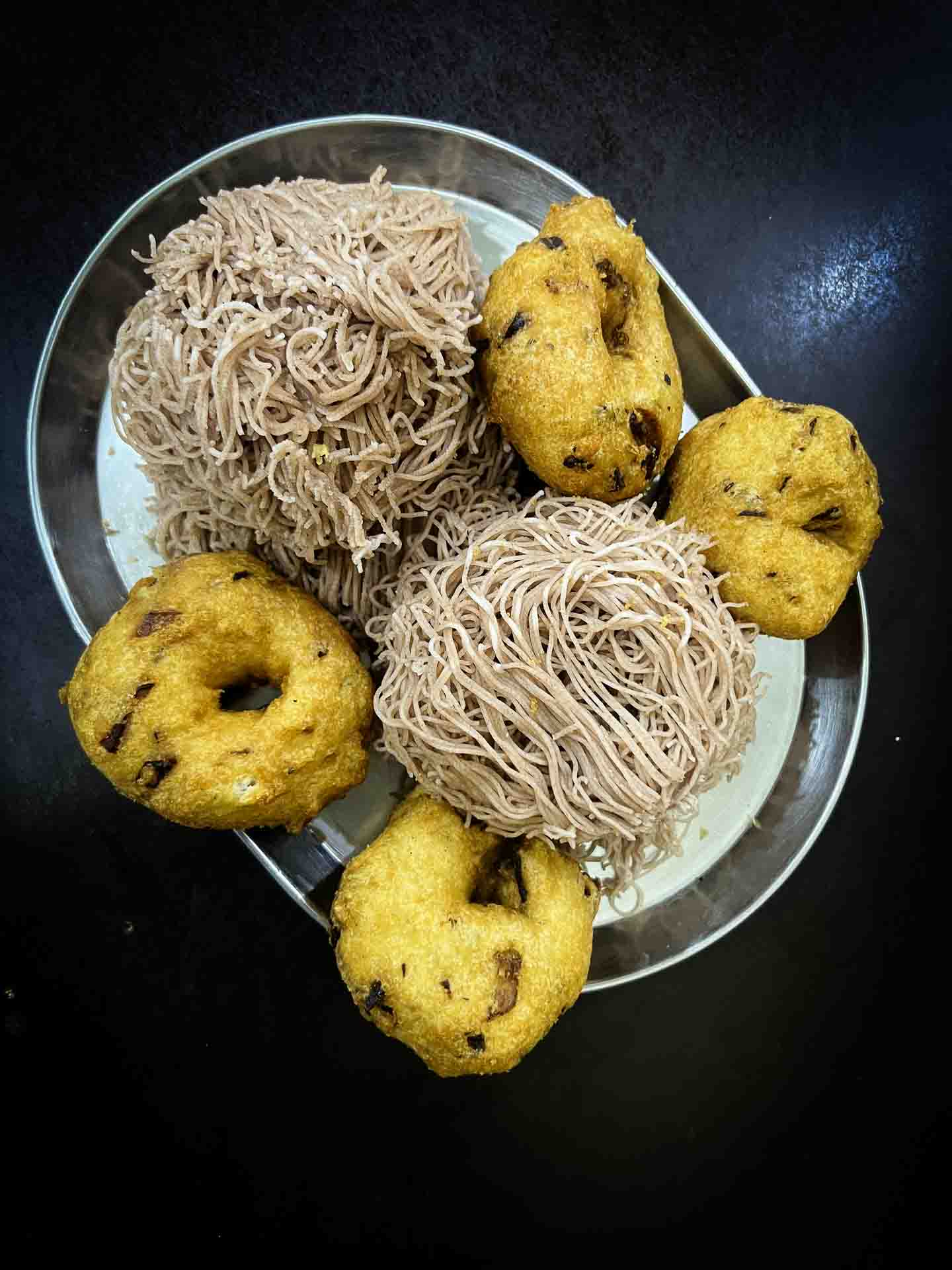
String Hoppers (Idiyappam) | Rice Noodle Nests
String hoppers are delicate nests of rice flour noodles made by pressing rice flour dough through a special mold onto circular mats, then steaming until cooked.
They’re usually served with curry and sambol. Their mild flavor makes them an ideal base for spicier accompaniments to balance out the heat.
Exotic Fruits in Sri Lanka
Curd with Kithul Treacle | Sweet Yogurt with Palm Syrup
This simple dessert uses thick buffalo milk curd served with kithul treacle, a syrup made from the sap of kithul palm flowers, on the side.
Curd has been made in clay pots in Sri Lanka for centuries. The kithul palm is tapped using traditional methods passed down through generations, with the sap collected and reduced to create the distinctive treacle.
This classic Sri Lankan food is a perfect balance of tangy curd against the rich, smoky sweetness of the treacle. The curd is thick and creamy while the treacle adds a molasses-like depth.
I don’t love things that are overly sweet but I adored the tangy flavors of the curd, and added just a touch of sweetness.
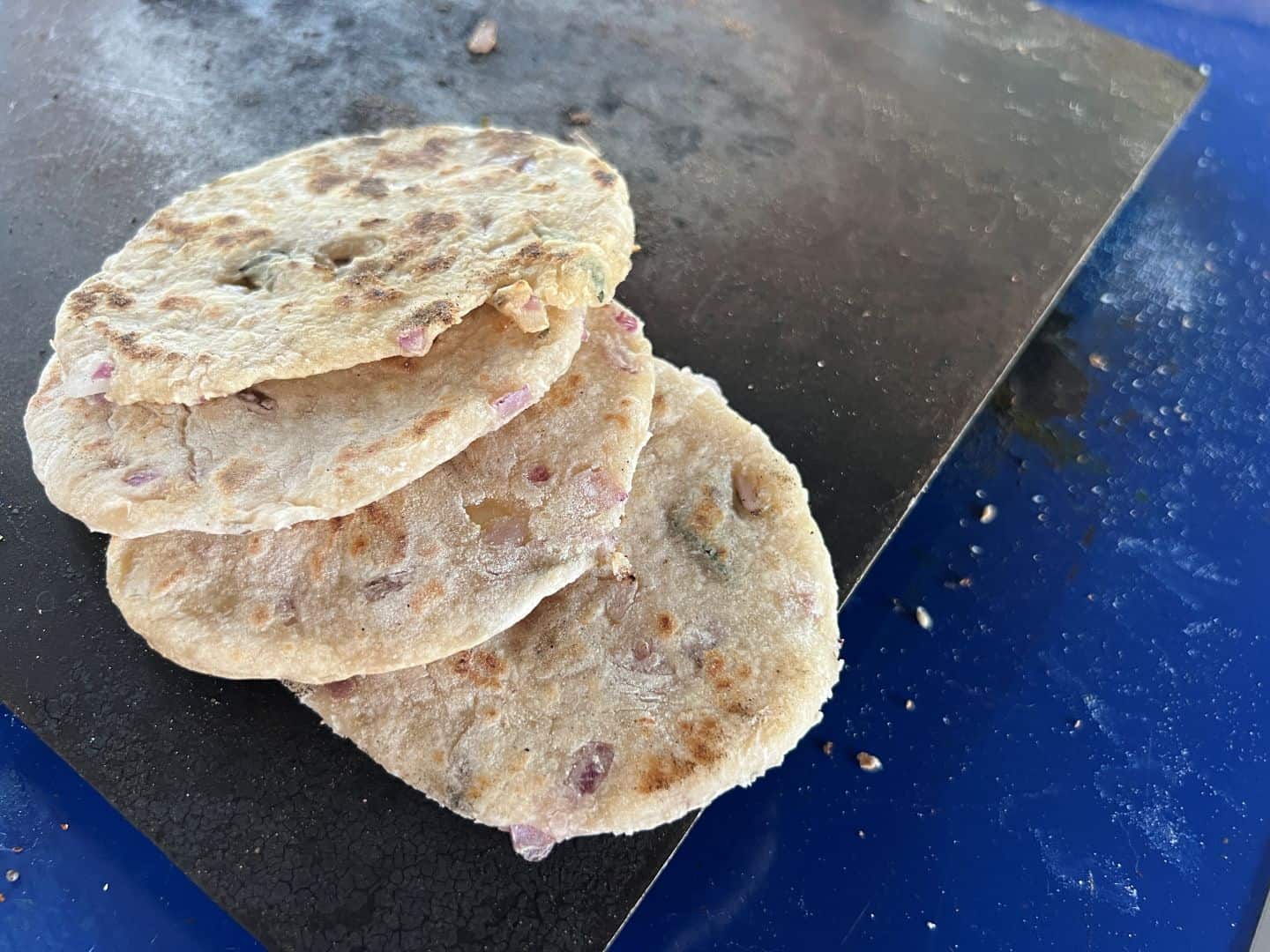
Vegetable Roti | Filled Flatbread
Sri Lankan vegetable roti is a flatbread stuffed with spiced vegetables, potatoes and sometimes fish or meat. The dough is wrapped around the filling, flattened and pan-fried until golden.
Although I first tried it in Trincomalee as the flat roti above, it is more often something folded into a triangle, almost looking like a bread samosa ..
Vegetable roti evolved as a convenient, portable meal for workers and travelers and is fantastic if you’re hungry and about to jump on a bus or train.
Coconut Roti | Coconut Flatbread
Coconut roti is a simple flatbread made from wheat flour, freshly grated coconut, minced green chilies, onions and salt. The dough is quickly mixed, flattened by hand and cooked on a flat griddle.
This bread has a rustic texture with visible coconut pieces and a savory flavor punctuated by bursts of chili and onion. It’s substantial enough to be satisfying on its own but also pairs well with curries.
Coconut roti is common throughout Sri Lanka but especially in southern coastal areas where coconuts are abundant.
Ella Food Guide
Prawn Curry
Sri Lankan shrimp curry features fresh shrimp cooked in a rich sauce of coconut milk, tomatoes, fenugreek, pandan leaves and curry powder. The prawns are added last to prevent overcooking.
The curry has a rich, creamy texture with prawns that remain tender and juicy. The natural sweetness of the shrimp complements the aromatic, spicy coconut gravy.
Prawn curry shows Sri Lanka’s skill in preserving the delicate flavors of shrimp without overpowering it with complex spices.
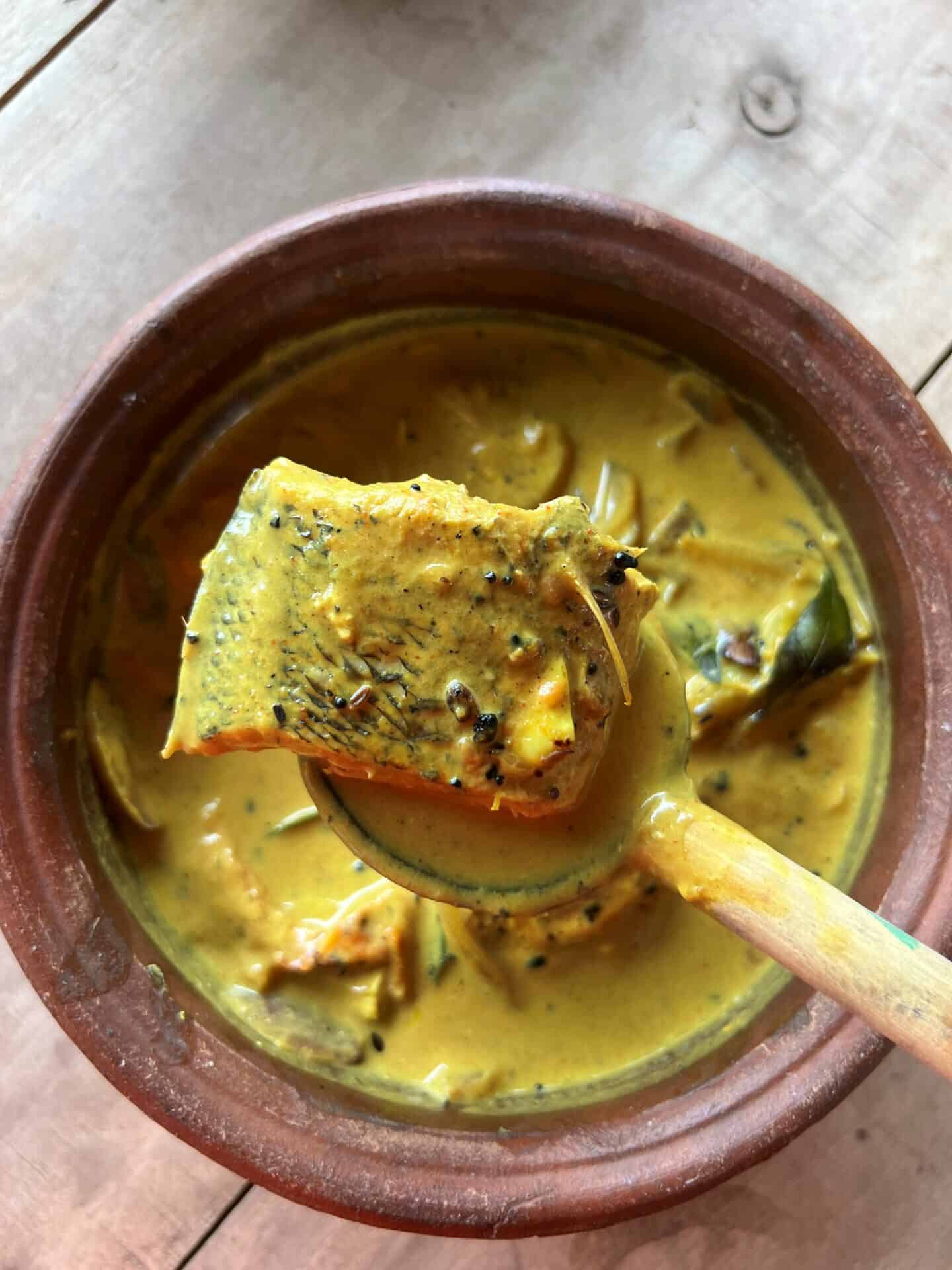
Meen Kulambu| Jaffna Fish Curry
Jaffna fish curry is made with firm white fish cooked in a thin gravy of tamarind, fenugreek, curry leaves and chili powder. Unlike southern fish curries, it uses minimal or no coconut milk.
The curry has a tangy, spicy flavor with a thin but intensely flavored gravy. The fish remains firm but flakes easily and absorbs the complex, sour notes from the tamarind.
This style of fish curry is specific to northern Sri Lanka and represents Tamil culinary traditions. It differs significantly from the coconut milk-based fish curries of southern Sri Lanka.
Ella Odyssey Train Route
Kiri Hodi | Coconut Milk Gravy
Kiri hodi is a mild coconut milk gravy tempered with turmeric, fenugreek, onions and curry leaves. Green chilies provide gentle heat without overwhelming the delicate coconut flavor.
It’s milder than most Sri Lankan curries, so it’s a great first dish to try. You’ll often find it along string hoppers or rice at breakfast. It’s particularly popular in the central highlands.
The dish represents the gentler side of Sri Lankan cuisine and is often one of the first curries introduced to children.
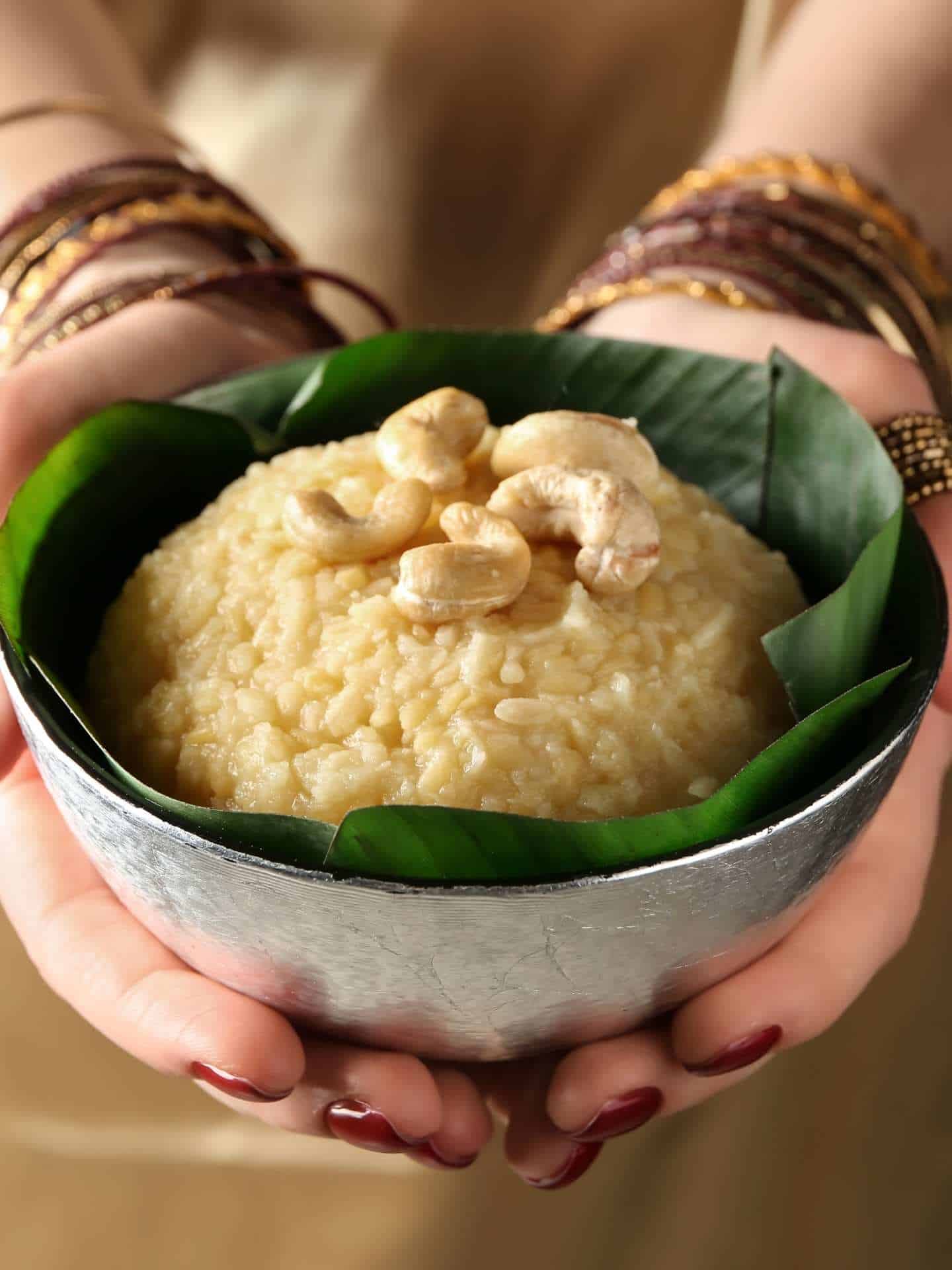
Pongol | Porridge
This savory rice and lentil porridge is a Tamil dish that’s hugely popular in Sri Lanka, especially in the north and east.
Rice and moong dhal are cooked together until soft and creamy, almost like a thick porridge. Then it’s flavored with black pepper, cumin, ginger and cashews.
And while I don’t love a traditional porridge, I had pongal for breakfast at a Tamil restaurant in Jaffna and it was the perfect comfort food. The texture was creamy and soft, with crunchy bits of cashew and bursts of black pepper heat.
It’s usually served with coconut chutney and sambar (a spiced lentil and vegetable stew). You mix everything together and the combination is perfect.
Best Restaurants in Kandy
Thala Guli | Sesame and Jaggery Balls
These sweet treats from the central highlands made by roasting sesame seeds and combining them with melted jaggery and a touch of cardamom..
Thala guli have a nutty, toasted flavor from the sesame seeds balanced by the complex sweetness of jaggery. The texture is crunchy yet slightly chewy.
I first tried thala guli in Kandy. In the highlands it is common to offer them to strangers during holidays. Mine was a gift from a restaurant at the end of the meal.
They are quiet simple, but I likeit that way as they are just slightly sweet and nutty.
Pin it for Later: Food in Sri Lanka