Mazamitla sits high in the Sierra del Tigre mountains at 2,300 meters above sea level. In Jalisco it is a popular spot for Mexicans who want an alpine-style vacation with cool weather and cozy cabins.
Only a few hours from Guadalajara, I was intrigued by this spot commonly known as “the Switzerland of Mexico.”
But I also knew it was very crowded on weekends with visiting Tapatios (people from Guadalajara) so we decided to go mid-week when we could have the town to ourselves.
That was the best decision we could have made.
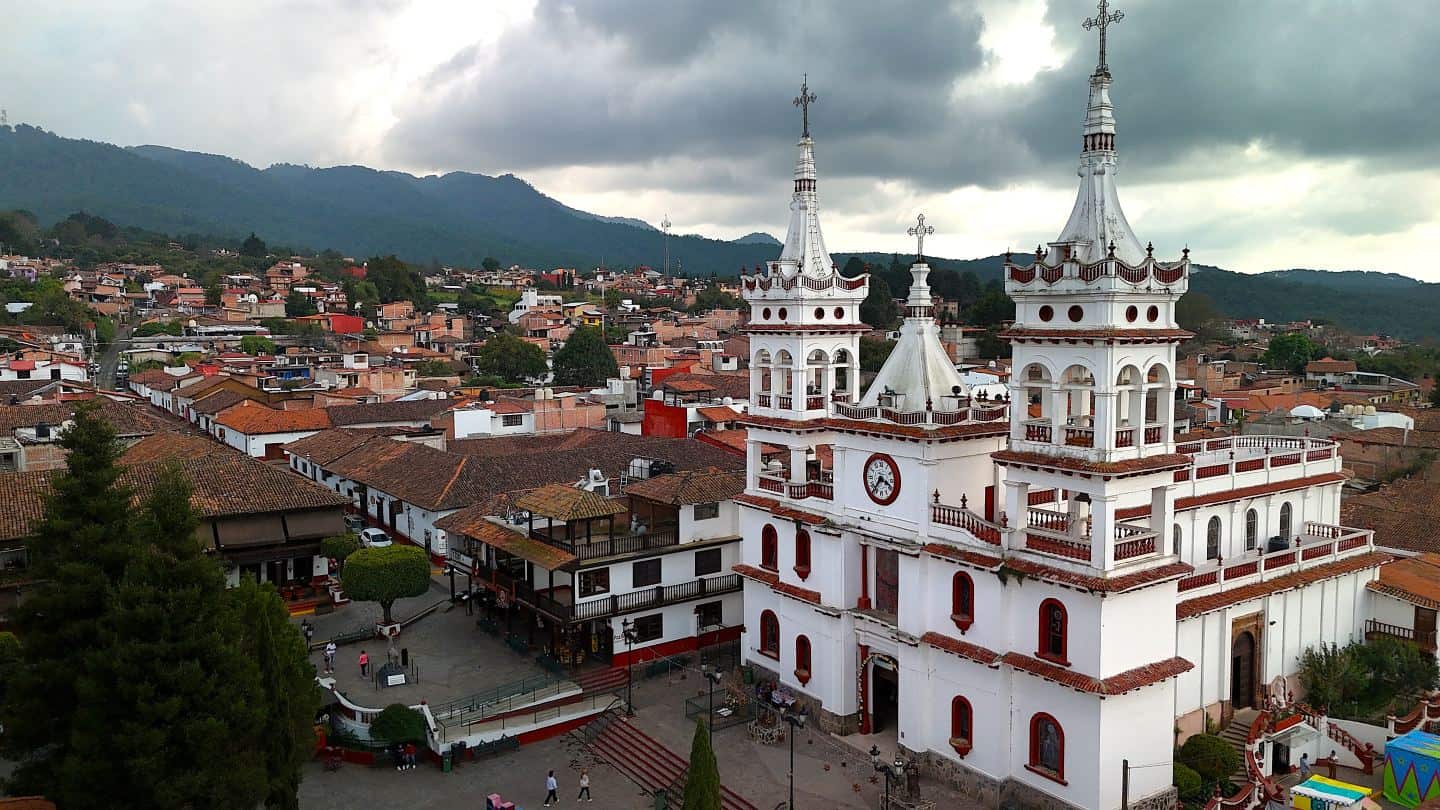
The pine forests and Alpine style architecture earned its Pueblo Mágico status in 2005. And when you step into town you smell fresh fine and wood everywhere.
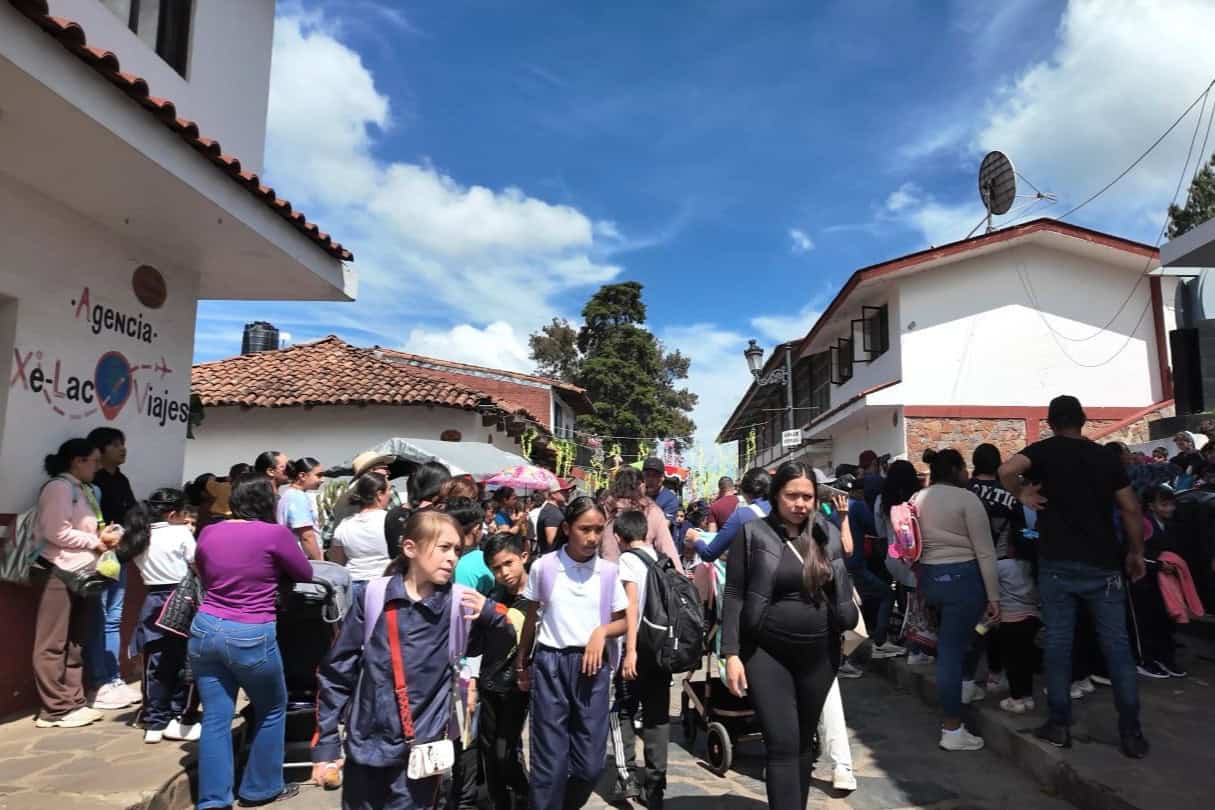
Unlike the hectic YouTube videos I watched, during the week it’s pretty calm with everyday life.
There are amazing cabins you can rent outside the town and also beautiful hotels in Mazamitla. But we stayed at Hotel Mazamitla right off the plaza. It was basic but you couldn’t beat the location for walking around.
We saw people going to work, kids going to school and we could just walk into restaurants without a reservation.
Some restaurants are only open on weekends, but we didn’t want tourist restaurants anyway. We loved our quiet time, getting away from the city.
Guadalajara is close and Ajijic and Chapala are even closer. If you don’t have time for an overnight trip this is a great Mazamitla day trip.
And again I would recommend going mid-week as weekends look chaotic.
Mountain Food Heritage
There’s nothing Swiss about the food here. Mazamitla’s cooking reflects its mountain location and Indigenous roots.
The cuisine blends ancient Aztec ingredients with Spanish colonial influences. Goat herding arrived with the Spanish in the 1500s.
The high altitude means cooler temperatures. This shaped what grows here and what people eat.Local cooks use pulque, the fermented agave drink, in surprising ways. Mountain herbs and locally raised meat appear in many dishes.
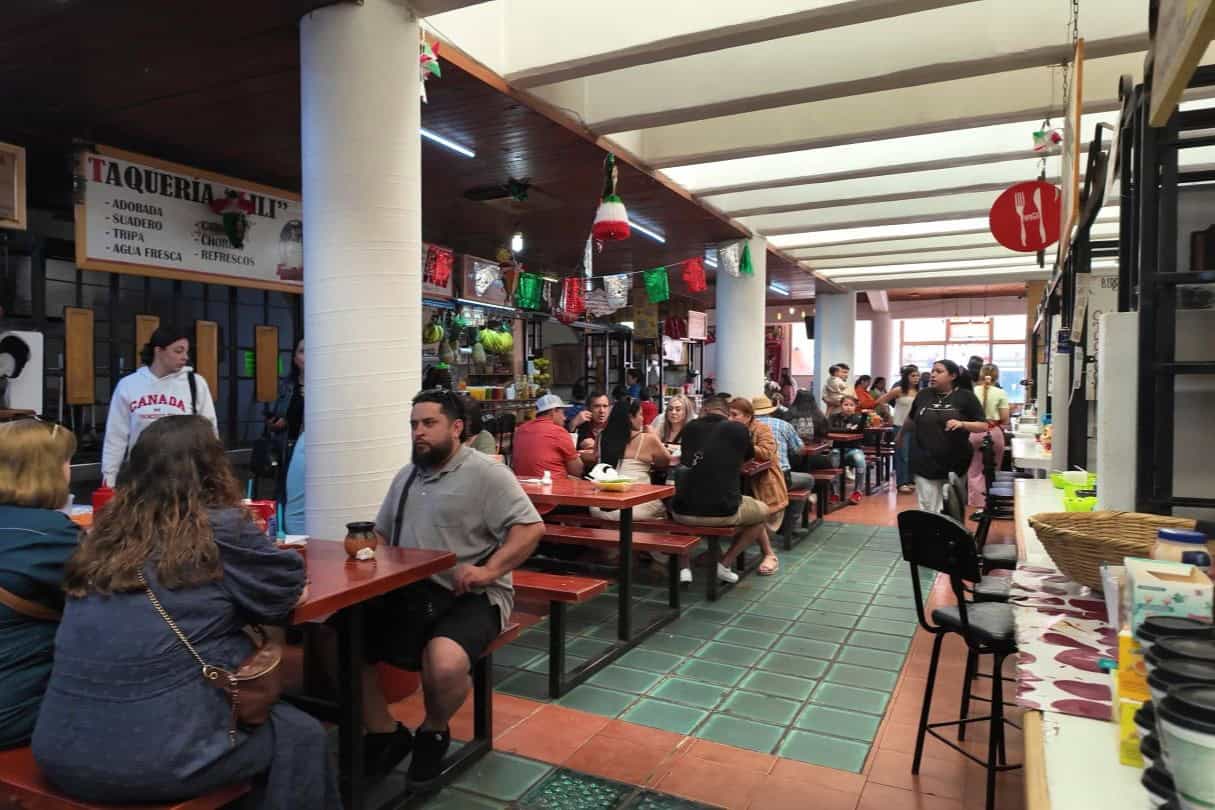
And while there are many fantastic restaurants, you’ll find most locals eating at the market.
Traditional Mazamitla Food
Mazamitla has all the great taste of Jalisco but with its own unique dishes.
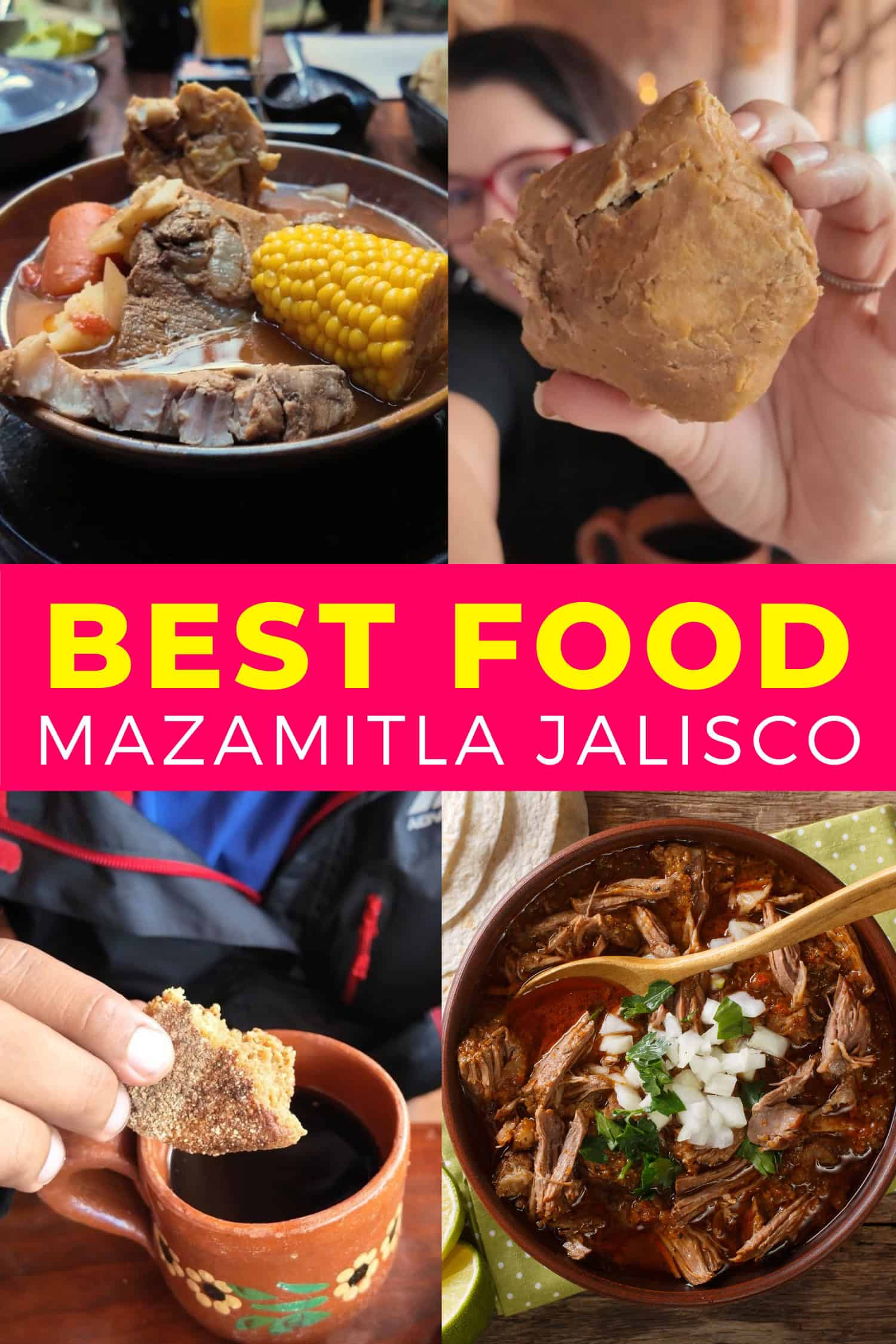
Birria de Chivo
Birria started in Jalisco in the 1500s when Spanish goats overran the countryside. The Spanish called goat meat “birria,” which means worthless.
Indigenous cooks proved them wrong.
They marinated the meat with local spices and slow cooked it underground. The result transformed unwanted meat into something special.
Birria de chivo is goat meat, not the beef version that became popular in Tijuana during the 1950s. The goat gives the broth a deeper, gamier flavor than beef.
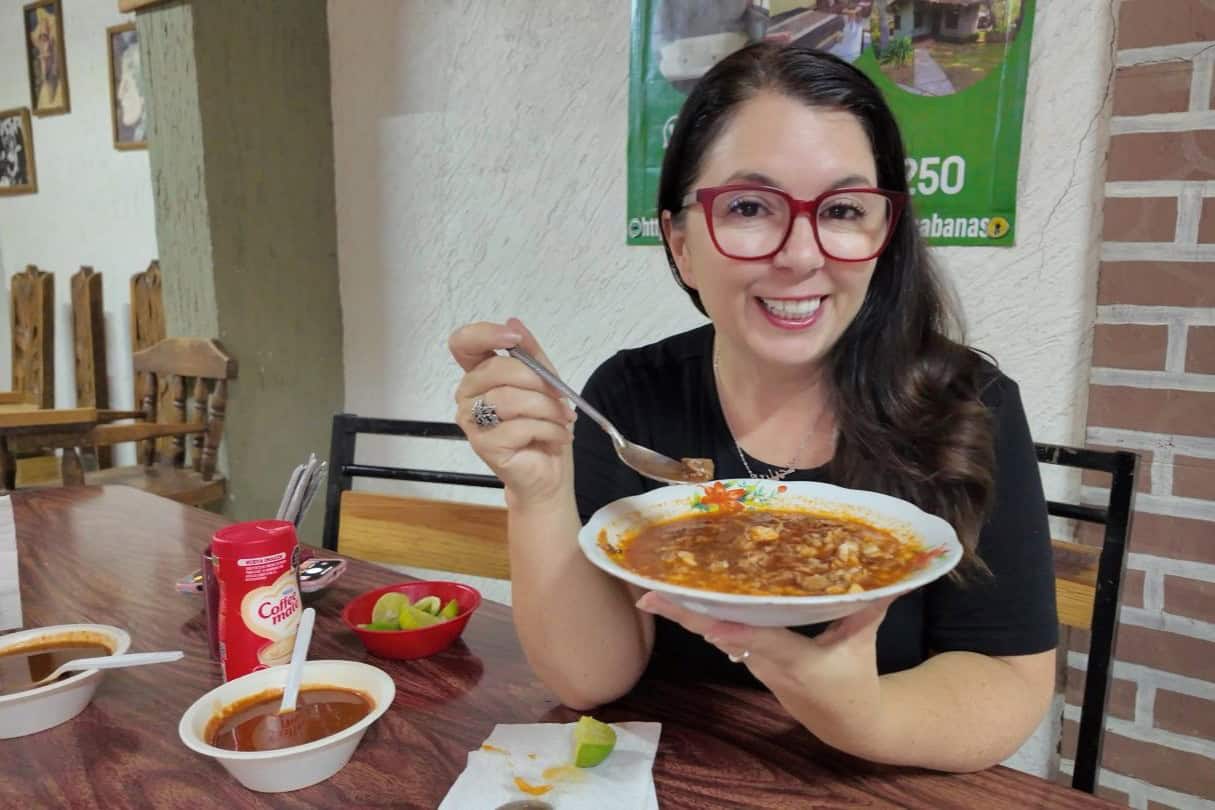
The red chile marinade stains the meat brick red. The broth tastes rich and slightly spicy.
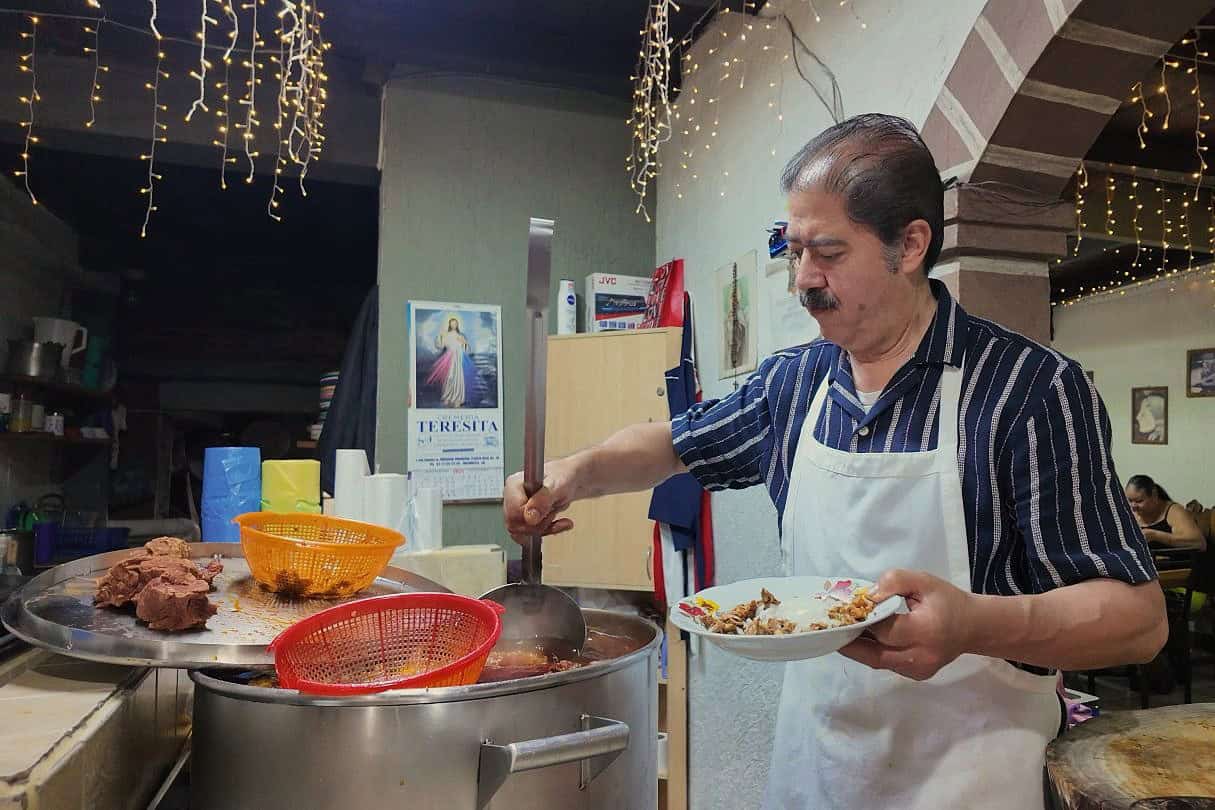
I found Birria Irma Isabel on the bottom floor of Mercado Mazamitla. They serve goat, sheep and beef birria.
The meat fell apart with my spoon. The broth had that earthy quality you only get from goat.
Locals eat birria for breakfast. They serve it with warm tortillas, lime wedges, chopped onion and cilantro on the side.
Where to eat Birria de Chivo: Birria Irma Isabel Mercado Mazamitla, bottom floor
Cajeta
Cajeta is goat milk caramel.
Cooks simmer goat milk with sugar for hours until it turns thick and amber colored. The goat milk gives it a tangy finish that cow milk dulce de leche doesn’t have.
Mazamitla makes cajeta using cow milk instead of goat milk. This breaks with the traditional Mexican method but uses the fresh milk from local dairies.
The result tastes sweeter and less tangy than goat milk versions. It’s thicker than honey but thinner than dulce de leche.
Local vendors sell it in small wooden boxes or glass jars. They drizzle it on ice cream, spread it on bread, or eat it straight with a spoon.
The name cajeta comes from the small wooden boxes it was traditionally packed in.
You’ll find cajeta vendors throughout the town center and market.
Where to eat Cajeta: Mercado Mazamitla Various vendors throughout the market
Café de Olla
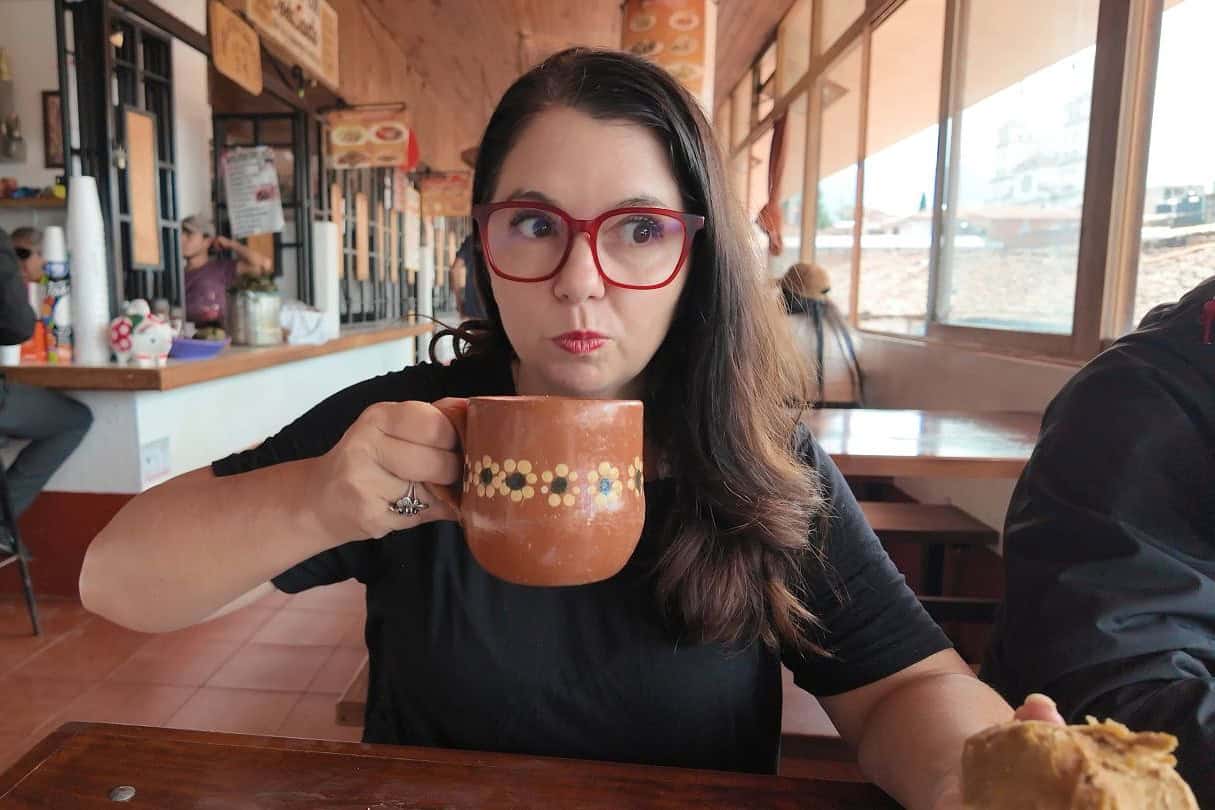
Café de olla means “pot coffee” in Spanish. Cooks traditionally make this in clay pots over open flames. The clay adds an earthy taste to the coffee.
The recipe uses piloncillo, unrefined cane sugar shaped into dark brown cones. Cinnamon sticks simmer in the pot.
Some cooks add orange peel or cloves. The drink tastes sweet and spicy at the same time.
The high altitude in Mazamitla makes the coffee taste stronger. The morning chill makes the hot drink essential.
I had mine at Antojitos Conchito on the second floor of the market. They served it in a traditional clay mug that kept it hot while I ate.
The piloncillo gives the coffee a molasses note that white sugar can’t match. The cinnamon doesn’t overpower the coffee.
This is how mountain people have started their mornings for generations.
Where to eat Café de Olla: Antojitos Conchito Mercado Mazamitla, second floor
Jocoque
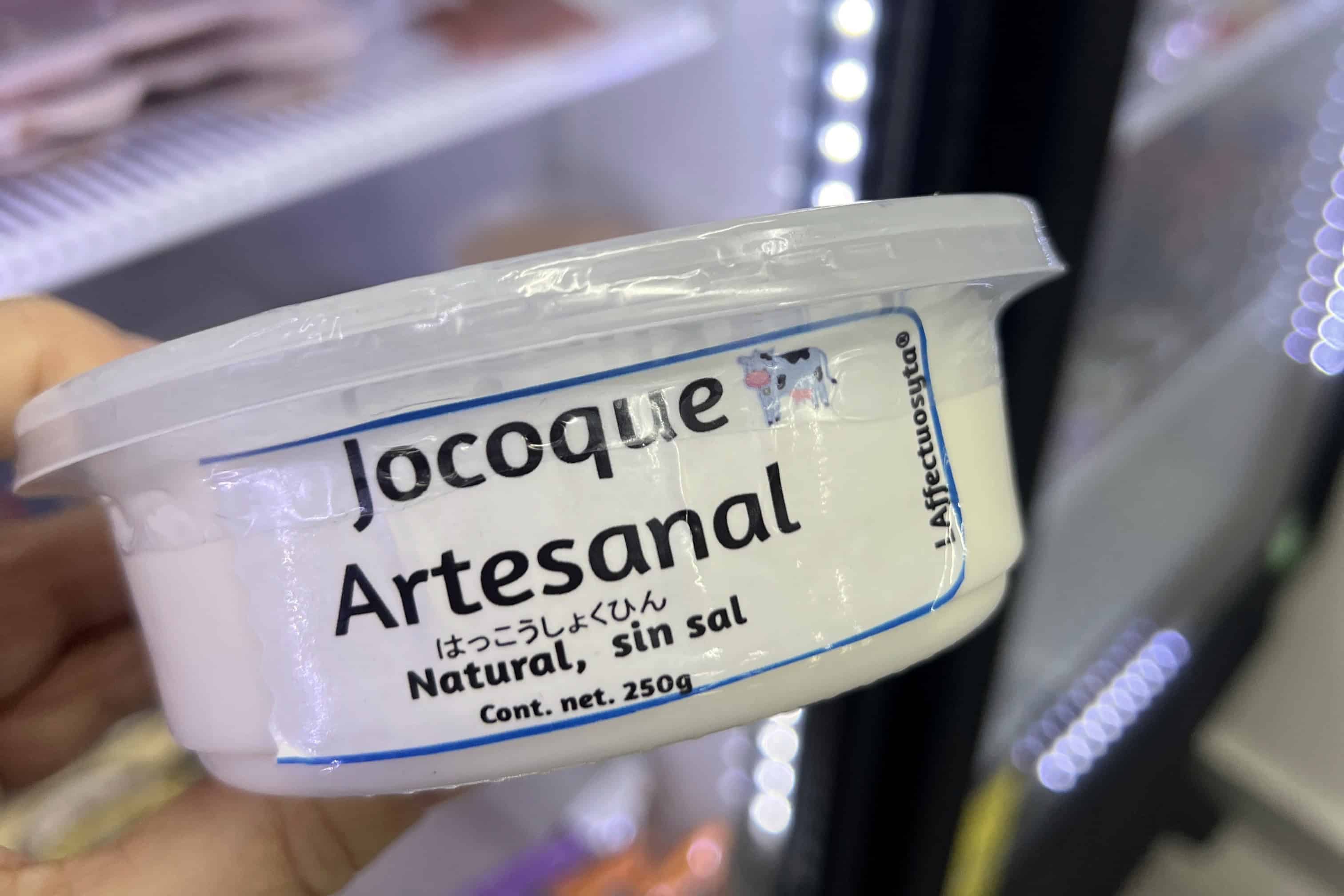
Jocoque is fermented milk similar to sour cream or yogurt.
Local dairies make it from the fresh milk produced in the surrounding ranches. The fermentation gives it a tangy, slightly sour taste.
The texture is thicker than yogurt but thinner than sour cream. It pours slowly.
Cooks use jocoque in frijoles puercos and as a topping for gorditas and corundas. Some people eat it plain with a spoon.
The fermentation happens naturally from bacteria in the milk. Different dairies produce different flavors.
Jocoque tastes tangier than American sour cream. The sourness wakes up your taste buds.
You can buy it fresh at the market or find it in most dishes that call for dairy. It’s a staple ingredient in mountain cooking.
Where to eat Jocoque: Mercado Mazamitla Dairy vendors throughout the market
Gordita de Trigo
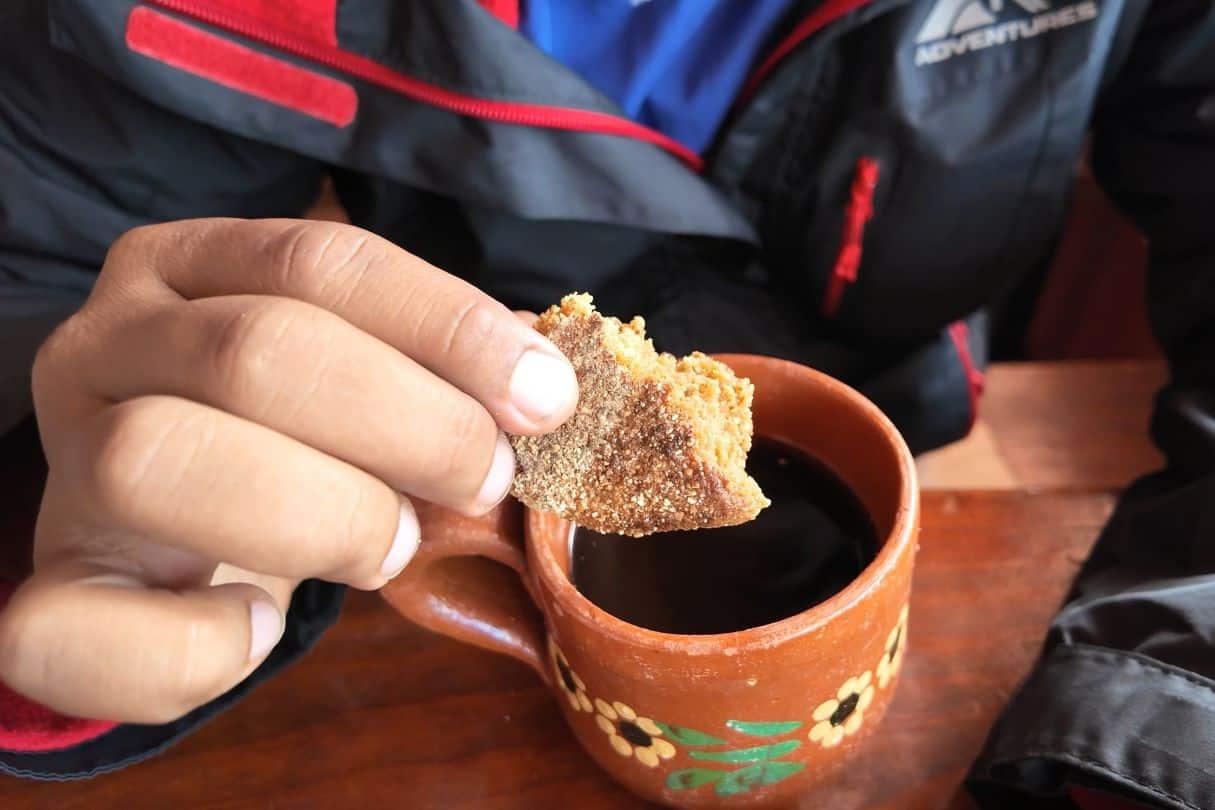
Gorditas de trigo are wheat flour flatbreads. It’s kind of like alpine toast.
Most Mexican gorditas use corn masa. These use wheat because wheat grows better at high altitudes than corn.
The dough puffs when it hits the hot comal. Cooks split them open while they’re hot.
The ones at Antojitos Conchito had a slightly nutty taste. And while they aren’t much on their own, they are fantastic to dip into coffee.
Where to eat Gordita de Trigo: Antojitos Conchito Mercado Mazamitla, second floor
Ponche de Zarzamora
Ponche de zarzamora is hot blackberry punch. Not one of the most common Mexican fruits, blackberries grow wild in the mountains around Mazamitla. The season runs from late summer through fall.
Fresh blackberries simmer with piloncillo, cinnamon sticks, and sometimes hibiscus flowers. The drink turns deep purple.
Some versions add tejocotes, small Mexican hawthorn fruits. Others include chunks of sugar cane to chew on after drinking.
The ponche tastes sweet, spicy, and slightly tart. Locals sometimes spike it with tequila or brandy.
Street vendors sell ponche from large pots on cold evenings. Vendors ladle it directly from the pot into your cup with chunks of cooked fruit.
Where to eat Ponche de Zarzamora: Ponches de Frutas Mendoza Centro, Mazamitla
Corunda
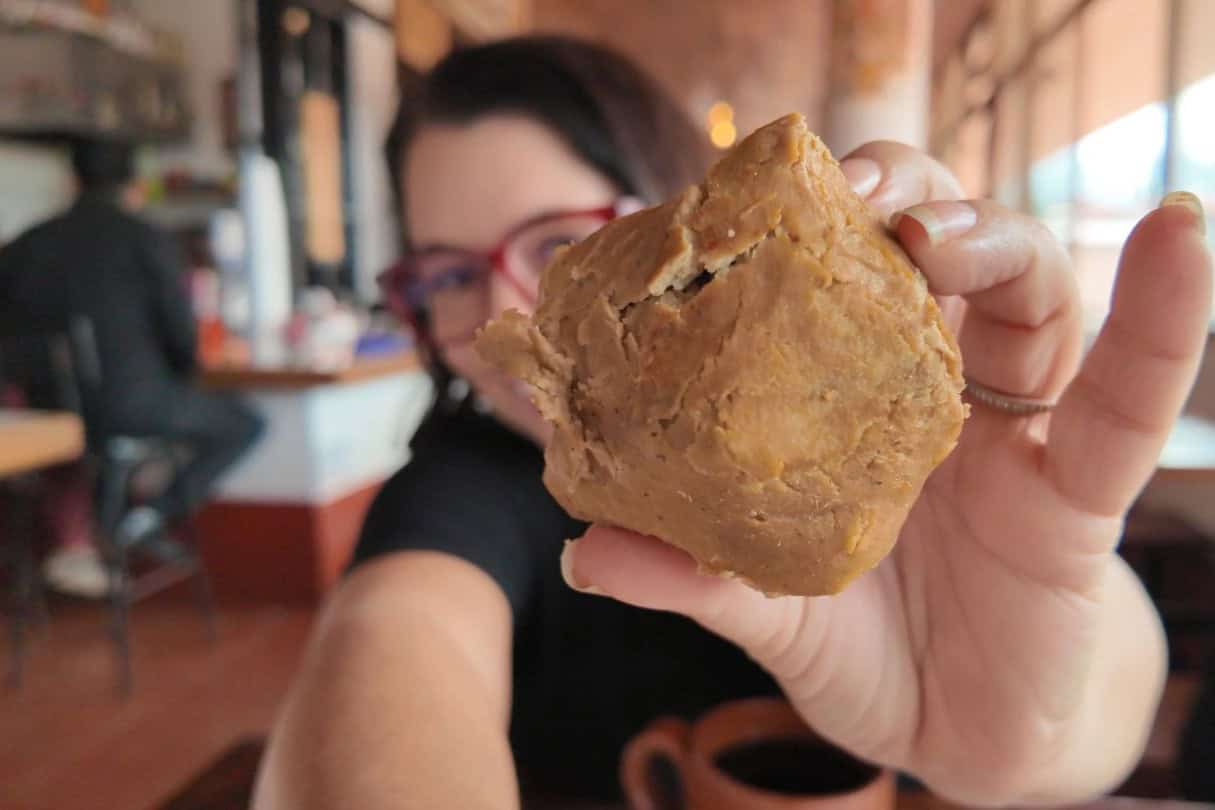
Corundas are triangular tamales from Michoacán that crossed into Jalisco’s mountain towns. The shape comes from how they fold the corn husks. Each one looks like a little pyramid.
The masa uses fresh corn and wood ash, which changes the flavor. They can be made without filling and served with crema, salsa verde, or frijoles puercos on top.
But in the Mazamitla Municipal market they had a delicious filling. The texture is dense and moist.
These make a filling breakfast that sticks with you on cold mountain mornings.
Where to eat Corunda: Antojitos Conchito Mercado Mazamitla, second floor
Bote
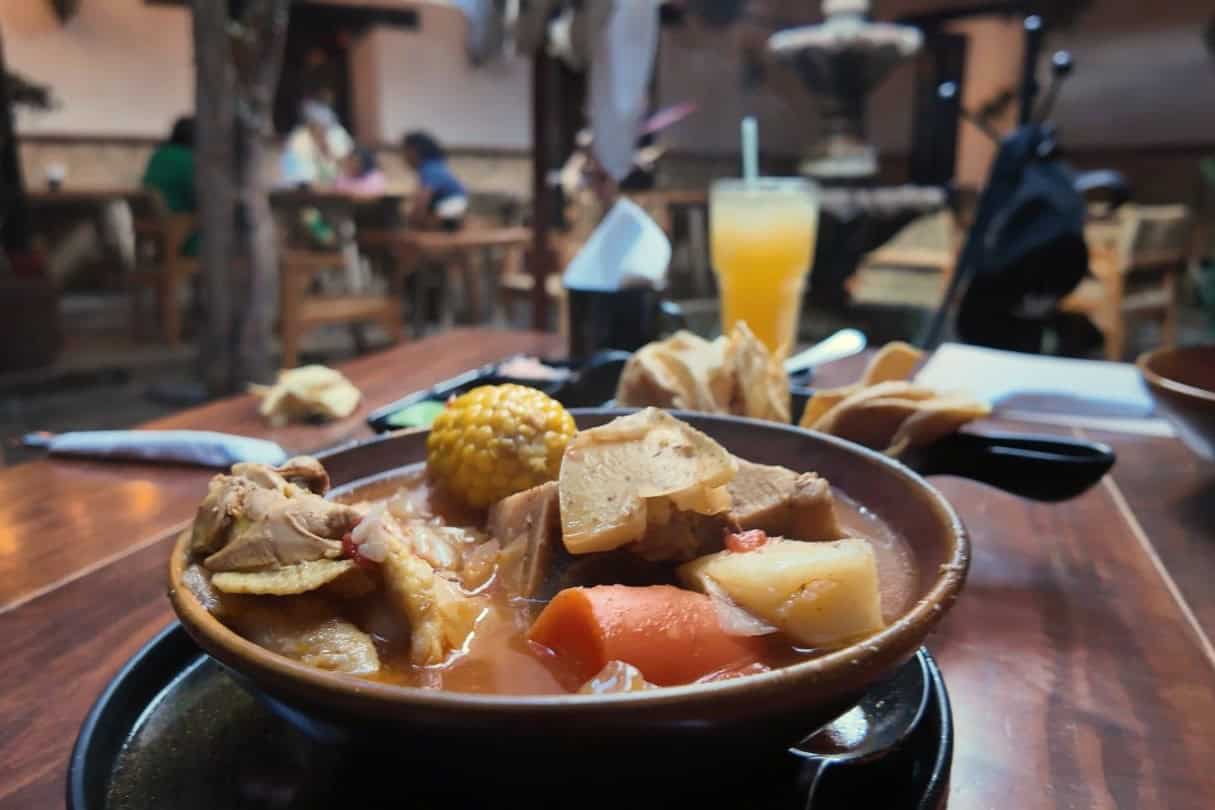
Bote is Mazamitla’s most unusual dish.
Legend says it was invented by accident. Workers went to the fields with beef, pork, and chicken but no pot or water.
They cooked everything in an aluminum can with pulque instead of water. The name “bote” means can.
The dish uses three meats cooked together in pulque broth. Vegetables like carrots, chayote, potatoes, corn, and zucchini simmer in the same pot.
The pulque gives the broth a tangy, slightly fermented taste. The three meats create a complex flavor.
Restaurants usually serve bote only on weekends. This is festival food that people line up for on Saturdays and Sundays. Famous spots like La Troje specialize in it.
But I got lucky at Casa Magna on a weekday.
The broth tasted sour and meaty at once. Each meat kept its own flavor but blended into the whole.
Where to eat Bote: Casa Magna Various locations in Mazamitla centro
Cantarito
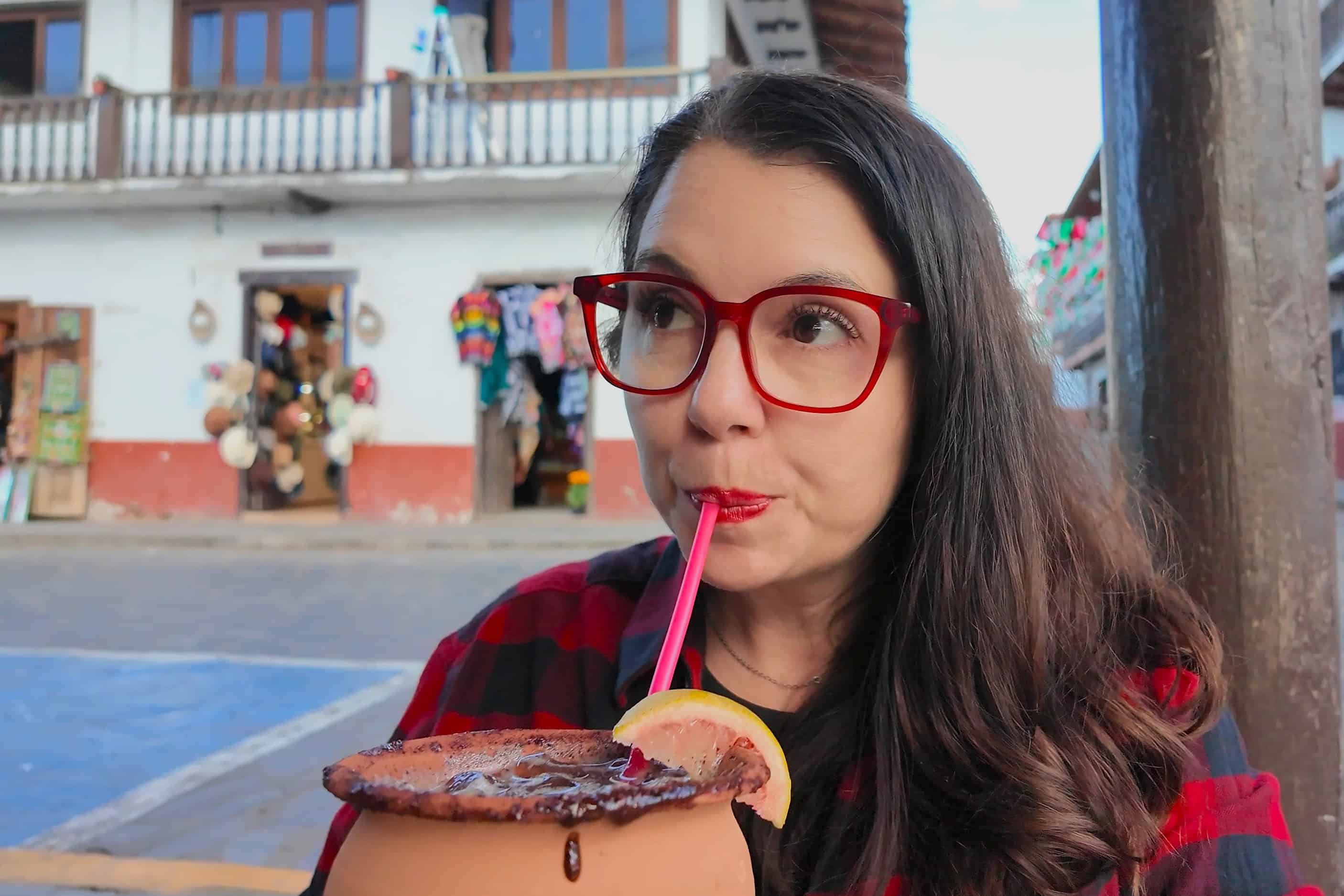
Cantarito is Jalisco’s signature tequila cocktail. And I cannot believe I had not discovered it until Mazamitla.
The drink mixes tequila with fresh squeezed orange, grapefruit, and lime juice. Grapefruit soda tops it off. They rim the glass with Tajín, the chile lime salt.
Everything goes into a clay cup called a cantarito.
The clay keeps the drink cold longer than glass. They say it also adds a subtle earthy taste but to be honest the drink is so strong I did not get that flavor note.
The drink originated in Jalisco to market tequila to tourists. Now locals drink it as much as visitors.
I had mine on the main square while watching people walk by. It was so good I’m adding it to my post about the best Mexican drinks.
Where to eat Cantarito: Plaza PrincipalVarious vendors around the main square
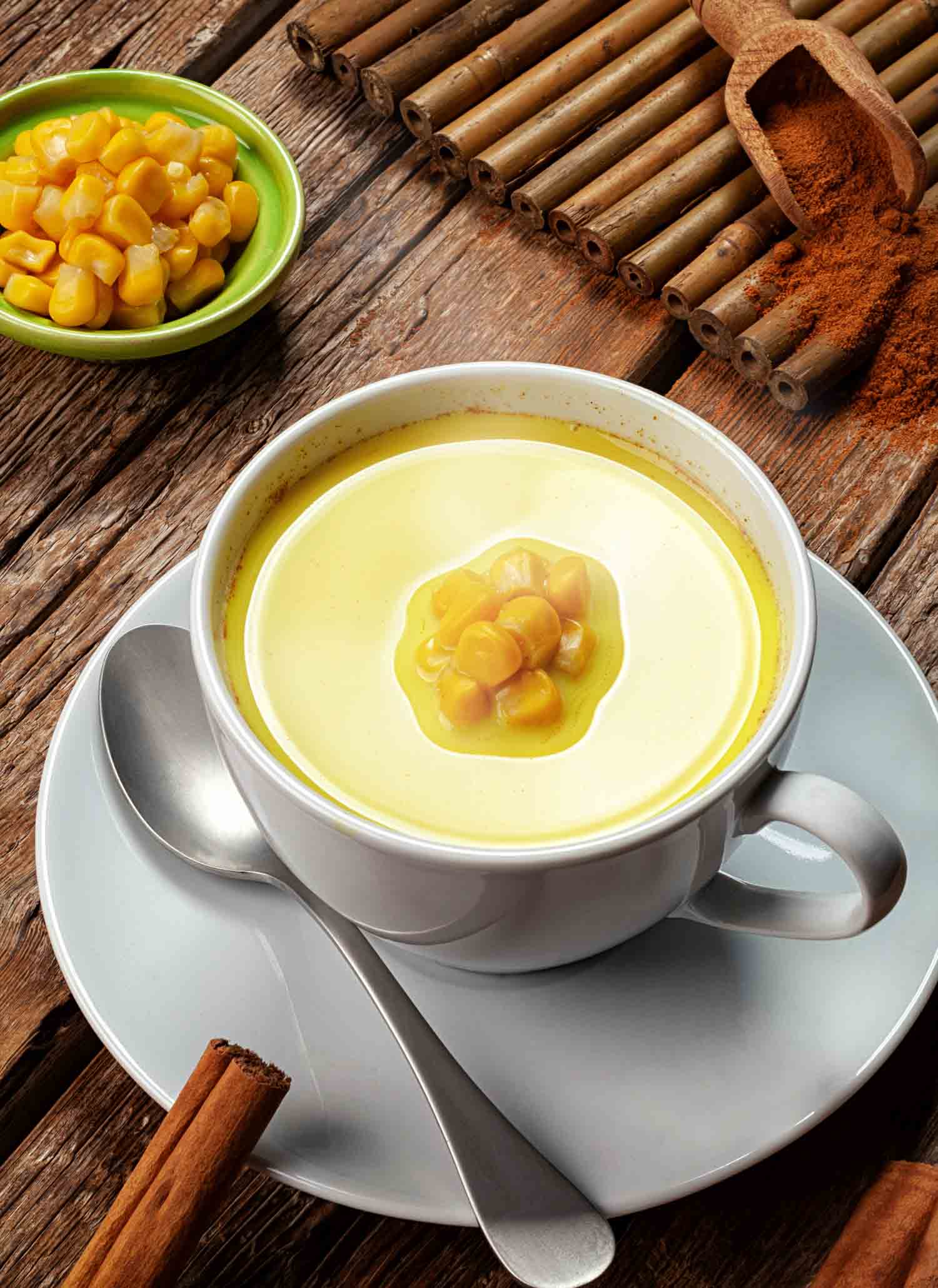
Atole
Atole is a thick hot drink made from masa and water.Cooks dissolve corn masa in hot water and sweeten it with piloncillo or sugar. Cinnamon and vanilla flavor most versions.
The drink tastes mildly sweet with a corn flavor that’s hard to describe. It’s nothing like corn on the cob. The texture feels like thin hot cereal.
Atole blanco is the plain version. Others add chocolate, strawberries or other fruits.
Indigenous people drank atole long before the Spanish arrived. It’s ancient comfort food. Today market vendors serve it alongside tamales and gorditas. The combination makes sense because both use masa.
Where to eat Atole: Mercado MazamitlaVarious vendors on the second floor