
Known as the heart of Mexico, San Miguel de Allende food is warm, comforting and won’t leave you hungry.
To be honest I wasn’t sure what I would think of the city. There are a lot of beautiful hotels in San Miguel de Allende, trendy restaurants and flashy rooftop bars.
But that’s not really my thing.
With 10% of the population being expats, it’s known as a beautiful place to live as artists have been coming here for the last century, much like Ajijic and Chapala. And a lot of wealthy Mexicans live here or keep second homes here.
But others, especially locals, say that this is making the city unaffordable for families who lived here for generations.
You see a lot of that in Mexico, especially after Covid. After experiencing the unsettling change in Oaxaca and making the video What Happened to Oaxaca? I started thinking about how my own travels impact locals.
This is why it is so important to stay in locally owned hotels, eat at local restaurants and choose to experience culture through traditional Mexican food.
When we support women-owned businesses we are keeping money in the local economy, supporting families and showing that tourists want tradition not flash.
I spent a day wandering the streets, armed with a list of traditional San Miguel de Allende food. It wasn’t enough time.
I didn’t feel like a had a good sense of the city and I wish I had taken a day tour with a guide.
So I will return again because I think it’s worth revisiting why it’s so popular and equally criticized. This time I would take one of these tours:
- SMA’s original food tour
- Walking food tour covering classic dishes
- Wine tour outside the city to try Mexican wine
These tours cover some of the dishes I was unable to find on my own. And I think with local insight I would appreciate the tour.
San Miguel de Allende Culinary Influences
San Miguel de Allende is in the Bajío region of Guanajuato. This high desert plateau produces different crops than coastal Mexico or the tropics. Corn, beans and cactus grow well in this climate. Pigs thrive here, making pork the star protein.
Traditionally this is simple, rancher style food that strips down dishes to the basic ingredients. I previously saw this in Guanajuato food, where well known dishes like menudo didn’t have hominy or a lot of accompaniments. But the most valued aspect was a rich, hearty broth
You’ll taste more dairy in Bajío cooking than in other parts of Mexico. Fresh cheese appears in many dishes.
The food tends to be less spicy than what you’d find in Oaxaca or Yucatán. Herbs like epazote grow wild and appear in pots of beans. Xoconostle, a tart cactus fruit, adds brightness to savory and sweet dishes.
I absolutely love cactus fruit, if you’re lucky enough to be there while it’s in season try it in as many dishes as you can.
Must Try San Miguel de Allende Food
Fiambre Sanmiguelense
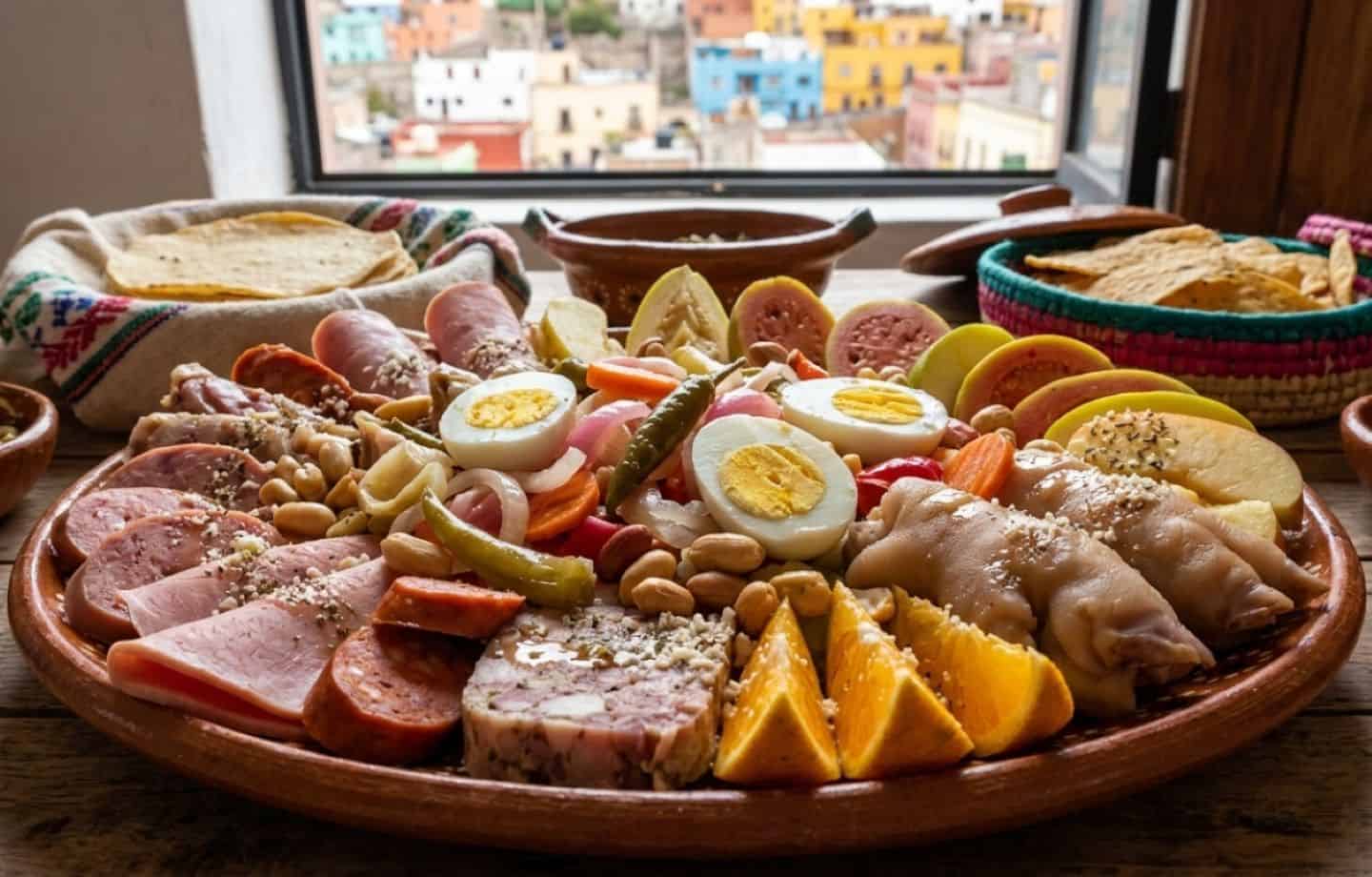
This cold salad exists only in San Miguel de Allende and only during Christmas and New Year. It combines pickled vegetables including beets, cauliflower and carrots with shredded chicken, pork or tongue.
The pickling brine includes vinegar, bay leaves and black pepper. The bright pink color from beets makes it impossible to miss in December markets.
Seasonal: December only.
Mazamitla
Caldo de Res Estilo Bajio
This beef soup feeds families on cold highland evenings. Big chunks of beef shank simmer with corn on the cob, potatoes, carrots and cabbage.
The Bajío version uses only beef, while other regions might add chicken or pork.
Seasonal: most common during rainy season and winter, but some fondas serve it year round.
Enchiladas Mineras
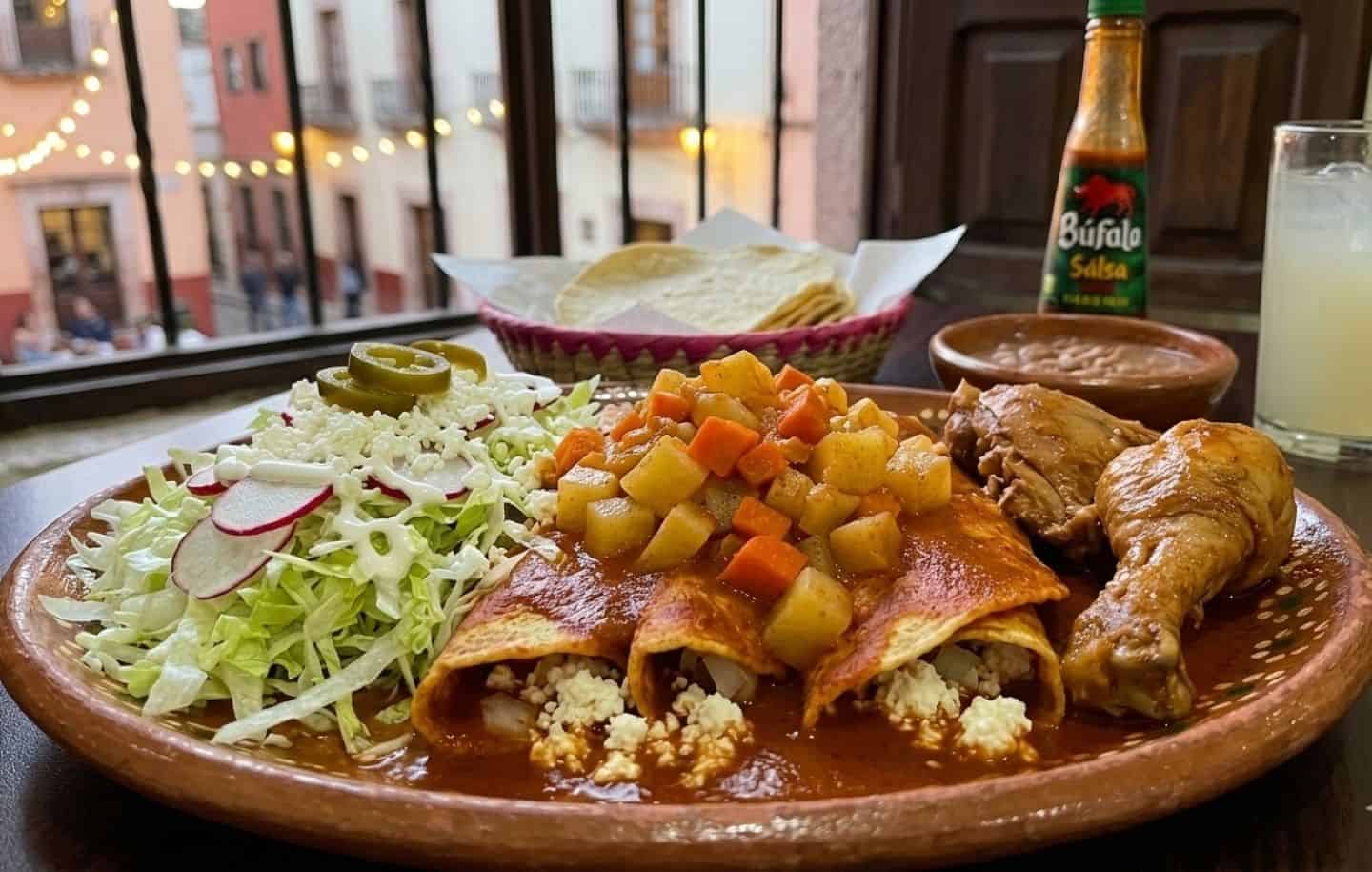
These rolled tortillas in guajillo chile sauce were created in Guanajuato’s mining towns to feed silver miners.
Cooks fry the tortillas before dipping them in smooth red chile sauce, then fill them with crumbled queso fresco and onions. They top everything with fried potatoes and carrots.
The sauce is thinner than typical enchilada sauce and has a deep, earthy flavor.
Gorditas del Bajío
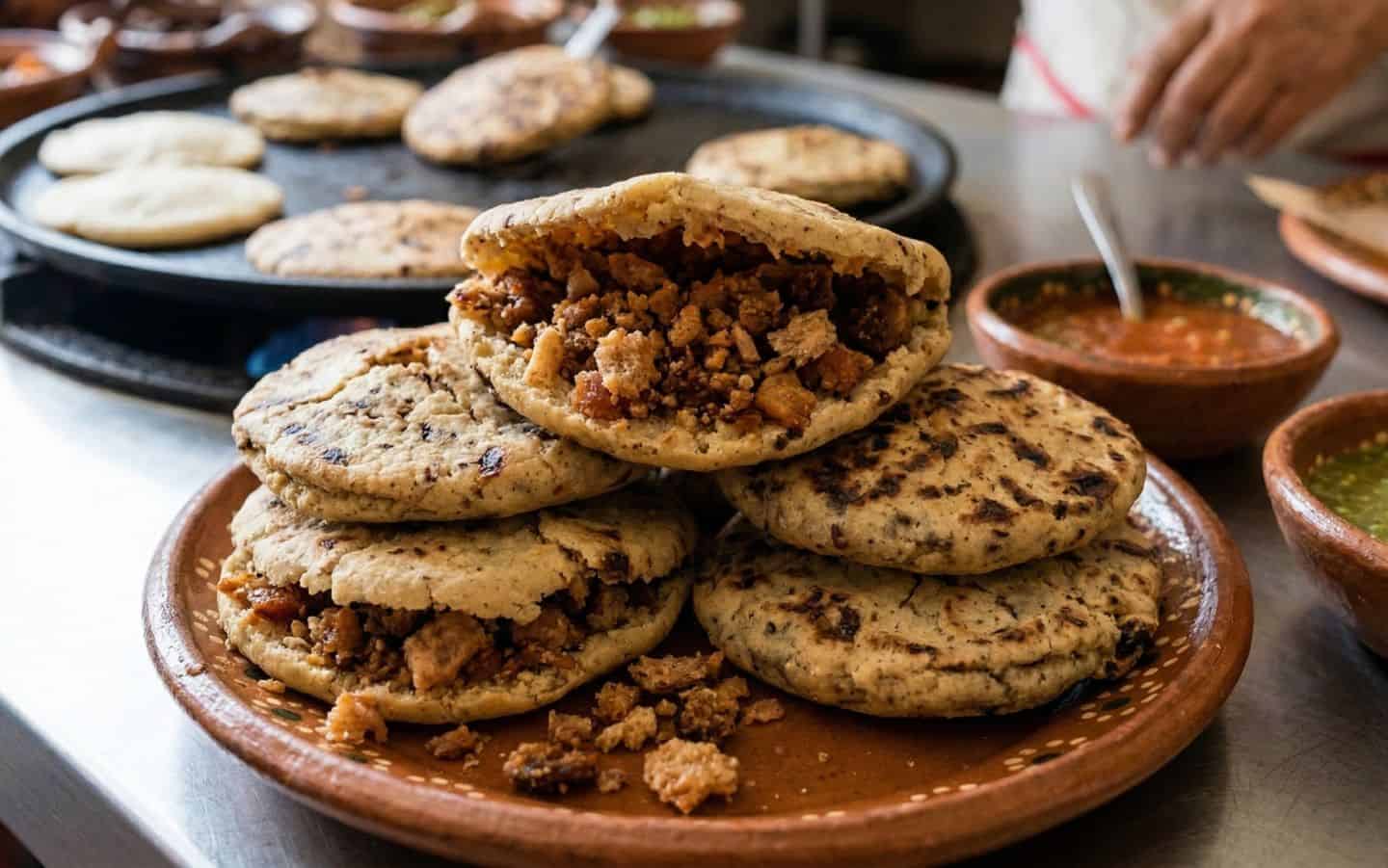
The Bajío region is famous for its gorditas, thick corn cakes that puff on the comal and split open for filling. Fresh masa gets formed thick and cooked until steam creates a pocket inside.
Vendors fill them with chicharrón in salsa verde, picadillo or beans with cheese. The masa here uses local criollo corn.
Traditional Guadalajara Food
Gorditas de Migajas
This Querétaro style uses leftover chicharrón bits, called migajas, mixed right into the masa before cooking. The crispy pork pieces stud the thick corn cake, adding bursts of flavor throughout.
Cooks pat them thick and cook them on a comal until they develop a crispy crust. You split them open and fill them as you like.
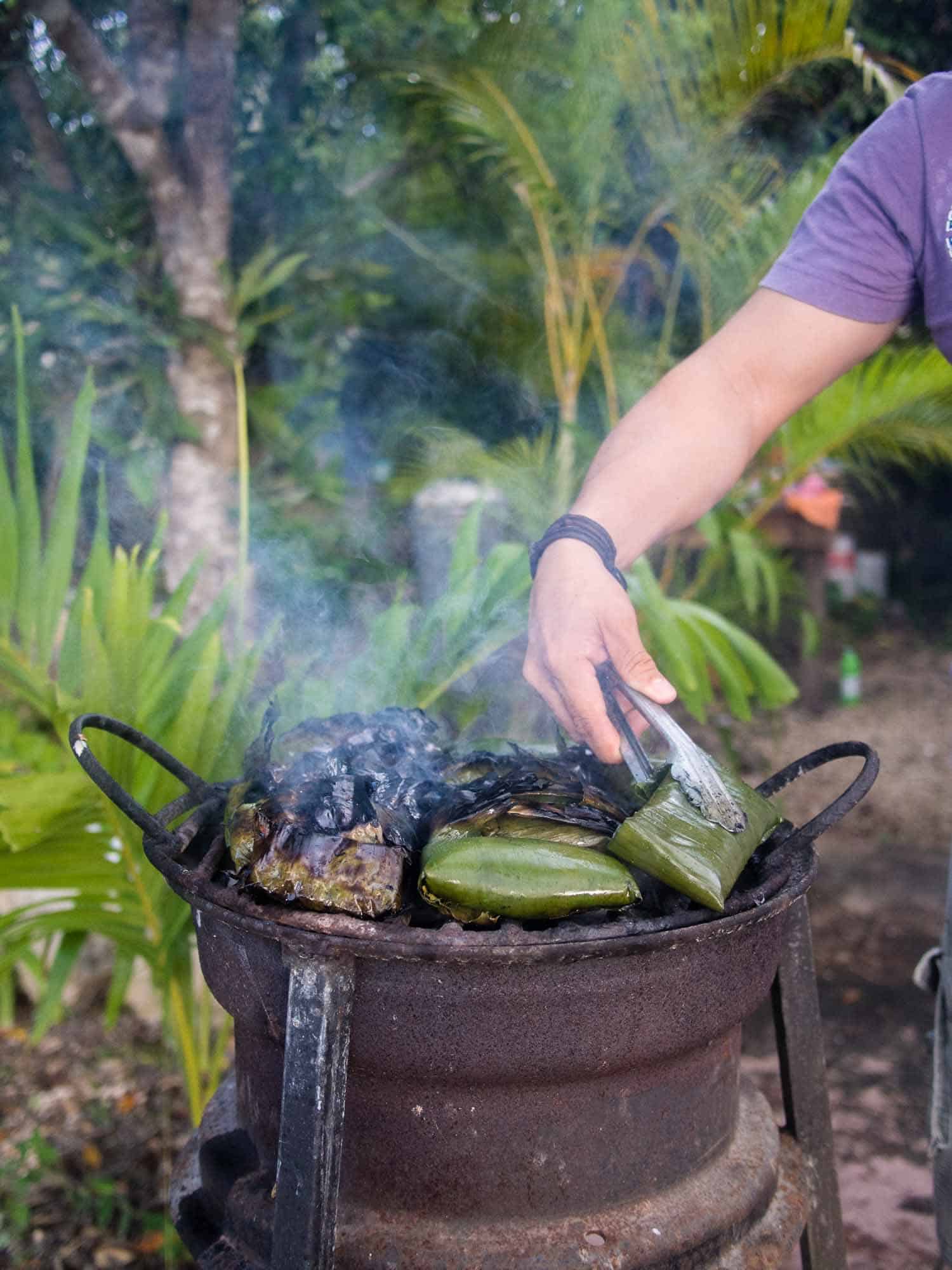
Tamales de Ceniza
These tamales get their name from the wood ash used to treat the corn, which turns the masa gray. Indigenous cooks have made tamales this way for centuries.
The ash gives the masa a unique mineral flavor and denser texture. They’re filled with beans, cheese or nothing at all.
Haggling in Mexico
Tamales de Cacahuate
These peanut tamales are a Guanajuato specialty combining Indigenous corn traditions with regional peanuts.
The filling is ground peanuts cooked with piloncillo and cinnamon, creating a sweet paste wrapped in corn masa. They’re eaten as dessert or afternoon snack rather than a meal.
Seasonal: especially during festivals and holidays.
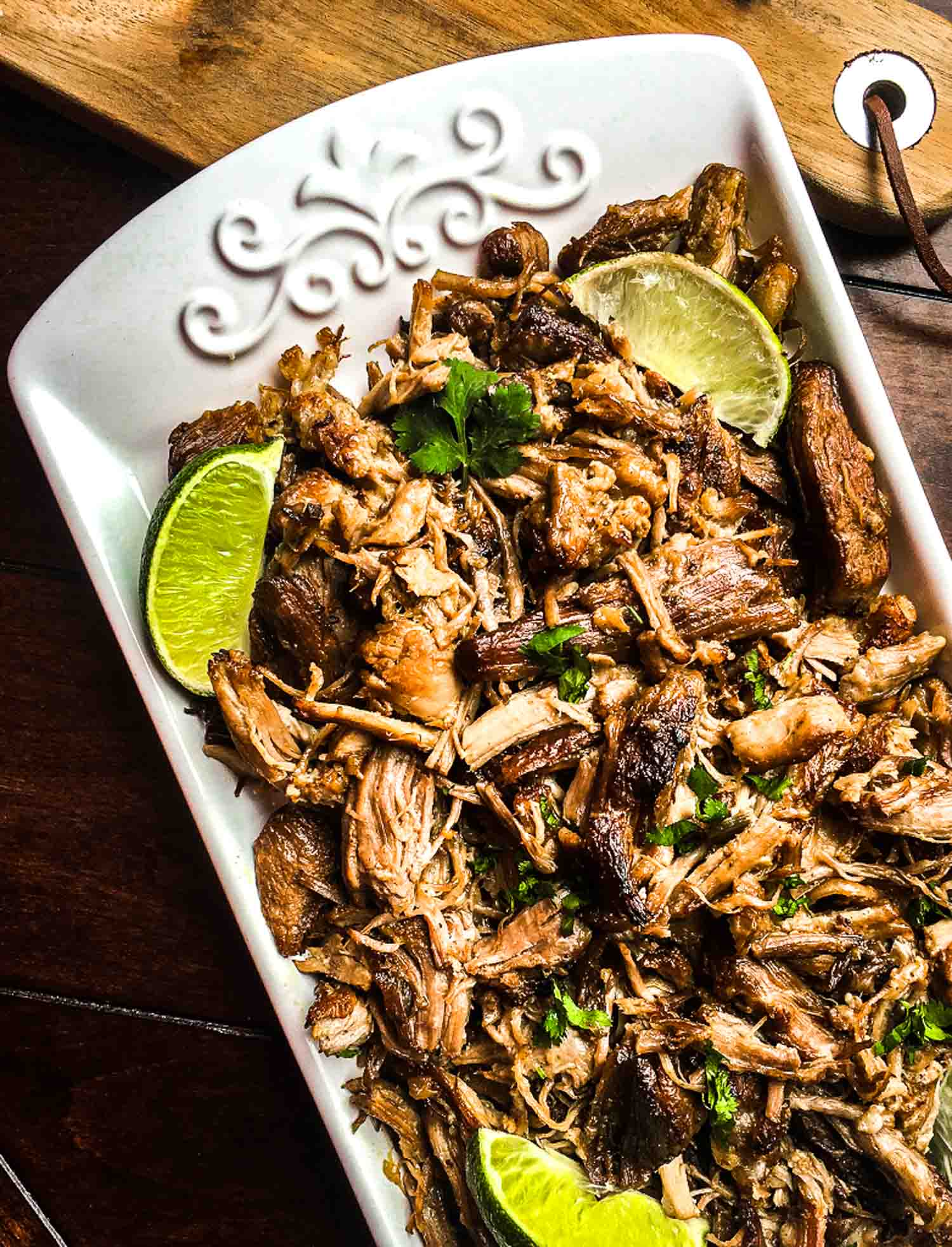
Carnitas Estilo Bajío
The Bajío takes carnitas seriously. Pork simmers low and slow in huge copper pots with its own fat, sometimes with orange peel or milk added.
When you order, choose your cut from maciza, cuerito or surtido. The meat should fall apart but have crispy edges.
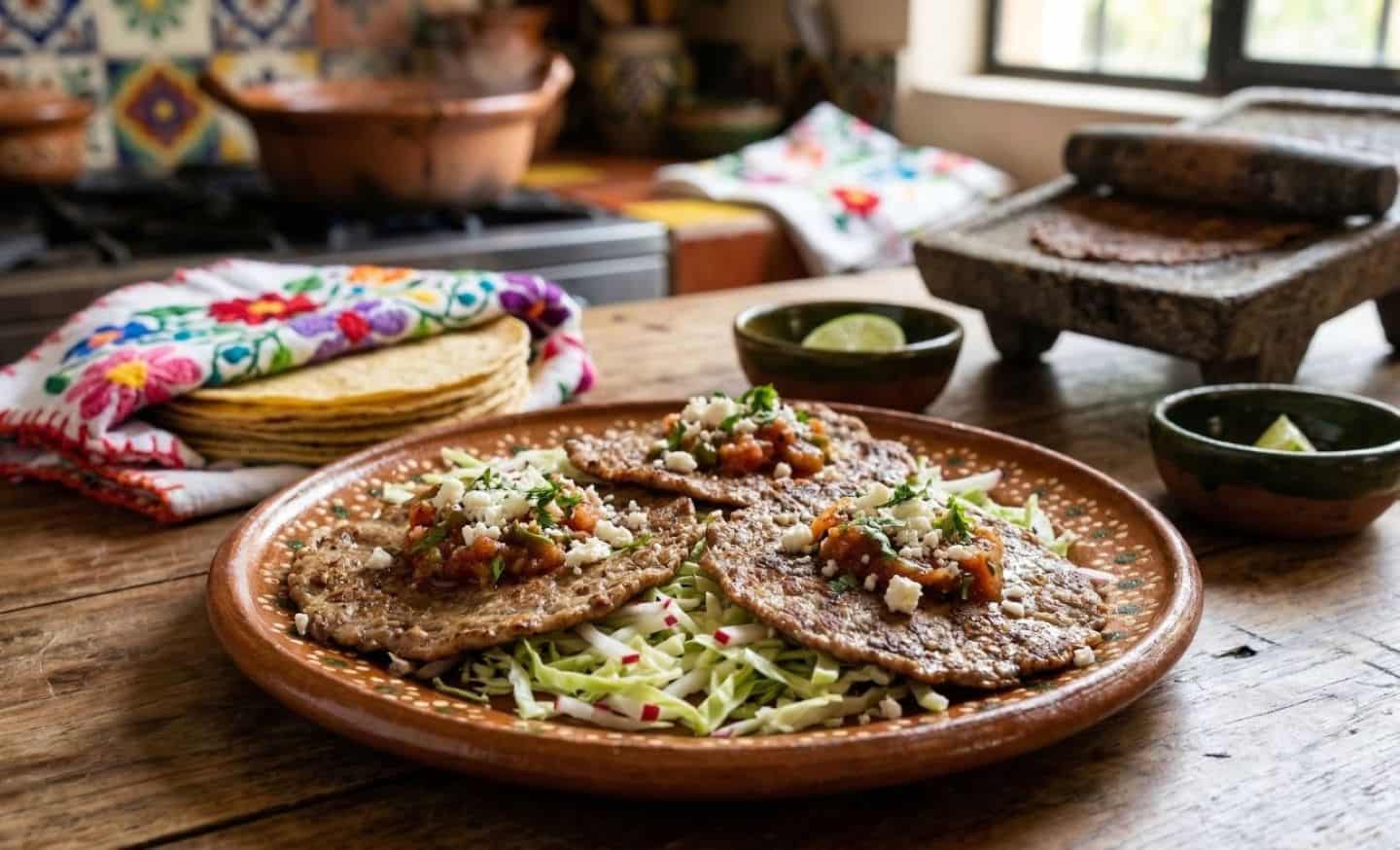
Pacholas Guanajuatenses
These thin ground beef patties are from Guanajuato state. Cooks grind beef with dried chiles, garlic and spices, then pat the mixture thin and fry it until the edges get crispy.
The texture is somewhere between a hamburger and a crispy tostada.
Living in Puerto Vallarta
Frijoles Caldosos con Epazote
These soupy beans cook low and slow with fresh epazote, a pungent herb that grows wild throughout Mexico.
The beans stay thin and brothy rather than getting mashed or refried. Epazote adds a flavor between oregano and anise with a bit of citrus. It also helps with digestion.
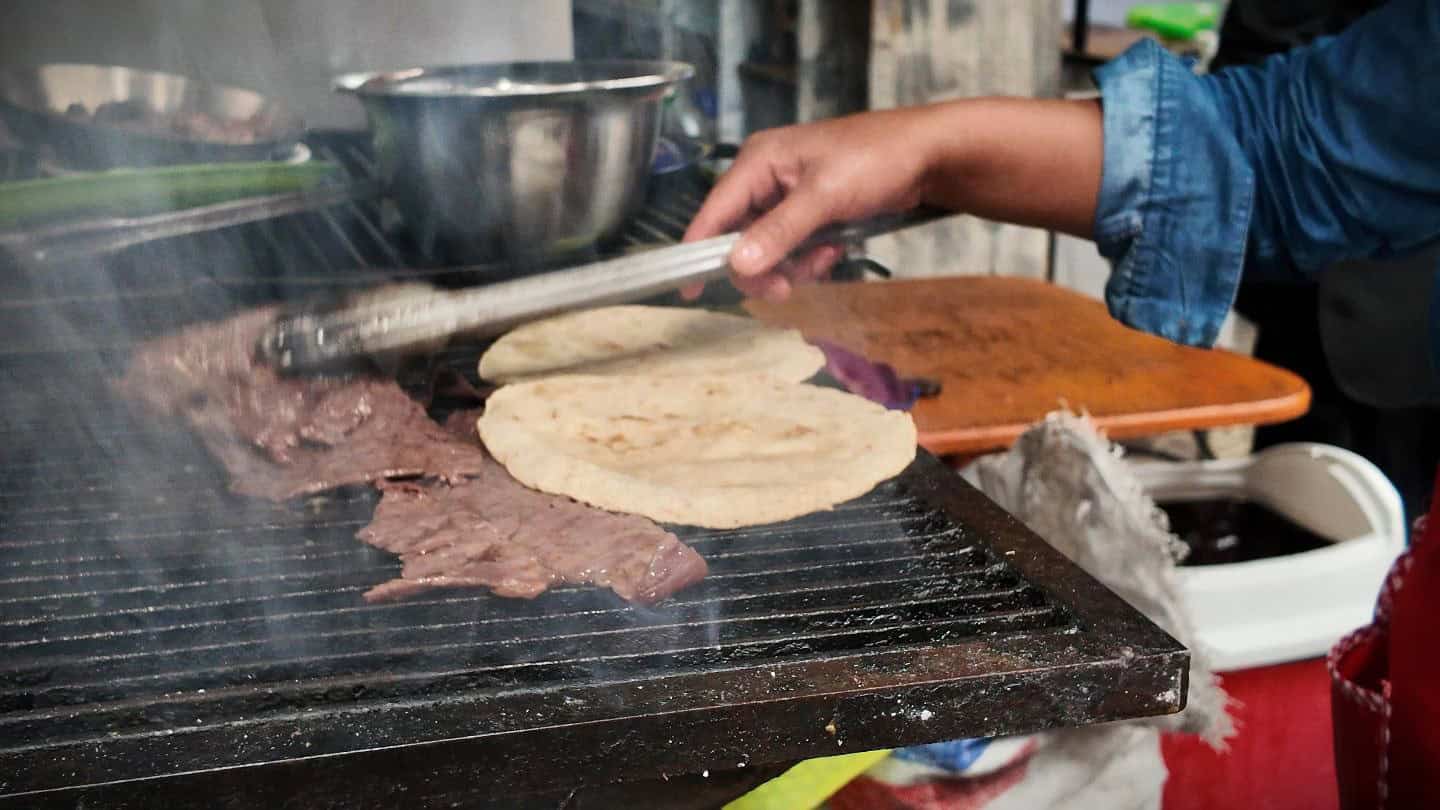
Cecina Guanajuatense
This thinly sliced salted beef gets pounded until almost translucent, then dried and grilled. Guanajuato’s version is less salty than cecina from other regions like Cholula .
When grilled over charcoal, the thin slices crisp at the edges and develop a smoky char. People eat it in tacos with fresh salsa and onions.
Nopales Guisados con Xoconostle
This dish pairs tender cactus paddles with tart xoconostle. The nopales get cleaned, diced and cooked until the slime disappears.
Xoconostle adds a lemony brightness that cuts through the earthy nopales. This is everyday home cooking.
Seasonal: best from late winter through spring when xoconostle is ripe.
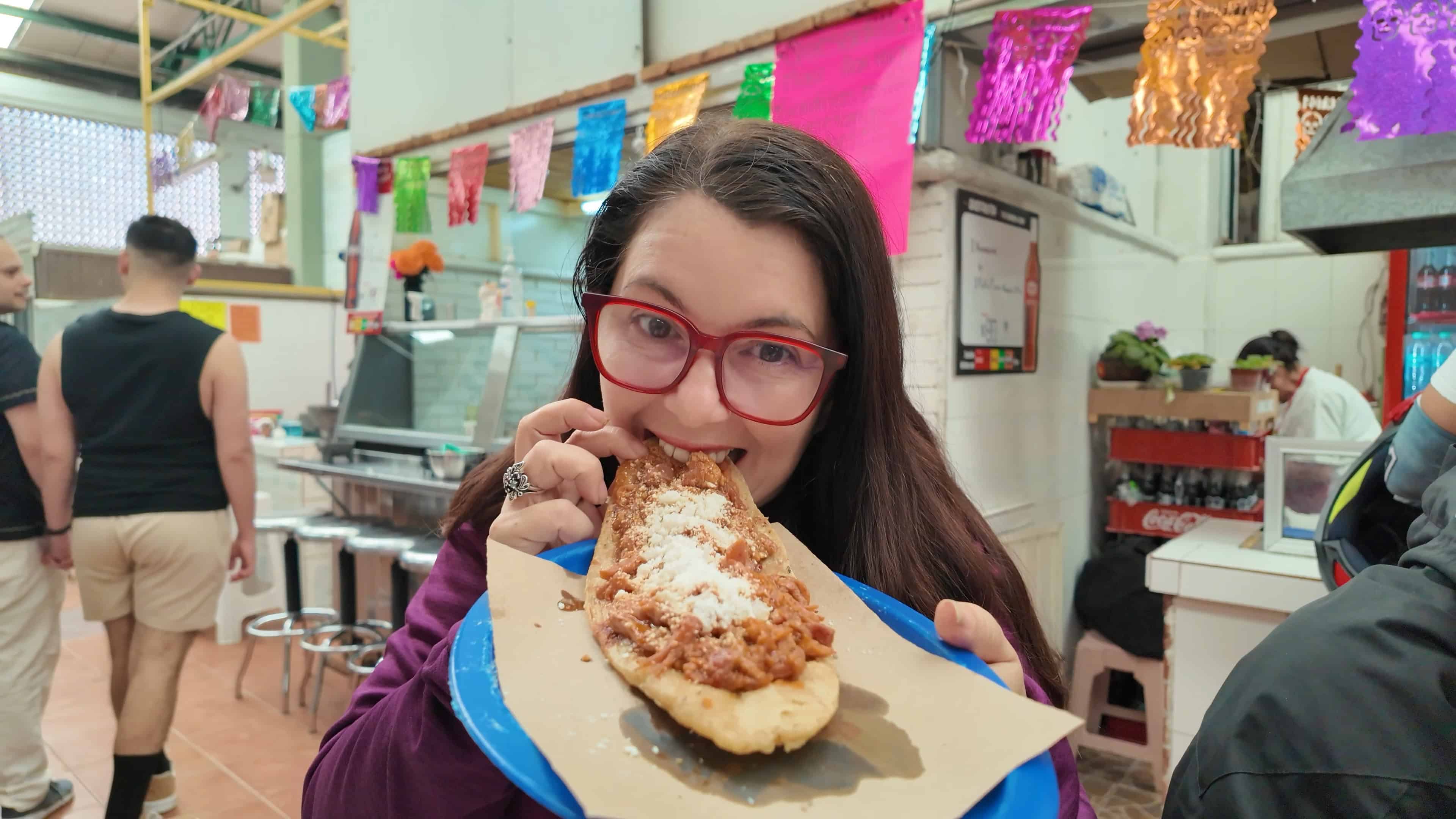
Chicharrón Prensado en Salsa Roja
This starts with chicharrón pressed into blocks. Cooks crumble the pressed chicharrón and simmer it in red salsa made from tomatoes and dried chiles until it softens and absorbs the sauce.
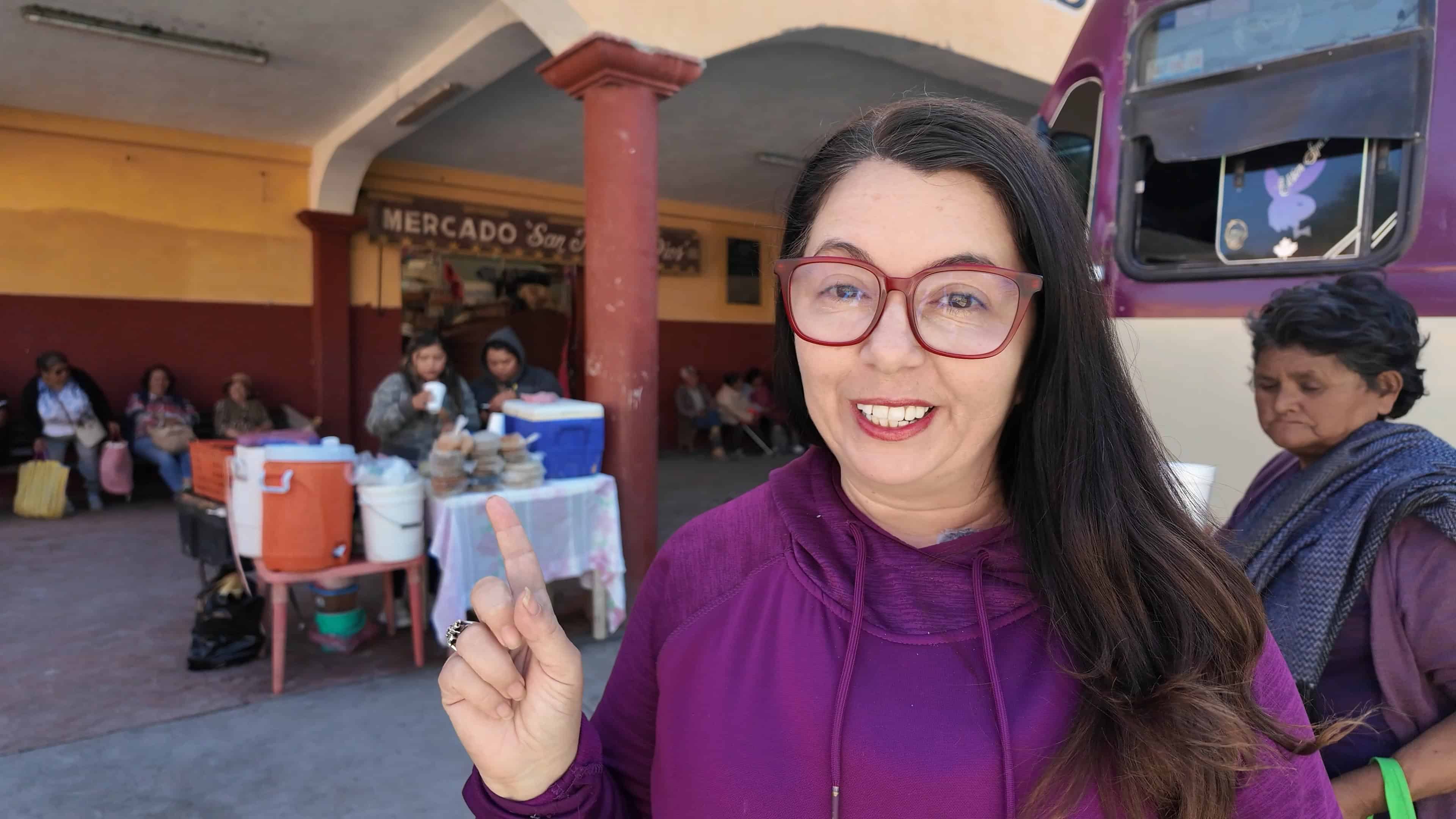
I ate it for breakfast on top of a huarache at the Mercado San Juan de Dios. It was a true local market just outside of the tourist core and absolutely delicious.
Tortillas Hechas a Mano de Maíz Criollo
These handmade tortillas use heirloom corn varieties instead of hybrid corn. Women grind the nixtamalized corn on stone metates, pat each tortilla by hand and cook them on a comal over wood fire.
Criollo corn has more complexity than factory tortillas, sometimes nutty, sometimes sweet. Eating one fresh totally changed my mind about tortillas. If someone hands you a salt shaker, make sure to add a bit as it’s like a flavor explosion.
San Miguel de Allende Desserts and Sweets
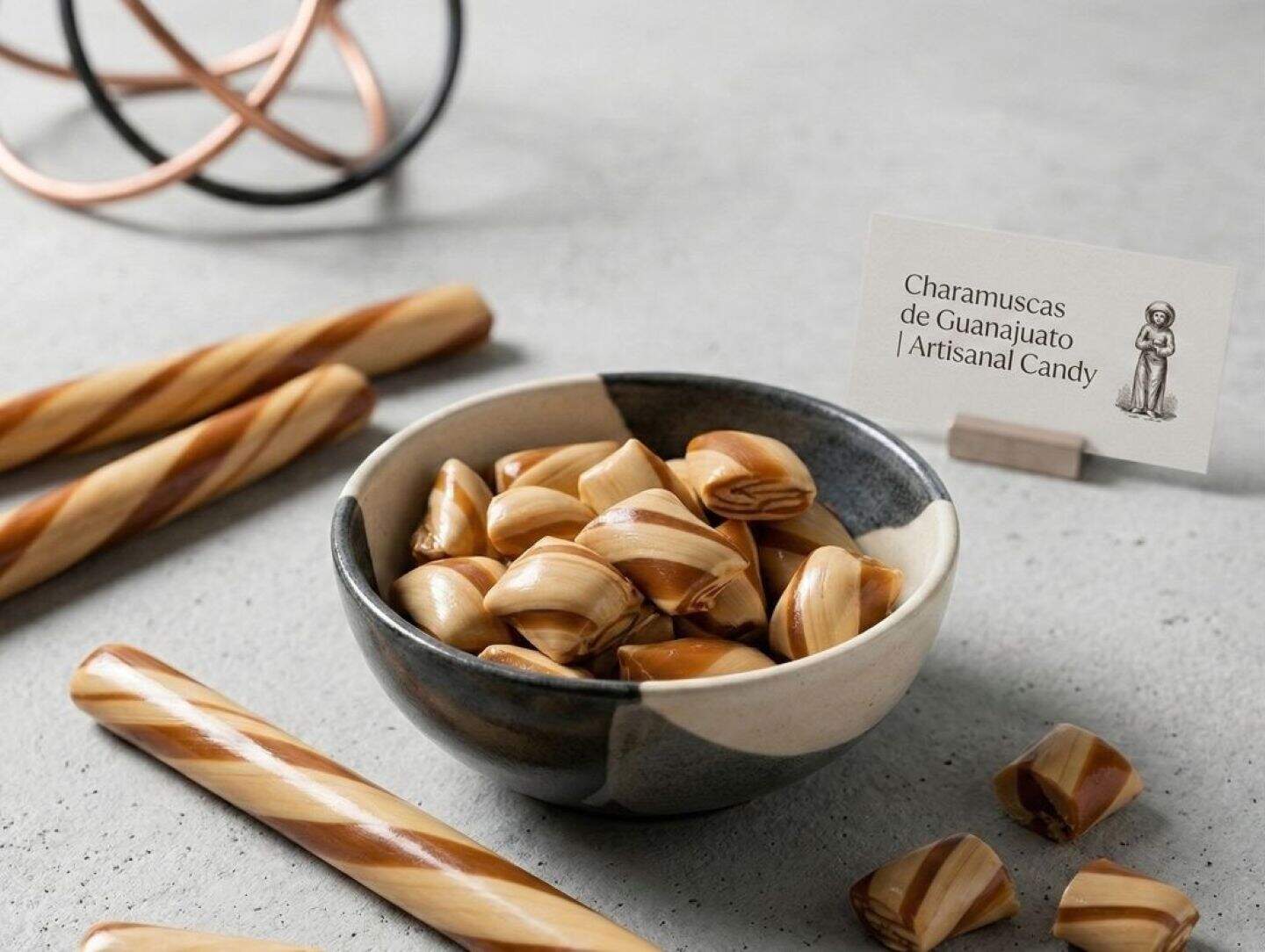
Charamuscas
These twisted sugar candies come in wild colors and get shaped while the sugar is still hot. Candy makers pull and twist the molten sugar into spirals. They’re purely decorative and purely sweet, made from sugar, water and food coloring. Kids love them because they’re bright and fun.
Cajeta de Celaya
This thick caramelized goat milk comes from Celaya, thirty minutes from San Miguel. Fresh goat milk cooks down with sugar for hours until it turns deep amber.
The goat milk gives it a slight tang that balances the sugar. People spread it on bread or drizzle it over ice cream.
Jamoncillo de Pepita
This fudge uses ground pumpkin seeds instead of the milk base. The pepitas get ground fine, cooked with sugar and cinnamon, then pressed into molds.
The result is rich and nutty with a slightly grainy texture. The green color from pumpkin seeds makes it recognizable.
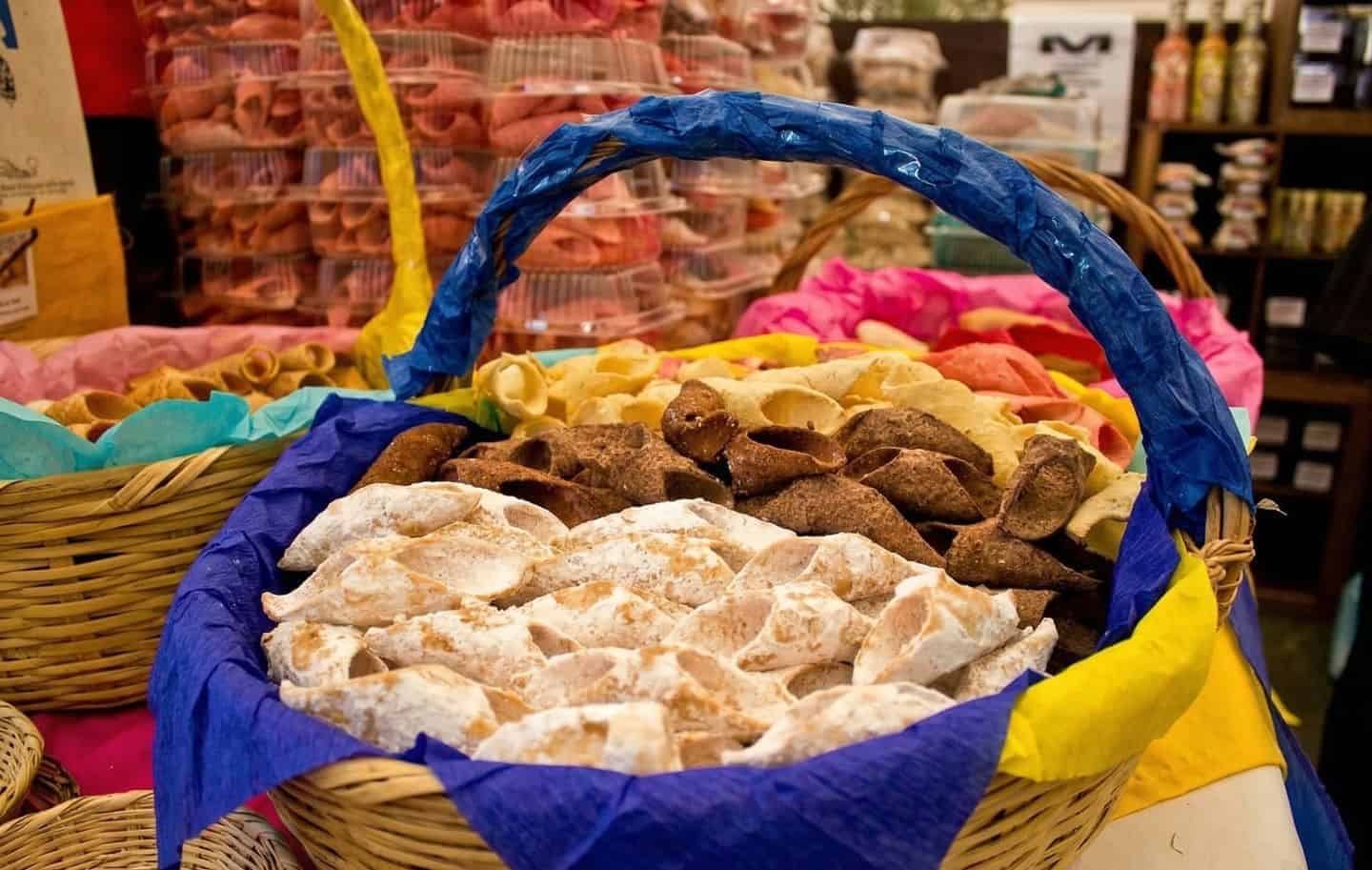
Tumbagones
These crispy fried pastries puff up when they hit hot oil. The dough is simple wheat flour, eggs and anise, rolled thin and cut before frying.
As they cook, they bubble and expand. Once fried, they get dusted with cinnamon sugar or drizzled with honey.
Seasonal: especially during festivals and Day of the Dead.
Palanquetas Artesanales
These thin peanut brittles use local peanuts and piloncillo instead of white sugar. The piloncillo gives them a deeper, more molasses sweetness.
Candy makers cook the piloncillo, stir in toasted peanuts, then pour everything and roll it thin before it hardens.
Buñuelos Sanmiguelenses
While you can get this Mexican dessert all over the country it is particularly special here.
Vendors stretch wheat dough paper thin before dropping it into hot oil where it puffs and blisters golden. Once fried, they get dusted with cinnamon sugar or drizzled with piloncillo syrup.
What makes SMA’s buñuelos unique is the tradition that follows eating one: vendors serve them on clay bowls that you smash on the ground for good luck.
On New Year’s Eve the streets around the Jardín fill with the sound of breaking clay.
Seasonal: available year round but essential December through New Year’s.
Mexican Desserts
Dulce de Xoconostle
This tart cactus fruit preserve transforms sour xoconostle into candy through long, slow cooking with piloncillo. The fruit’s natural pectin helps it gel. The final product is both sweet and tart with a stunning magenta color. People eat it as candy or use it as a filling for pastries.
Seasonal: late winter through spring when xoconostle ripens.
Ate de Membrillo o Guayaba
These thick fruit pastes come in blocks and get sliced thin to serve with cheese or eaten plain. Ate de membrillo has a deep orange color and tastes floral and slightly tart.
Ate de guayaba is brighter pink and sweeter. Both require hours of cooking fruit with sugar until it sets.
Traditional Drinks in San Miguel de Allende
Colonche
This fermented cactus fruit drink uses tunas, the fruit of the nopal cactus. Indigenous people have made colonche for centuries.
The result is sweet, slightly fizzy and has a flavor unlike anything else. The alcohol content stays low, maybe three or four percent.
Seasonal: late summer and fall when tunas ripen.
Charro Negro
Cebadina
This fizzy drink tastes and looks like cream soda but it’s made from fermented barley water.
Someone started making these in Guanajuato decades ago and now you can find them throughout the Bajío. The drink is sweet, bubbly and pale amber colored. People drink cebadina ice cold on hot afternoons.
Pulque Natural o Curado
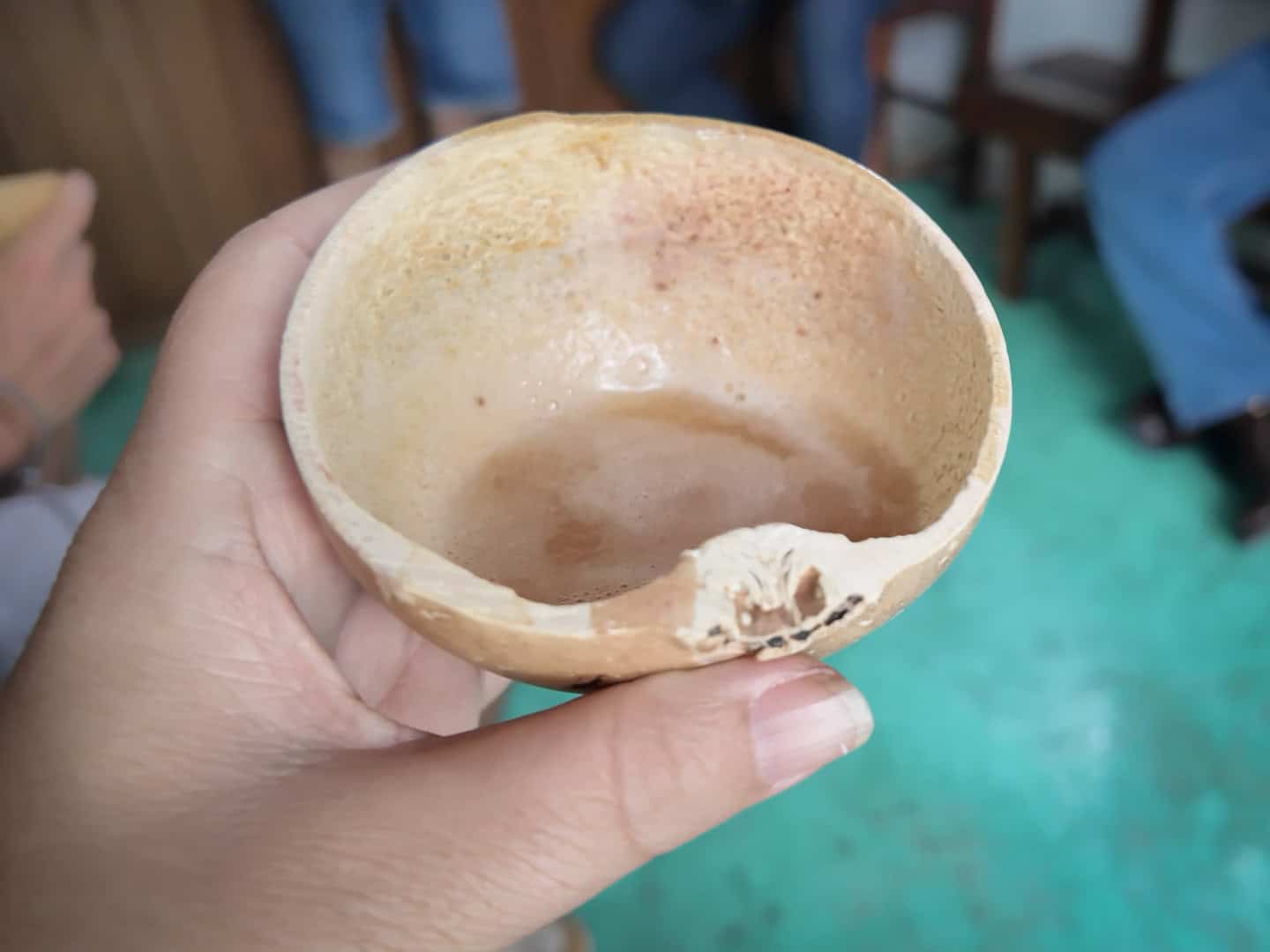
This fermented agave drink predates the Spanish arrival by centuries. Fresh pulque tastes earthy, slightly sour and has a thick, viscous texture. The alcohol content is low, similar to beer.
Curados are pulques mixed with fruit, nuts or vegetables. Popular flavors include strawberry, oatmeal, celery and pineapple.
They are also very popular in Oaxaca, Puebla and Mexico City.
Atole Blanco
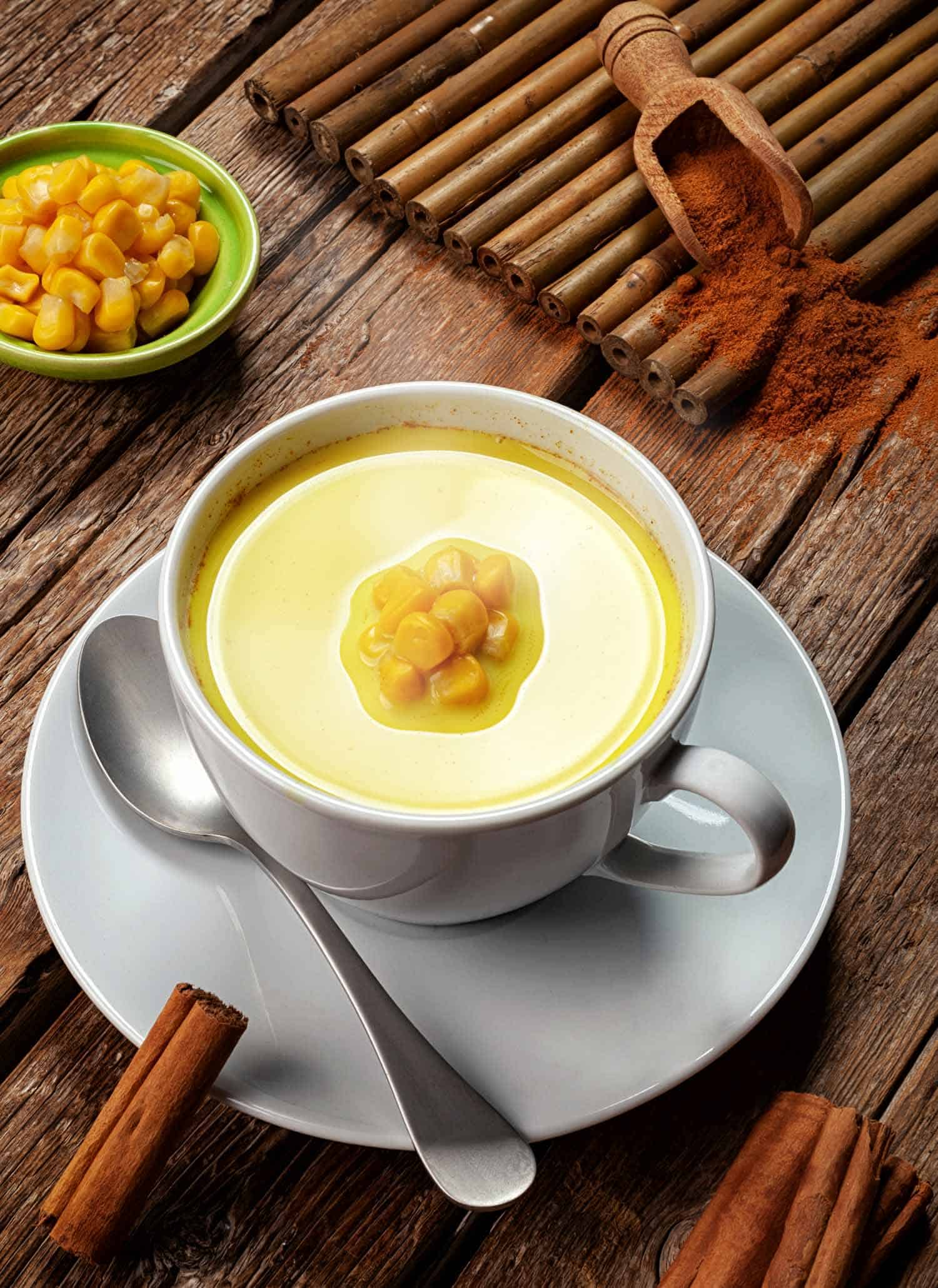
This warm corn drink is simple comfort in a cup. Corn masa dissolves in water or milk and cooks until it thickens, then gets sweetened with piloncillo or sugar.
The white version has no added flavoring. People drink it for breakfast or in the evening when the highland air turns cold.
Champurrado
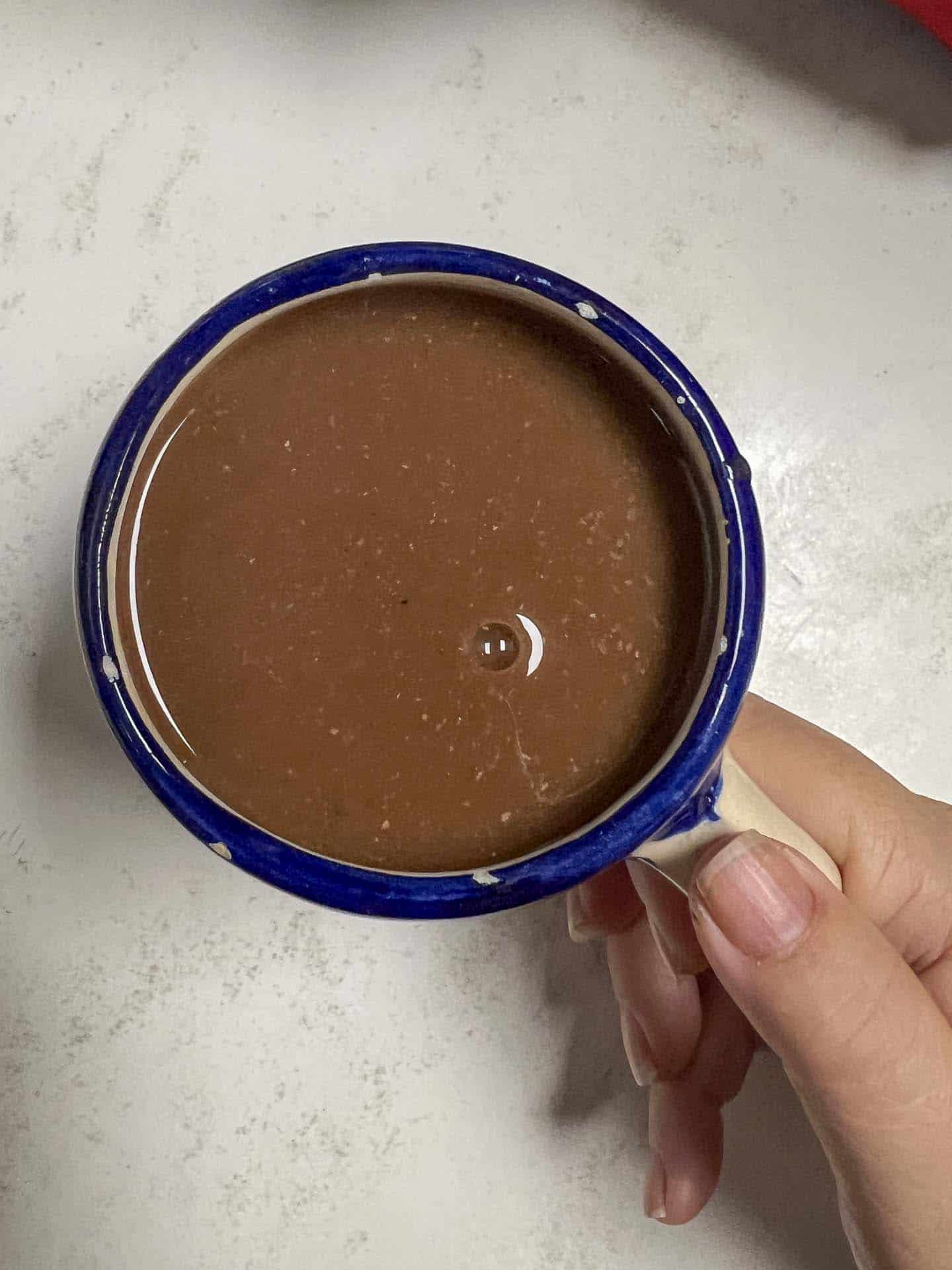
This chocolate version of atole combines masa with chocolate, cinnamon and piloncillo. The texture should be thick but pourable.
You’ll find this Mexican drink throughout the country and supermarkets also have a mix to make it at home. But try it from scratch.
Champurrado is cold weather drinking, showing up most often from October through February. Vendors serve it steaming hot alongside tamales.
Seasonal: most common October through February, but available year round at some stands.
Agua Fresca de Xoconostle
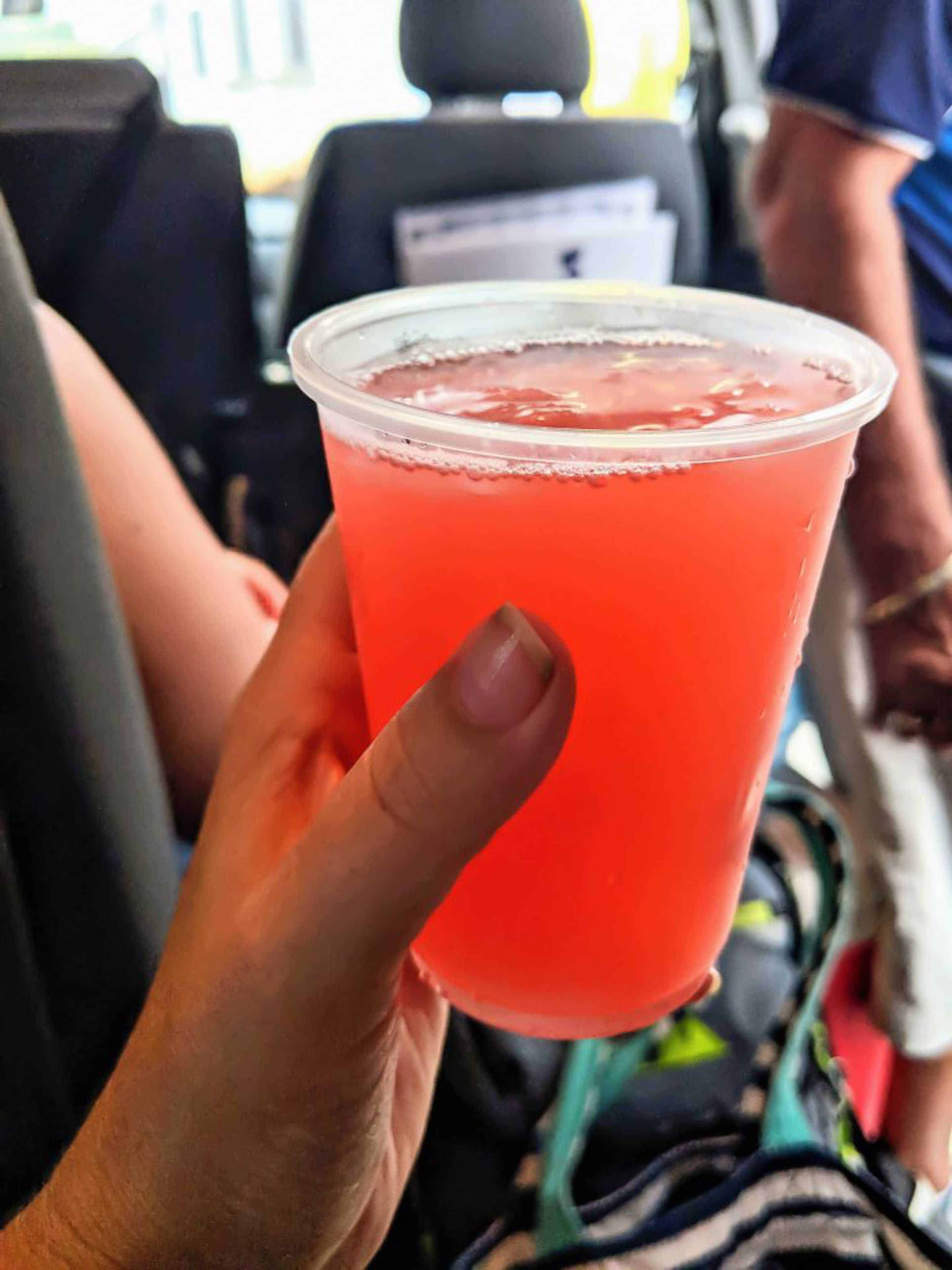
So many red and pink drinks in the city! This bright pink agua fresca uses tart xoconostle cactus fruit. The blended fruit and mixed with water and sugar.
t tastes like a cross between lemonade and cranberry juice with its own unique cactus flavor. The natural color is stunning.
Seasonal: late winter through spring when xoconostle is ripe.
Pin it: Best Food in San Miguel de Allende
